
Rana (genus) — true frogs of ponds and wetlands
Rana is a genus of true frogs (Ranidae) including many pond and brown frogs. Species occur across Eurasia, the Americas and parts of Africa; they are characterized by long legs, webbed feet and semi-aquatic life cycles.
Overview
Rana is a traditional genus name applied to a group of frogs commonly called true frogs. Historically the name covered a large and diverse set of pond and stream-dwelling species; modern taxonomy has revised many placements, but the name remains in use for a set of closely related taxa in many field guides and databases (genus overview, species catalog). Commonly known members include the European common frog and a number of brown and leopard frog species.
Image gallery
6 Images



Physical characteristics
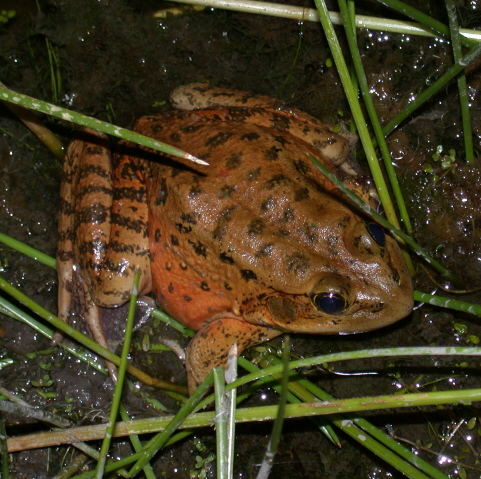
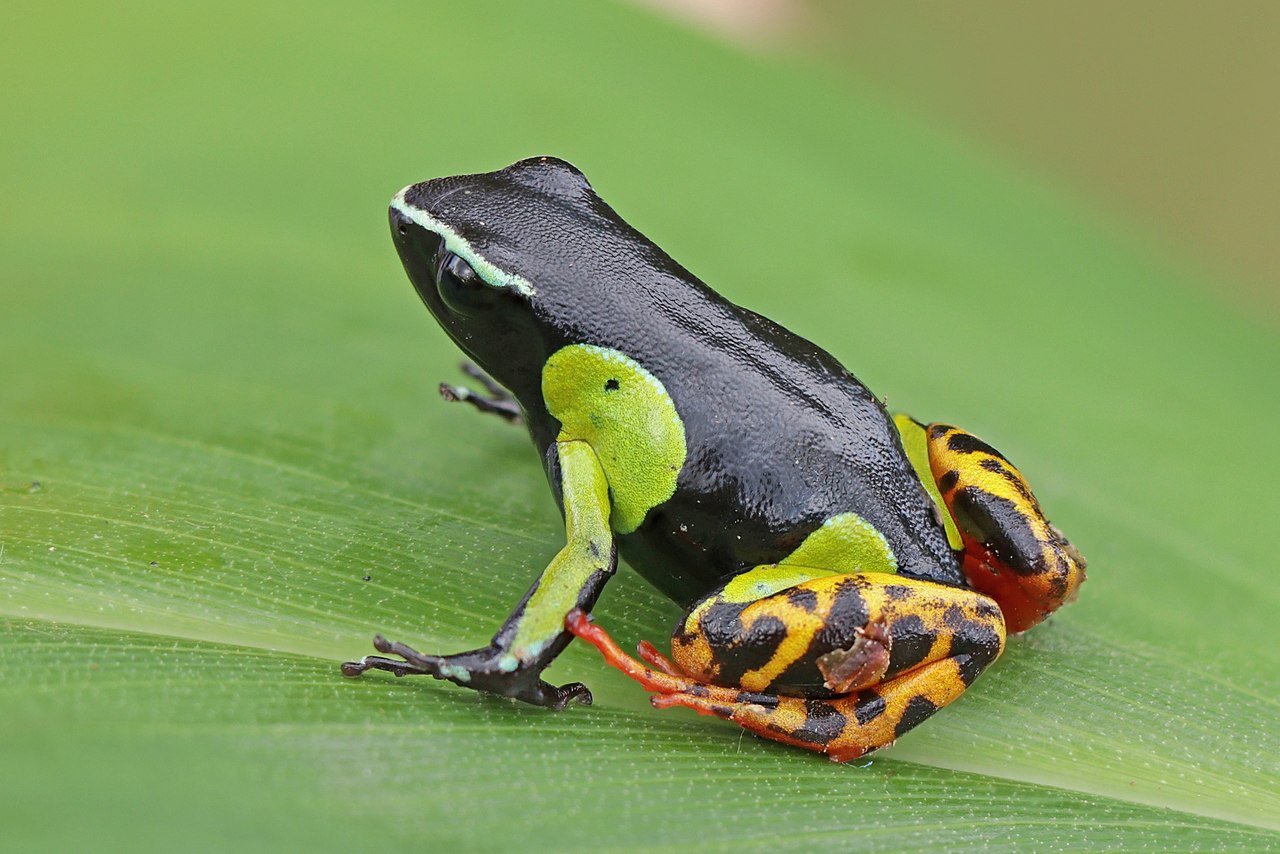
Frogs referred to as Rana share morphological traits suited to semiaquatic life. They typically have a lean, streamlined body with relatively slim waists and a smooth to slightly wrinkled skin texture rather than heavy warting. The tympanum (external ear) is usually conspicuous. Hind limbs are long and muscular, supporting powerful leaps (long slender legs), and the toes are commonly webbed to aid swimming.
Distribution and habitat
Species historically placed in Rana occur across much of the temperate and subtropical world. Populations are known from parts of Eurasia, across North America, throughout regions of Africa, and into Central America and the northern areas of South America. Typical habitats include ponds, marshes, slow-moving streams and the vegetated margins of lakes; some species use seasonally wet grasslands or temporary pools.
Behavior, diet and life cycle
Most Rana frogs are primarily insectivorous as adults, feeding on a variety of invertebrates; larger species may take small fishes, other amphibians or small vertebrates. Activity patterns vary by species and climate, with many being most active at night or in damp weather. Reproduction generally involves external fertilization: females deposit eggs in water, often in clumps or strands, and those eggs hatch into aquatic tadpoles that develop gills and a tail before undergoing metamorphosis to a juvenile frog.
Representative species
- Common frog (a widespread European pond frog often used as an example).
- Brown frogs and leopard frogs — groups of several similar-looking species widespread in temperate zones.
- Species historically linked to the American bullfrog — taxonomy has shifted and treatments vary by authority.
Taxonomy and systematics
The taxonomy of Rana has been dynamic. Molecular studies over recent decades have shown that many species traditionally placed in Rana are part of distinct lineages, prompting the erection or resurrection of other genera and reassignments in specialist checklists. As a result, the exact composition of Rana depends on the taxonomic framework adopted; authoritative lists and regional guides provide the most up-to-date species rosters (overview, catalog).
Conservation
Status among Rana species ranges from common and adaptable to threatened. Threat factors include habitat loss, pollution, hydrological change, invasive species and emerging diseases such as chytridiomycosis. Some species have become invasive when introduced outside their native range, with ecological consequences for local amphibian communities.
Human interactions and research
Rana frogs are of interest to naturalists, ecologists and conservationists because of their ecological roles as predators of invertebrates and as prey for birds, mammals and fishes. They have been the subject of studies on locomotion (leg function), skin and coloration (dermal traits), and reproductive ecology. Regional identification and natural history are best consulted through local field guides and specialized accounts for Europe, Eurasia, Africa, Central America and South America resources.
Identification tips
- Note body shape and leg length: long, powerful hind legs indicate strong jumpers typical of true frogs.
- Check skin texture and markings: many species are smooth or slightly wrinkled with transverse dorsal patterns or spots.
- Observe habitat and call: breeding sites and mating calls are often diagnostic at the species level.
For authoritative species lists, distribution maps and conservation assessments consult curated databases and specialist literature (species catalog, genus overview). Morphology notes and locomotion studies provide further context for understanding how form relates to the semi-aquatic lifestyle of these frogs (morphology, locomotion, swimming adaptations).
Questions and answers
Q: What is Rana?
A: Rana is a genus of frogs.
Q: How many species of Rana are there?
A: There are over 90 species of Rana.
Q: Where can Rana be found?
A: Rana can be found in Eurasia, North America, Africa, Central America, and the northern parts of South America.
Q: What do Rana frogs look like?
A: Rana frogs are very large in length, have slim waists and wrinkled skin. They are mostly green and have brown on the top, with darker and yellowish spots on their bodies.
Q: Do Rana frogs have warts?
A: Most of Rana frogs do not have warts like many toads.
Q: How do Rana frogs move in water?
A: All of the Rana frogs, including most frogs, have webbed feet. This allows them to swim in water.
Q: Why are Rana frogs great jumpers?
A: Rana frogs are great jumpers because of their long slender legs.
Related articles
Author
AlegsaOnline.com Rana (genus) — true frogs of ponds and wetlands Leandro Alegsa
URL: https://en.alegsaonline.com/art/81070