
Ranidae (true frogs): overview, traits, distribution, and significance
Ranidae, the 'true frogs', are a widespread family of generally smooth, long‑legged, semi‑aquatic frogs. This article summarizes their distribution, morphology, life cycle, ecology, and human relevance.
Overview
Ranidae, commonly called the true frogs, form a broadly distributed group of frogs notable for their smooth skin, powerful hind limbs and association with freshwater. Members of this assemblage occupy a wide variety of habitats and ecological roles. The name "true frogs" reflects a traditional, morphological concept rather than a single strict genetic unit in modern taxonomy.
Image gallery
4 Images

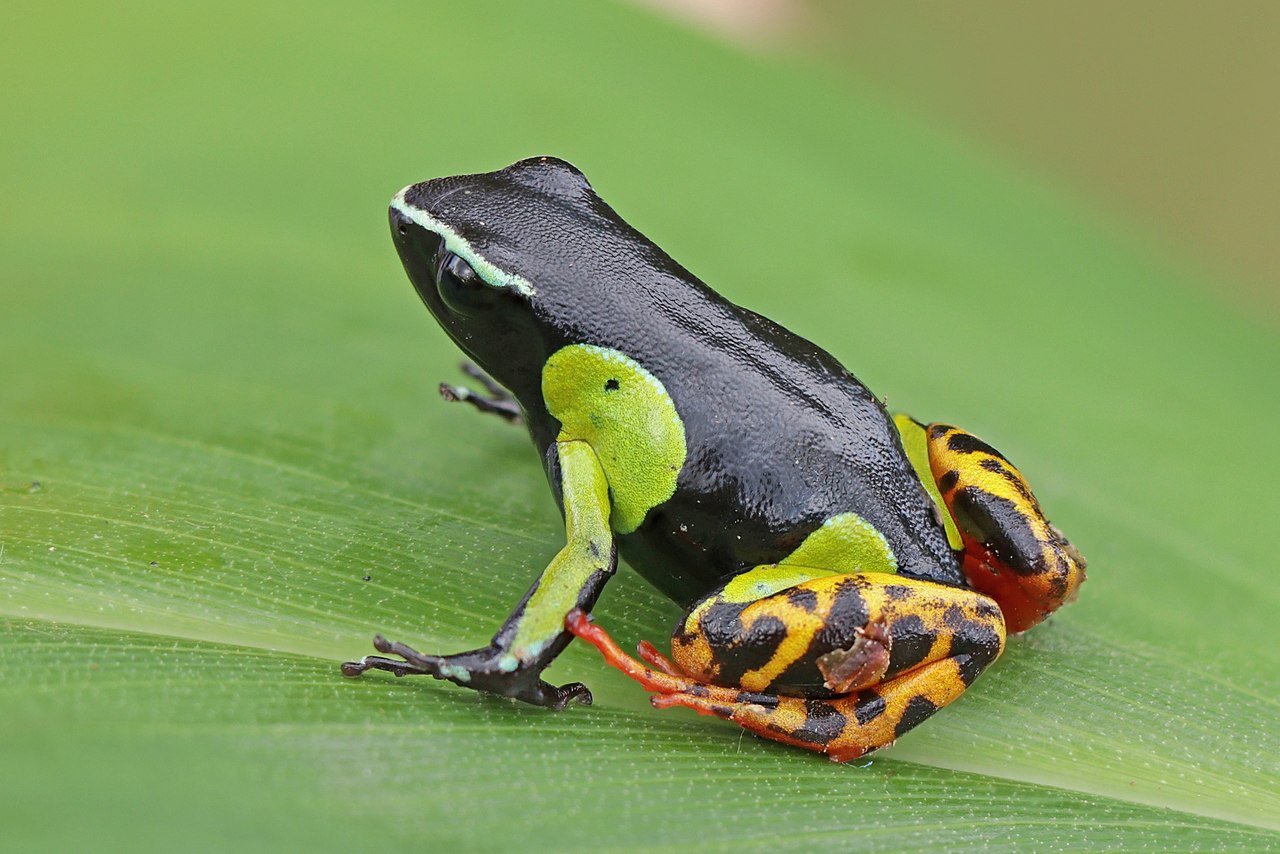

Distribution and habitat
True frogs occur on most continents except Antarctica. They are found throughout North America, parts of northern South America, across Europe and much of Asia, and on islands such as Madagascar and in regions of Africa. Populations extend into the East Indies and New Guinea and are present in parts of Australia. The family is largely tied to freshwater environments—streams, ponds, marshes and riparian forests—but some species occupy drier or more terrestrial niches.
Characteristics
True frogs typically have a set of recognizable features adapted for jumping and swimming: smooth, moist skin; long, muscular hind legs; and webbed feet that aid in propulsion. Many are semi‑aquatic, splitting time between land and water. Distinguishing characters may include vocal sacs in males used for calling and a life cycle that usually includes aquatic eggs and tadpoles.
- Skin and limbs: generally smooth skin and strong hind limbs for leaping.
- Locomotion: webbed feet for swimming (webbed feet).
- Reproduction: eggs laid in water, aquatic tadpole stage.
Life cycle and behavior
Most true frogs reproduce in water. Eggs hatch into aquatic larvae (tadpoles) that later metamorphose into terrestrial or semi‑aquatic adults. Many species are active vocal communicators during the breeding season, and some show migratory movements between seasonal wetlands and upland habitats. Diets are generally carnivorous, consisting of insects and other small invertebrates; larger species take bigger prey.
Taxonomy and notable species
The taxonomic boundaries of Ranidae have been revised repeatedly; molecular studies have split and reassigned lineages that were once grouped together. Well‑known representatives often cited in field guides include the American bullfrog (bullfrog) in North America, smaller temperate species such as the wood frog, and some of the largest frogs such as the Goliath frog, noted for its exceptional size. These species illustrate the range of sizes and ecologies found within the broader true‑frog tradition.
Ecological importance and conservation
True frogs play key roles as both predators and prey in freshwater ecosystems, helping control insect populations and serving as food for birds, mammals and reptiles. They are also sensitive indicators of environmental change because of their permeable skin and dependence on aquatic habitats. Threats include habitat loss, pollution, invasive species, disease and climate change. Conservation efforts range from habitat protection to captive breeding and monitoring programs aimed at maintaining regional diversity.
For further reading on regional occurrence and species accounts, see resources for Antarctic absence and global distribution, continental checklists such as those for North America and Europe, and regional surveys covering Asia, Madagascar, Africa, the East Indies and New Guinea, and Australia. Practical notes on anatomy and locomotion are summarized at sources addressing webbed feet and semi‑aquatic lifestyles.
Questions and answers
Q: What family do true frogs belong to?
A: True frogs belong to the Ranidae family.
Q: Where can true frogs be found?
A: True frogs can be found in North America, northern South America, Europe, Asia, Madagascar, Africa, East Indies, New Guinea and Australia.
Q: What is the largest true frog in North America?
A: The bullfrog is the largest true frog in North America.
Q: How do most true frogs look like?
A: Most true frogs are smooth and moist-skinned with large powerful legs and webbed feet.
Q: What is the smallest species of true frog?
A: The Wood Frog (Rana sylvatica) is the smallest species of true frog.
Q: What is the largest species of true frog?
A: The Goliath Frog (Conraua goliath) is the largest species of true frog.
Q: Where do they live?
A: True frogs are semi-aquatic and usually live near water sources.
Related articles
Author
AlegsaOnline.com Ranidae (true frogs): overview, traits, distribution, and significance Leandro Alegsa
URL: https://en.alegsaonline.com/art/81148
Sources
- commons.wikimedia.org : Ranidae
- species.wikimedia.org : Ranidae
- amphibiatree.org : PDF fulltext
- research.amnh.org : Petropedetidae Noble, 1931
- jeb.biologists.org : PDF fulltext
- dx.doi.org : 10.1016/j.ympev.2006.08.001
- cnah.org : PDF fulltext
- dx.doi.org : 10.1016/j.ympev.2004.10.007
- dx.doi.org : 10.2108/zsj.25.381
- dx.doi.org : 10.1016/j.ympev.2007.09.016
- bryanlstuart.com : PDF fulltext