
Plaza Mayor (Madrid)
Historic central square in Madrid, originating as a medieval market and reshaped in the 16th–17th centuries; notable for its arcaded façades, Casa de la Panadería and an equestrian statue of Philip III.
Overview
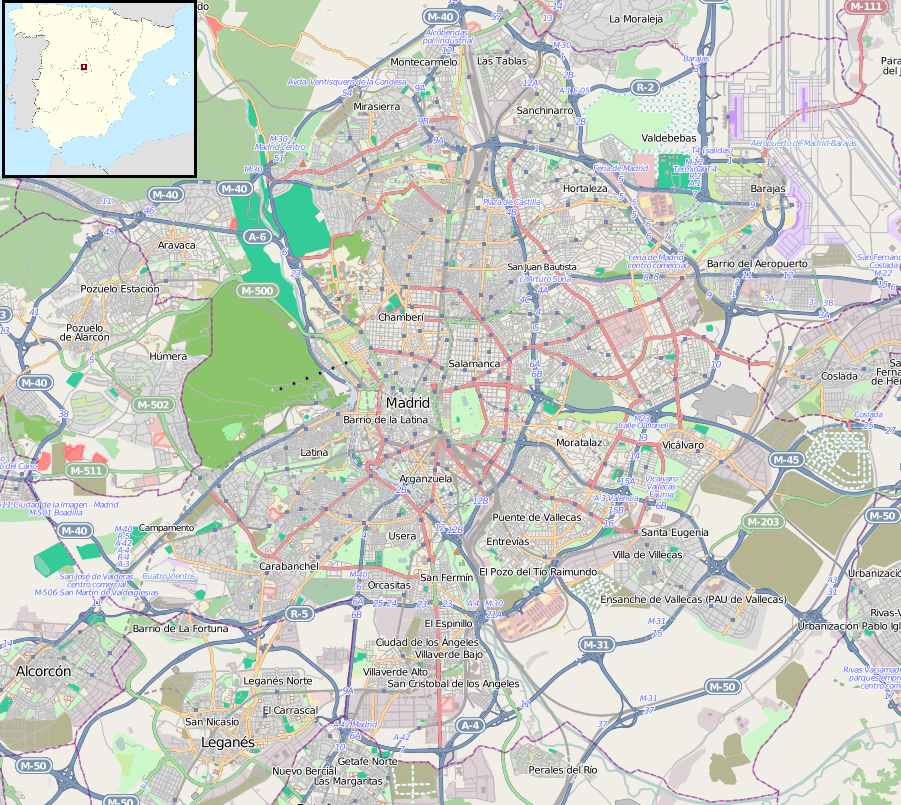
The Plaza Mayor sits at the historic heart of Madrid. Built on the site of the earlier Plaza del Arrabal, it evolved from a medieval market space into a formal public square surrounded by continuous, uniform façades with arcades at ground level. Its rectangular plan, cobbled surface and balconies make the plaza a distinctive urban stage for civic life.
Image gallery
10 Images



Origins and early development
The square began as an open market outside the medieval walls of the city and was known for trading goods and hosting public gatherings. For background on its earliest role as a market and meeting place see foundation and market history. Contemporary accounts and later studies refer to its use throughout the Middle Ages as a commercial and social hub.
16th–17th century remodelling
In the late 16th century the square was selected for a formal remodelling under royal direction. Plans promoted by King Philip II and advisors including architects in his circle such as Juan de Herrera led to a project to transform the open market into a purpose-built plaza for urban ceremonies and judicial events. The Casa de la Panadería, a prominent and decorative building on the square, was completed around the end of the 16th century and became one of the most recognizable facades. The general rectangular layout and the surrounding three-storey buildings were consolidated by architects who worked into the early 17th century, and the plaza took on a more finished civic character under the reign of Philip III.
Architecture and notable elements
Key physical features include the continuous arcaded galleries at street level, the timber-framed balconies overlooking the square, and the cobbled central surface. A prominent element in the middle of the plaza is the equestrian statue of Philip III, originally created by Giambologna; the statue was installed in the square in the 19th century and is often cited alongside accounts of the sculptor (statue, Philip III, Giambologna).
Uses, ceremonies and events
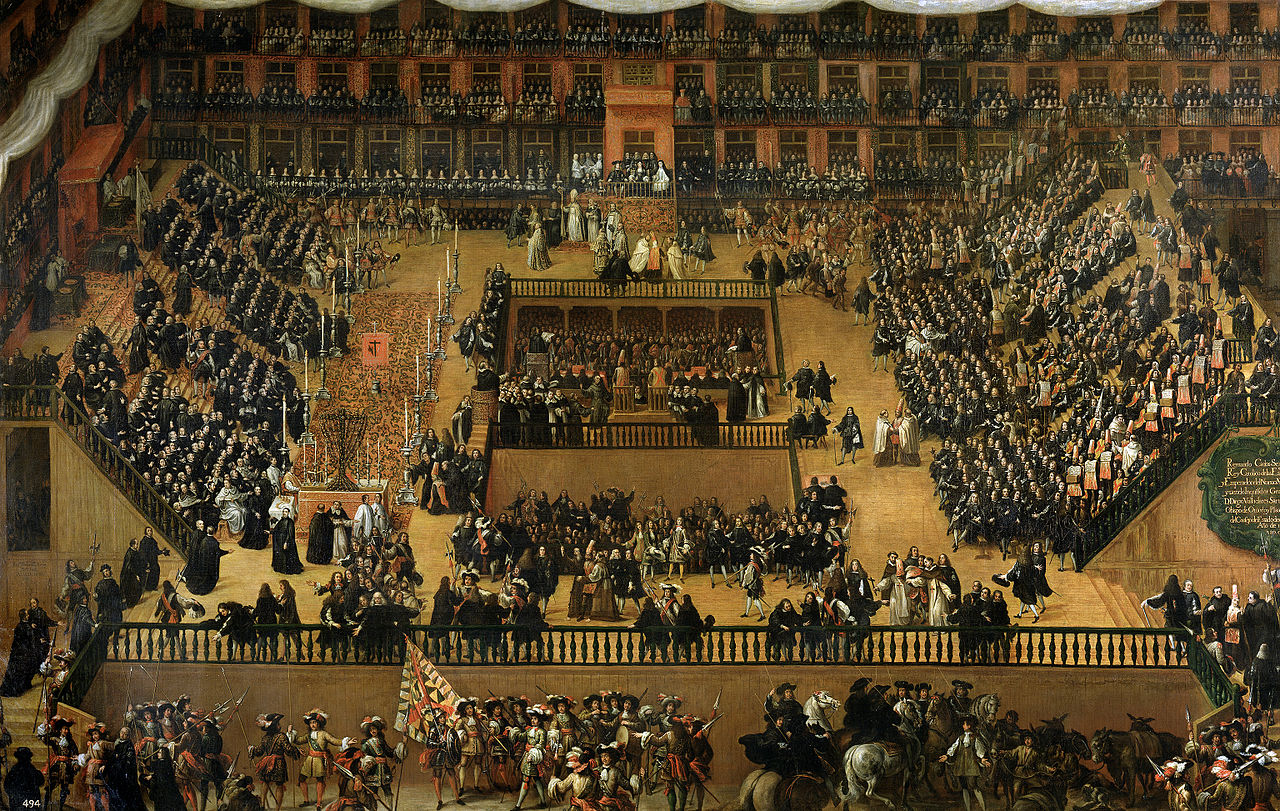
Historically the Plaza Mayor hosted a wide range of public activities: royal proclamations and coronations in the public eye, bullfights and spectacles, festive occasions such as carnivals, and — in darker episodes of its past — public executions. Spectators traditionally watched from the balconies and arcaded walkways that frame the square; the relationship between performers, authorities and audiences was a defining feature of the plaza’s social life (balconies).
Damage, restoration and present appearance
The Plaza Mayor has suffered several major fires over the centuries and was rebuilt and repaired multiple times. These destructive events led to successive renovations that altered details while preserving the overall plan; accounts of the major fires and subsequent repairs explain how the present appearance is the result of layered interventions. Today visitors enter the plaza through a set of archways; the traditional number of principal entrances commonly cited is nine, each providing access beneath the surrounding buildings (arches).
Why it matters
Plaza Mayor remains one of Madrid’s most important civic and tourist spaces. As a compact and well-preserved example of a Spanish public square it illustrates how urban design served political, commercial and ceremonial functions across centuries. Contemporary uses range from seasonal markets and cultural events to daily tourism, and the square continues to serve as a visible symbol of Madrid’s historic center.
- Central buildings: Casa de la Panadería and continuous residential façades
- Distinctive features: arcades, balconies, cobbled floor and central statue
- Typical events: markets, concerts, festivals and guided tours
Related articles
Author
AlegsaOnline.com Plaza Mayor (Madrid) Leandro Alegsa
URL: https://en.alegsaonline.com/art/77422
Sources
- mcu.es : Database of protected buildings
- mcu.es : movable
- mcu.es : non-movable