
Market — physical places and economic systems for buying and selling
Overview of markets: physical and virtual spaces where buyers and sellers meet, their functions, types (consumer, financial, labor), history, mechanisms like supply and demand, and common examples.
What a market is
A market is any arrangement—physical or virtual—where people, firms, or institutions exchange goods, services, or financial claims. In everyday language a market can be a specific location where traders gather to sell items, such as a town square or a dedicated market building. It can also refer more abstractly to the set of buyers and sellers for a particular product or category, for example the market for smartphones or the labor market for nurses.
Image gallery
10 Images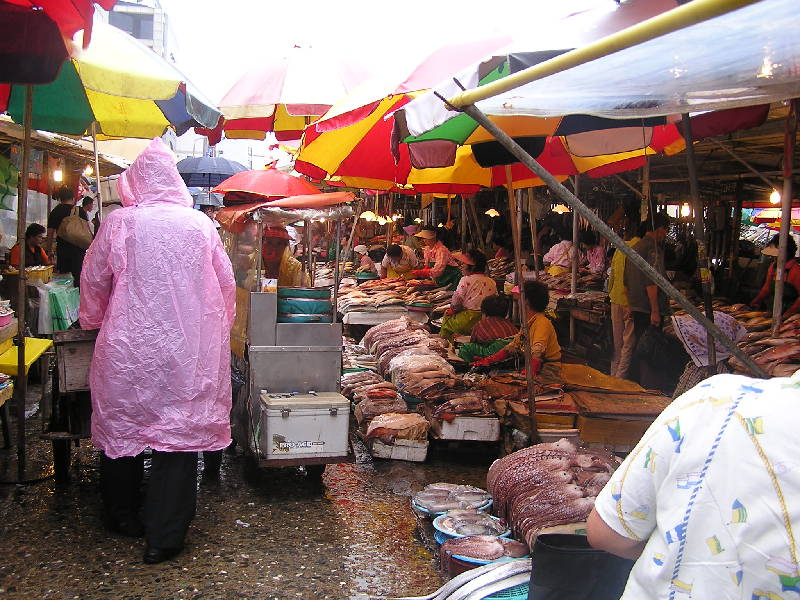



Typical features and participants
Markets share a common set of elements: participants who want to buy or sell, offers and bids that express willingness to trade at particular prices, a medium of exchange (money), and rules or customs that shape how trades occur. Typical participants include individual consumers, producers, wholesalers, retailers, brokers and sometimes regulators. Markets perform three core functions: bringing together buyers and sellers, facilitating price discovery, and allocating resources through trade.
Kinds of markets
- Physical markets: open-air markets, farmers' markets, flea markets and bazaars where stalls or temporary structures (often similar to a stall or tent) host sellers each day.
- Retail markets: supermarkets and shopping centers that sell consumer goods directly.
- Financial markets: stock exchanges, bond markets and currency markets where financial assets are issued and traded.
- Labor markets: where employers and jobseekers meet and agree terms of employment.
- Digital marketplaces: online platforms that match buyers and sellers for goods, services or information.
How markets work and why they matter
At the heart of market activity is the relationship between supply and demand. Buyers' willingness to pay and sellers' willingness to accept determine prices that convey information about scarcity and preference. When demand for an item increases or supply falls, prices tend to rise; the opposite shifts prices downward. This interaction—often summarized as the law of supply and demand—supports distribution of resources across the economy and can stimulate production, specialization and trade. Because markets link production and consumption they are central to how modern economies organize activity and generate income and employment. More abstractly, a strong market presence for a product indicates consumer interest: saying there is a "big market for dishwashers" means many people want to buy them, which encourages firms to make or sell them.
History and development
Markets have existed in some form for thousands of years. Ancient agoras and bazaars served as commercial and social hubs; medieval fairs expanded long-distance trade; and the rise of formal exchanges in the early modern period created venues for trading commodities and securities. The industrial revolution and improvements in transport and communication led to larger, more integrated markets. In the late 20th and early 21st centuries digital technology has created new kinds of marketplaces that can reach global audiences instantly.
Limitations, regulation and notable distinctions
Markets are powerful but not perfect. They can fail to provide desirable outcomes when information is asymmetric, when external costs or benefits are ignored, or when one seller dominates (monopoly). Governments commonly regulate markets to protect consumers, ensure competition and manage public goods. Economists also distinguish between primary markets (where new goods or securities are issued) and secondary markets (where existing items are resold), and between competitive markets and those with limited participants or barriers to entry. Understanding these distinctions helps explain why similar-sounding "markets"—for example a weekend craft market versus an international currency market—operate under very different rules and consequences.
Examples and everyday relevance
Common real-world examples include local farmers' markets where producers sell fresh food, flea markets for secondhand goods, supermarkets for everyday purchases, online platforms that connect freelance workers with clients, and stock exchanges where shares are traded. Each of these illustrates the basic idea of matching buyers and sellers, while differing in scale, regulation, and the complexity of trades. For further reading on economic concepts that underpin market behavior, see discussions of the broader economy and the dynamics of supply and demand.
Related articles
Author
AlegsaOnline.com Market — physical places and economic systems for buying and selling Leandro Alegsa
URL: https://en.alegsaonline.com/art/62124