
Architectural Arches: Forms, Mechanics, and Uses
Overview of architectural arches: forms, structural mechanics, materials and construction (keystone, voussoirs), common uses in buildings, bridges and arcades, and natural rock arches.
An arch is a structural opening whose top is shaped to pass loads to its supports. Arches are common features in building design and engineering because their curved form moves forces away from the center and toward supporting walls or piers.
Image gallery
10 Images
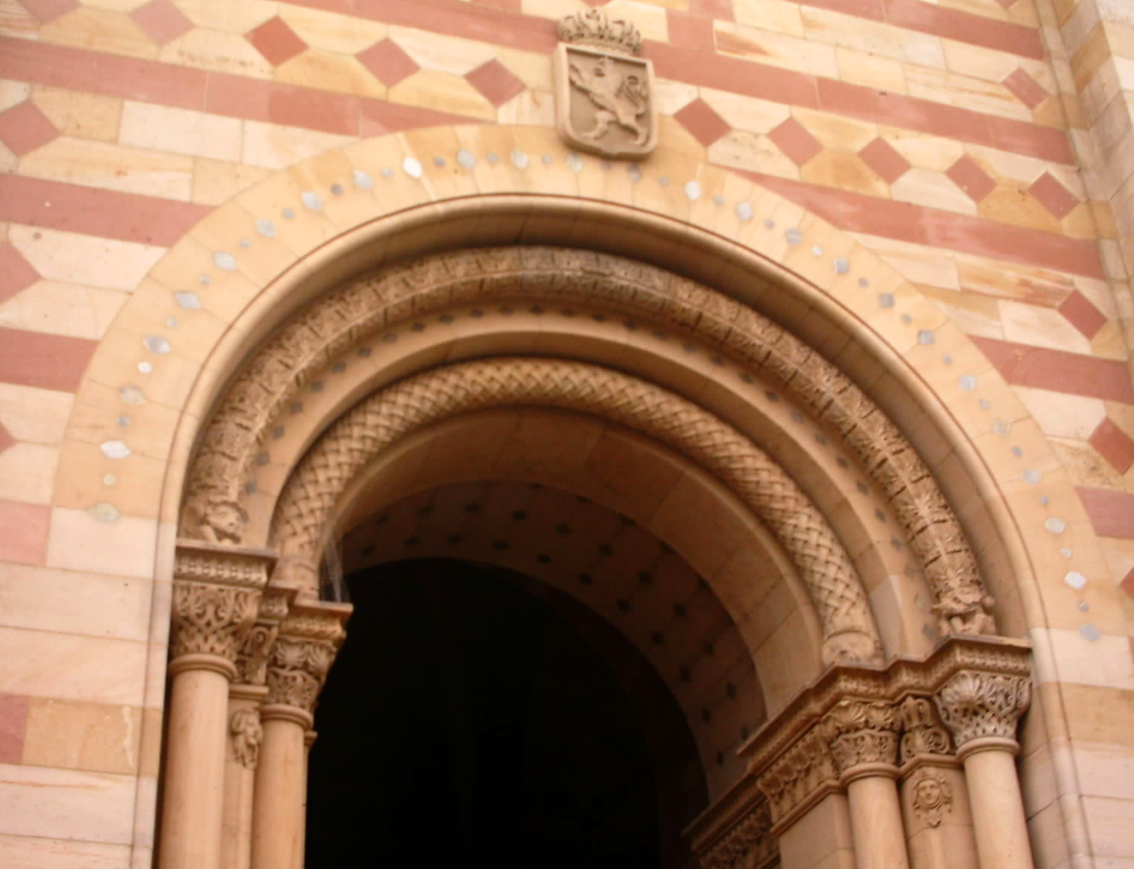


Form and mechanics
The curved portion of an arch can take different geometries. It may follow part of a circle, producing a smooth rounded profile, or be composed of two circular arcs that meet at a point, creating a pointed shape. Traditional arches are assembled from many small wedge-shaped units such as stones or fired clay bricks. The central stone at the top, called the keystone, locks those units together so the arch acts as a single, stable structure.
Where arches are used
- Arches commonly span doorways and frame windows, providing both strength and an opening.
- Many kinds of bridges use arch forms. Some of these are specifically termed arch bridges, and modern examples may be built from materials like steel.
- A row of adjacent arches creates an arcade, often used in covered walkways or as an architectural motif.
Natural arches
Arches are not only man-made. In nature, openings that resemble architectural arches can develop when the erosion of rock removes softer material and leaves a curved span. This process frequently occurs in cliffs and other exposed rock formations, producing the natural arches seen in many landscapes.
Tags
Related articles
Author
AlegsaOnline.com Architectural Arches: Forms, Mechanics, and Uses Leandro Alegsa
URL: https://en.alegsaonline.com/art/5271
Sources
- books.google.com : The Natural Arches of the Big South Fork: A Guide to Selected Landforms
- britannica.com : "Arch | architecture"
- mymodernmet.com : "What We Can Learn From the Exquisite History and Ornate Aesthetic of Gothic Architecture"