
Platinum (chemical element and metal)
Platinum is a dense, silvery-white precious metal (Pt, atomic number 78) valued for its chemical stability, catalytic activity and use in jewelry, industry and automotive emissions control.
Platinum is a dense, silvery-white precious metal known for its high density, resistance to corrosion and distinctive metallic lustre. In chemistry the element is designated by the symbol Pt and has atomic number 78 and an atomic mass of about 195 unified atomic mass units. Readers seeking a brief physical portrait can consult a technical summary via physical properties, while general chemical context is available at elemental chemistry. As a commodity metal it is commonly classified among the precious metals and is often priced higher than gold in certain markets; contemporary price discussions are summarized at market data and compared with gold at gold price.
Image gallery
10 Images
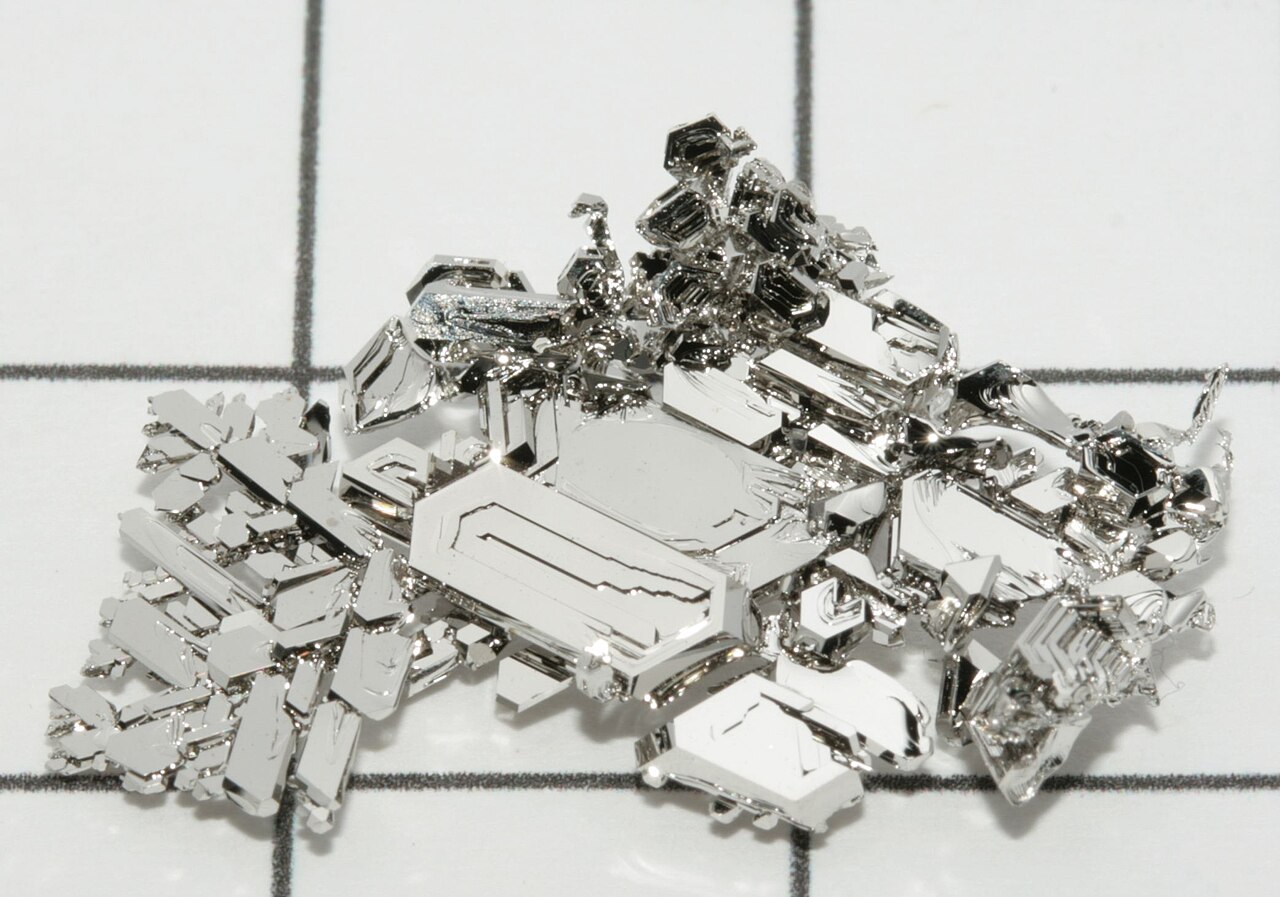


Characteristics and behaviour
Platinum is soft and malleable in pure form, and also ductile, so it can be drawn into wire or rolled into thin sheets. For discussions of mechanical workability see malleability and ductility. The metal is chemically inert under many conditions: it resists oxidation and attack by most common acids, and is therefore prized for use in equipment that must remain chemically pure and durable; further notes on chemical stability appear at chemical stability. In extreme chemical environments only powerful oxidizing mixtures or complexing agents will dissolve platinum.
History and name
The name platinum derives from the Spanish term platina, meaning "little silver", a diminutive of the word for silver; the linguistic origin is referenced at platina (Spanish) and silver. Platinum was recognized and used in pre-industrial contexts in South America and later adopted into European metallurgy during the 18th century. Knowledge of its refined properties and industrial potential expanded through the 19th and 20th centuries as extraction and refining techniques improved.
Occurrence and extraction
Platinum occurs naturally both as native metal grains and alloyed with other members of the platinum group metals (PGMs). Economically significant deposits are often associated with layered mafic intrusions and with placer deposits derived from their erosion. Modern mining and refining recoveries are complex and costly; industry summaries and mining geography can be explored at mineral data.
Uses and importance
Platinum's combination of catalytic activity, resistance to chemical attack, and attractive appearance has produced diverse applications:
- Automotive catalytic converters, where platinum helps convert harmful exhaust gases into less toxic compounds — see an overview at catalytic converter uses.
- Jewellery and decorative arts, valued for its bright white colour and tarnish resistance.
- Industrial catalysts in petroleum refining and chemical synthesis, and in fuel cells where platinum catalyses reactions at electrodes.
- Laboratory apparatus, medical devices and electrical contacts that require corrosion-resistant, conductive metal.
Notable distinctions and practical notes
Platinum belongs to the platinum group metals, which share similar chemical properties and are often recovered together. Its softness as a pure metal means alloys are commonly used for jewellery and engineering parts to improve hardness and wear resistance. Because of its high value and broad use in emissions control, recycling—particularly from spent catalytic converters—constitutes an important source of recycled platinum. For introductory overviews and investor information see chemical symbol, precious metals and general resources at precious metals market.
For technical specifications, industrial guidance and further historical context, readers may consult dedicated resources such as material handbooks and industry summaries available via physical properties and broader educational portals at stability and corrosion and market data. Additional reading on extraction and geological settings can be found at mineral data.
Related articles
Author
AlegsaOnline.com Platinum (chemical element and metal) Leandro Alegsa
URL: https://en.alegsaonline.com/art/77353