
Symbol: meaning, types, history and common uses
An overview of symbols — signs, objects or marks that stand for ideas, things or quantities — describing types, history, functions in communication, art, religion, computing and everyday life.
Overview
A symbol is any sign, shape, object or mark that stands for something beyond itself: an idea, a person, a quantity, a feeling or a set of instructions. Symbols operate by convention or learned association, so a single mark can carry different meanings in different cultures or contexts. Everyday examples include letters, numerals and common icons used in signs and interfaces. See how letters function as symbolic forms: letters, and how words are built from them: words. Symbols also represent sounds and phonemes: phonetic signs.
Image gallery
1 Image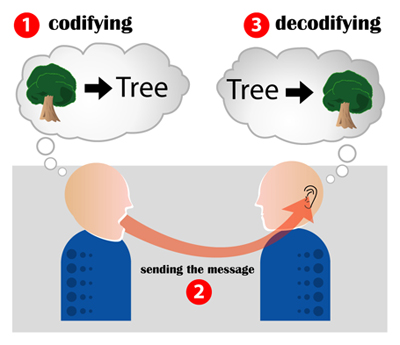
Forms and characteristics
Symbols appear in many modes: visual (objects, logos, flags), auditory (musical motifs), tactile (raised dots in braille), and abstract (mathematical notation). They can be concrete objects — for instance a cross or a scepter — or qualities such as color and pattern that carry meaning. The cross often functions as a religious emblem: cross (example), while colors and motifs may be used in ritual or identity: color as symbol.
History and development
Human use of symbols dates back to early mark-making and pictographs; over time, pictorial signs evolved into scripts, numbers and abstract logos. Religious, political and social symbols developed alongside institutions, helping to summarize complex beliefs or authority in a compact form. Literary and artistic traditions later used symbolic imagery to convey deeper layers of meaning in poetry and prose: poetry and literature frequently rely on symbolic elements, often overlapping with metaphor and simile: metaphor and simile.
Common uses and examples
Symbols serve practical and expressive roles. They simplify communication (traffic signs, numerals), mark identity (national emblems and flags), communicate beliefs (religious icons), and brand organizations (logos). In computing and mathematics, concise symbols permit complex operations and instructions to be conveyed and manipulated efficiently. A national emblem is a widely recognized political symbol: national emblem.
Distinctions and notable facts
In semiotics, scholars often distinguish icons (signs resembling what they represent), indices (signs showing a causal or existential link), and symbols (signs linked by convention). That distinction helps explain why some symbols are nearly universal while others require cultural learning. Symbols can be powerful tools for cohesion and conflict: they can unify communities but also carry contested meanings when groups attribute different values to the same sign.
Why symbols matter
By condensing complex ideas into recognisable signs, symbols make abstract thought, ritual practice, legal authority and technical notation manageable. They shape perception, memory and identity, and remain central to communication across art, religion, governance, science and daily life.
Questions and answers
Q: What is a symbol?
A: A symbol is a drawing, shape or object that represents an idea, object or amount of something.
Q: What are the most common symbols?
A: The most common symbols are letters which represent words and sounds.
Q: Can a symbol be an actual object?
A: Yes, a symbol can be an actual object such as a cross, which is a symbol of Christianity, or a scepter, which is a symbol of royalty and power.
Q: Can a certain color or pattern be a symbol?
A: Yes, a certain color or pattern can be a symbol.
Q: How are symbols used in literature?
A: Symbols are used often in poetry and other types of literature, sometimes as metaphors or similes.
Q: What is a national emblem?
A: A national emblem is a symbol for a certain country.
Q: What is the purpose of a symbol?
A: The purpose of a symbol is to represent an idea, object, or amount of something.
Related articles
Author
AlegsaOnline.com Symbol: meaning, types, history and common uses Leandro Alegsa
URL: https://en.alegsaonline.com/art/95626