
Catalytic converter
A catalytic converter is an emissions-control device fitted to vehicle exhausts that uses precious metal catalysts to transform harmful gases into less harmful products; it shaped modern air-quality regulation.
Overview
A catalytic converter is a component fitted in the exhaust system of most modern internal-combustion vehicles. Its purpose is to chemically transform pollutants in engine exhaust into less harmful substances before they enter the atmosphere. Converters are now a standard part of gasoline-powered vehicles and a key technology for meeting motor-vehicle emissions standards.
Image gallery
4 Images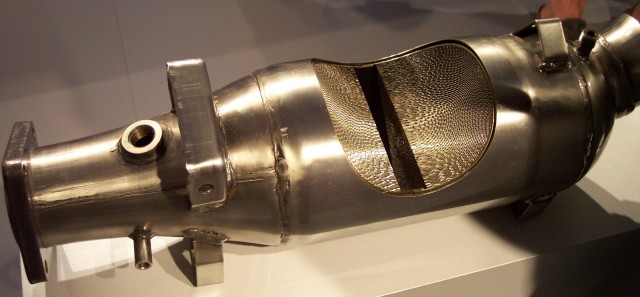


How it works and main parts
Inside a catalytic converter is a substrate—typically a ceramic or metal honeycomb—that provides a large surface area. The substrate is coated with a porous "washcoat" that helps disperse tiny amounts of precious metals, which act as catalysts. Common catalytic metals include platinum, palladium and rhodium. These materials speed up chemical reactions without being consumed.
The converter promotes reactions that change pollutant molecules. In three-way converters, which are widely used on gasoline engines, the device simultaneously reduces nitrogen oxides and oxidizes carbon monoxide and unburned hydrocarbons. Two-way or oxidation catalysts—used on some diesel engines—focus mainly on oxidizing carbon monoxide and hydrocarbons.
Pollutants transformed
A catalytic converter targets primary tailpipe pollutants such as carbon monoxide, unburned hydrocarbons (components of smog) and nitrogen oxides (contributors to ozone and acid deposition). Through reduction and oxidation reactions these are converted mainly to carbon dioxide, water and nitrogen, which are less directly harmful to breathe at normal concentrations.
History and development
Catalytic converters became widespread after stronger air-quality regulations were introduced in the mid-20th century. Their adoption was driven by legislation and emissions testing that required automakers to limit the amounts of CO, hydrocarbons and NOx from new vehicles. Over time the designs improved to increase durability, reduce light-off temperature and cope with varied fuels and engine controls.
Practical considerations and impacts
- Effectiveness depends on temperature: converters need to reach a certain operating temperature to work efficiently.
- They are sensitive to contamination: leaded gasoline, certain additives or engine oil can "poison" the catalyst and reduce performance.
- The precious metals inside are valuable, which has led to theft and recycling markets for used converters.
While converters greatly reduce local air pollutants that harm human health and urban air quality, they convert some emissions into carbon dioxide, a greenhouse gas. Therefore catalytic converters address acute health-related emissions but are only one part of broader efforts to lower vehicle contributions to climate change. Modern strategies combine advanced catalysts with improved engine management, alternative fuels, electrification and filters or selective catalytic reduction systems for diesel NOx control.
Maintenance, regulation and notable facts
Maintaining the engine, using recommended fuels and addressing misfires will extend converter life. Tampering with or removing emissions controls is illegal in many jurisdictions and can cause vehicles to fail inspections. For further technical details and regulatory context, see manufacturer guidance and emissions regulations published by relevant agencies (platinum info, palladium info, rhodium info). Additional technical and environmental resources can be found through authoritative sources carbon monoxide, hydrocarbons, nitrogen oxides and material-specific pages on carbon dioxide, water and nitrogen.
Related articles
Author
AlegsaOnline.com Catalytic converter Leandro Alegsa
URL: https://en.alegsaonline.com/art/17579