
Pika — small lagomorphs of cold rocky habitats
Pikas are small, rabbit-like mammals (family Ochotonidae) adapted to cold, rocky environments. They collect haypiles, do not hibernate, and serve as climate-change indicators across Asia, North America and parts of Europe.
Overview: A pika is a small, compact mammal related to hares and rabbits. The group belongs to the family Ochotonidae within the order Lagomorpha. Pikas are often called rock rabbits or coneys because of their rounded bodies, short limbs, upright rounded ears and lack of an external tail. For a general reference to their mammalian biology see mammal, and for close relatives see hare and rabbit.
Image gallery
10 Images


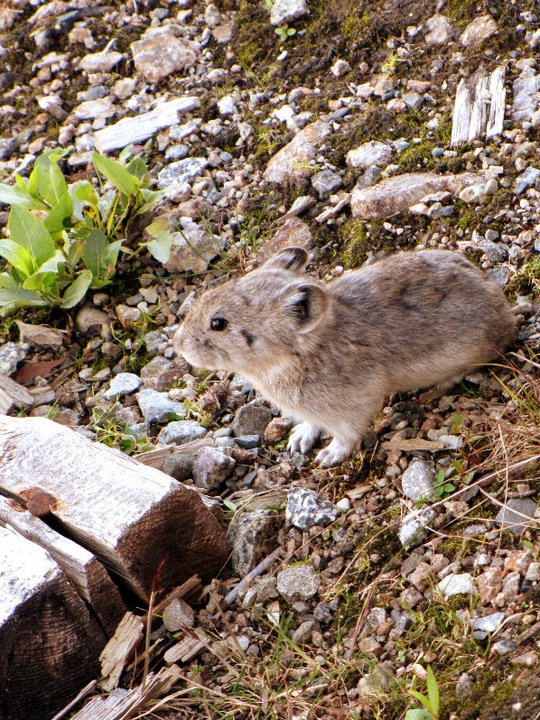

Characteristics
Pikas are small and stocky with dense fur that insulates them in cold climates. There are roughly a few dozen recognized species; estimates vary among authorities — see species accounts at species lists. Most species inhabit rocky slopes and talus fields where crevices provide shelter and lookout points; detailed habitat notes appear at rocky habitat. They are highly adapted to cool conditions and are sensitive to heat: prolonged exposure to unusually warm temperatures can be lethal for some populations.
Behavior and ecology
Pikas are primarily diurnal or crepuscular, active by day and around twilight (diurnal/crepuscular). Unlike many small mammals, pikas do not hibernate (non-hibernating), so they harvest and store vegetation during the growing season. These "haypiles" are often dried and cached for winter use (hay-gathering). Their diet is herbivorous and includes a range of alpine plants such as grasses (grasses), sedges (sedges), mosses (moss) and lichens (lichens); general dietary summaries are available at herbivores.
Social structure and distribution
Geographically pikas occur across parts of Asia (Asia), North America (North America) and some eastern European regions (Eastern Europe). Eurasian species often form family groups that cooperate in foraging and vigilance (Eurasian sociality), whereas many North American species are more solitary outside the breeding season. Territorial behavior and social systems differ between species.
Predators, threats and conservation
Natural predators include small carnivores and raptors; for example, mustelids such as ferrets and related species prey on pikas (ferret-type predators), and large birds use hunting opportunities when pikas are distracted. Human-driven climate warming is a major conservation concern because pikas require cool microclimates; shifts in temperature and habitat reduce available refuges. Conservation assessments and regional accounts are summarized in specialist databases (species lists).
Cultural notes and notable facts
Pikas appear in folklore and popular culture. A famous modern cultural reference is the Pokémon character Pikachu, which was inspired in part by small, rodent-like and rabbit-like animals, including the pika (Pikachu inspiration). Field researchers study pikas as sentinel species because their sensitivity to heat and restricted alpine distributions make them useful indicators of ecological response to climate change.
- See field guides for regional species details: Asia, North America, Eastern Europe.
- Behavioral notes and seasonal activities: activity patterns, non-hibernation, haypiles.
- Dietary resources: grasses, sedges, moss, lichens.
- Further reading and species lists: taxonomic overview, general mammal reference.
Researchers and conservationists continue to monitor pika populations because of their ecological role and vulnerability; for up-to-date regional information consult specialist resources and conservation organizations (species lists, Eurasian accounts, Asian resources, North American resources). For accessible introductions aimed at the public, see outreach and media pages linked above (rabbit relatives, hare relatives, predator notes).
Related articles
Author
AlegsaOnline.com Pika — small lagomorphs of cold rocky habitats Leandro Alegsa
URL: https://en.alegsaonline.com/art/76885
Sources
- bucknell.edu : Mammal Species of the World
- species.wikimedia.org : Ochotona