
Hare (Lepus): biology, behavior, and relationship to humans
Hares (genus Lepus) are fast, long‑eared mammals in the family Leporidae. This article explains their anatomy, life cycle, habitat, diet, differences from rabbits, and interactions with people.
Overview — A hare (genus Lepus) is a warm‑blooded mammal first placed in the order Lagomorpha and the family Leporidae. As with many short encyclopedia entries, hares are often compared with the closely related rabbit, but they form a distinct group. In general hares are larger, have longer hind legs and ears tipped with dark fur, and occupy open habitats such as grassland, steppe and tundra.
Image gallery
10 Images




Physical characteristics
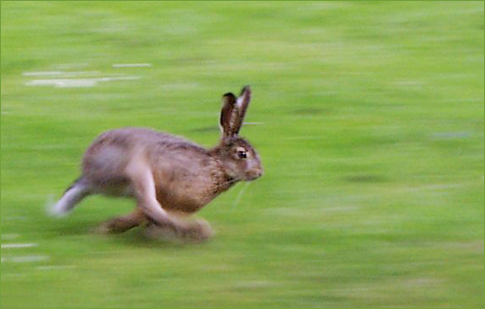
Hares have a lean, aerodynamic build: long hind limbs for powerful bounding, large eyes set to watch for predators, and ears that help with heat loss and acute hearing. Their coat color varies seasonally in some species (for example, Arctic hares may turn white in winter). Adult sizes vary by species, but in all cases hares are adapted for speed and endurance, traits that help them escape foxes, raptors and other predators.
Behavior, diet and life cycle
Most hares are solitary or form loose pair bonds rather than living in tight social warrens. They feed mainly on vegetation: grasses, shoots, buds, bark and other herbaceous material. Typical food items include cultivated vegetables and leafy plants; they are commonly observed grazing on grass and browsing on leafy weeds. Like other lagomorphs, hares practice selective feeding and may reingest nutrient‑rich droppings (cecotrophy) to extract more nutrition.
Reproduction differs from rabbits: hare young — called leverets — are born fully furred and with open eyes (precocial), ready to move shortly after birth. Females prepare shallow depressions in the ground called forms rather than digging burrows. Hares can produce several litters per year in favorable conditions and are known for rapid growth rates in the young.
Speed, species and examples
Speed is a notable trait: some species can reach high sprint velocities. For instance, the European brown hare (Lepus europaeus) has been reported to run at speeds up to about 56 km/h (35 mph), while several North American jackrabbits (a common name for some Lepus species) have been recorded at speeds approaching 64 km/h (40 mph) and are capable of long leaps. Commonly encountered species include:
- Lepus europaeus — European brown hare
- Lepus timidus — mountain or tundra hare
- Lepus arcticus — Arctic hare
- North American jackrabbit species (various Lepus spp.)
Human interactions and conservation
Hares have long been hunted for food and fur and appear frequently in folklore, sport and art. Cultural meanings vary — in some traditions hares symbolize fertility or cleverness. From a conservation perspective, population trends differ by species and region: a few species remain common and adaptable, while others have declined locally because of habitat loss, agricultural intensification, predation pressure and disease. Management and hunting regulations are used in many areas to balance human use with preservation.
Distinguishing hares from rabbits
Key differences include reproductive strategy (precocial leverets versus altricial rabbit kittens), nesting (forms above ground versus burrows or warrens), and generally larger size with longer ears and legs in hares. The term "jackrabbit" is popular in North America but refers to hares rather than true rabbits. For further general taxonomy and identification details see broader treatments of mammals (mammal) and lagomorph biology (Lagomorpha).
For more reading on feeding ecology and habitat, consult introductory field guides and regional species accounts that cover forage preferences and seasonal behaviour; many resources also discuss how agricultural practices influence hare populations and distribution. Additional practical notes about foraging and garden interactions can be found in literature addressing pest management and wildlife gardening.
Questions and answers
Q: What is a hare?
A: A hare is a mammal of the order Lagomorpha, in the same family as the rabbit. They are larger than rabbits and have black tipped ears.
Q: What is the diet of a hare?
A: Their diet resembles what rabbits eat; they eat rutabaga and lettuce. They graze on grass and leafy weeds.
Q: How fast can a European brown hare run?
A: The European brown hare can run at speeds up to 56 km/h (35 mph).
Q: How fast can jackrabbits run?
A: The five species of jackrabbit found in central and western North America can run at 64 km/h (40 mph).
Q: Can jackrabbits leap?
A: Yes, jackrabbits can leap up to 3m (ten feet) at a time.
Q: Do hares live alone or in groups?
A: Hares live solitarily or in pairs; a "drove" is the name for a group of hares.
Q: What family do hares belong to?
A: Hares belong to the same family as rabbits, the order Lagomorpha.
Related articles
Author
AlegsaOnline.com Hare (Lepus): biology, behavior, and relationship to humans Leandro Alegsa
URL: https://en.alegsaonline.com/art/42438
Sources
- animaldiversity.ummz.umich.edu : "Lepus europaeus: European hare"
- animals.nationalgeographic.com : "Jackrabbits, jackrabbit pictures, jackrabbit facts - National Geographic"
- sebastien.devillard.perso.sfr.fr : "Natal dispersal of European hare in France"
- doi.org : 10.1111/j.1469-7998.2007.00348.x
- doi.org : 10.1038/309549a0
- pubmed.ncbi.nlm.nih.gov : 6539424
- zoology.ubc.ca : zoology.ubc.ca/~krebs/ecological_rants/the-snowshoe-hare-10-year-cycle-a-cautionary-tale/