
Ferret: domestic mustelid (Mustela putorius furo) — traits, history and care
Comprehensive primer on the domestic ferret: biology, appearance, behaviour, origins, care essentials, common health issues, and how they differ from wild polecats.
Overview
The ferret (Mustela putorius furo) is the domesticated form of the European polecat and a member of the weasel family. As a domestic animal, it has been kept by people for centuries for hunting small game and, more recently, as a companion. Ferrets are long-bodied, carnivorous mammals prized for their curious, playful nature and agility.
Image gallery
10 Images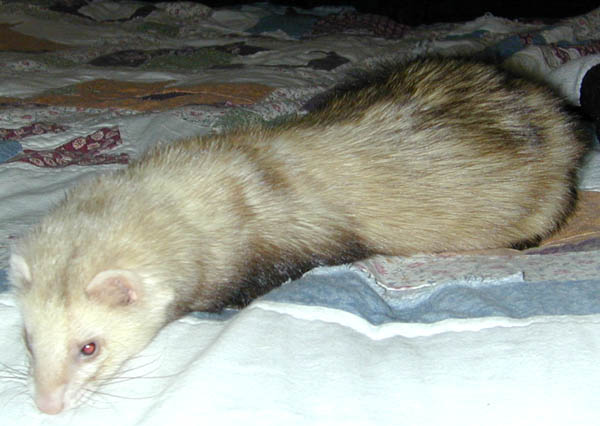





Physical characteristics
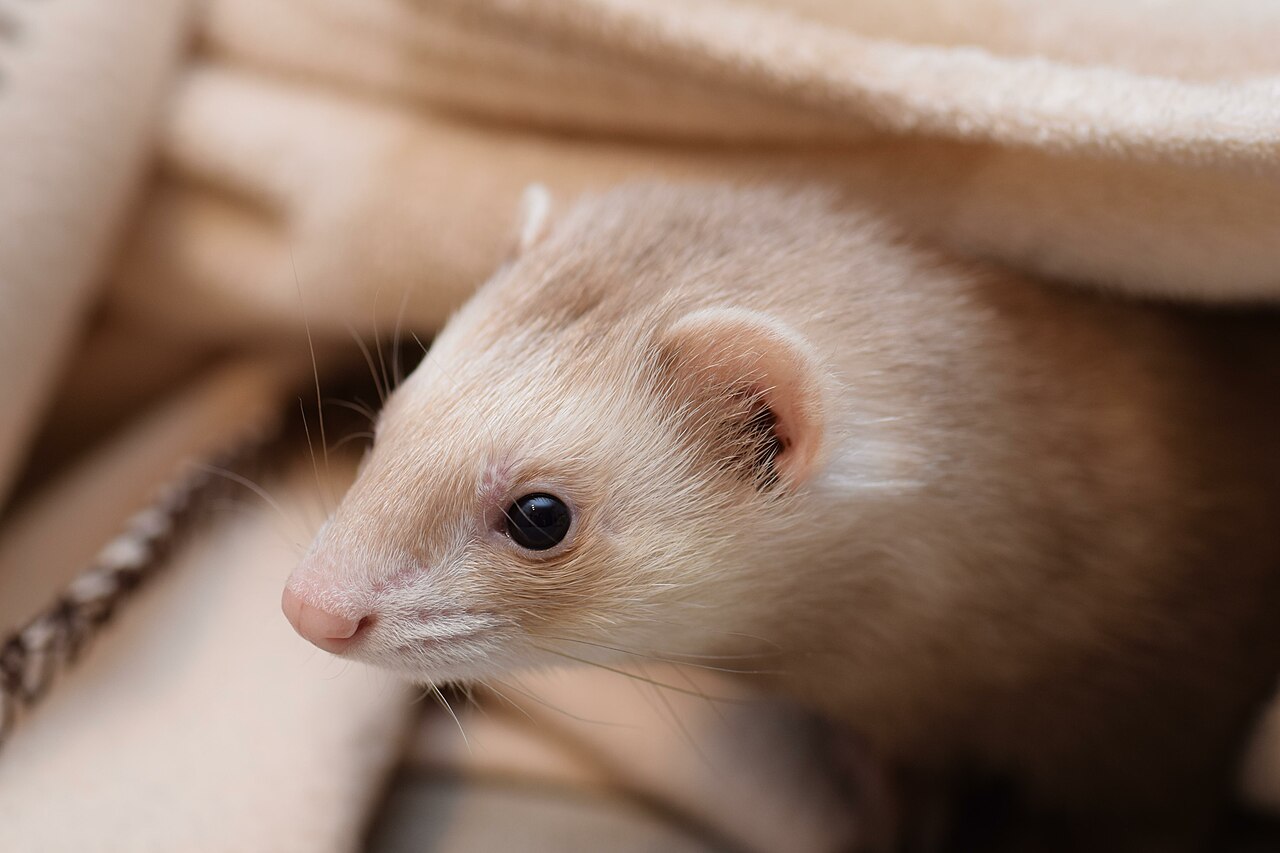
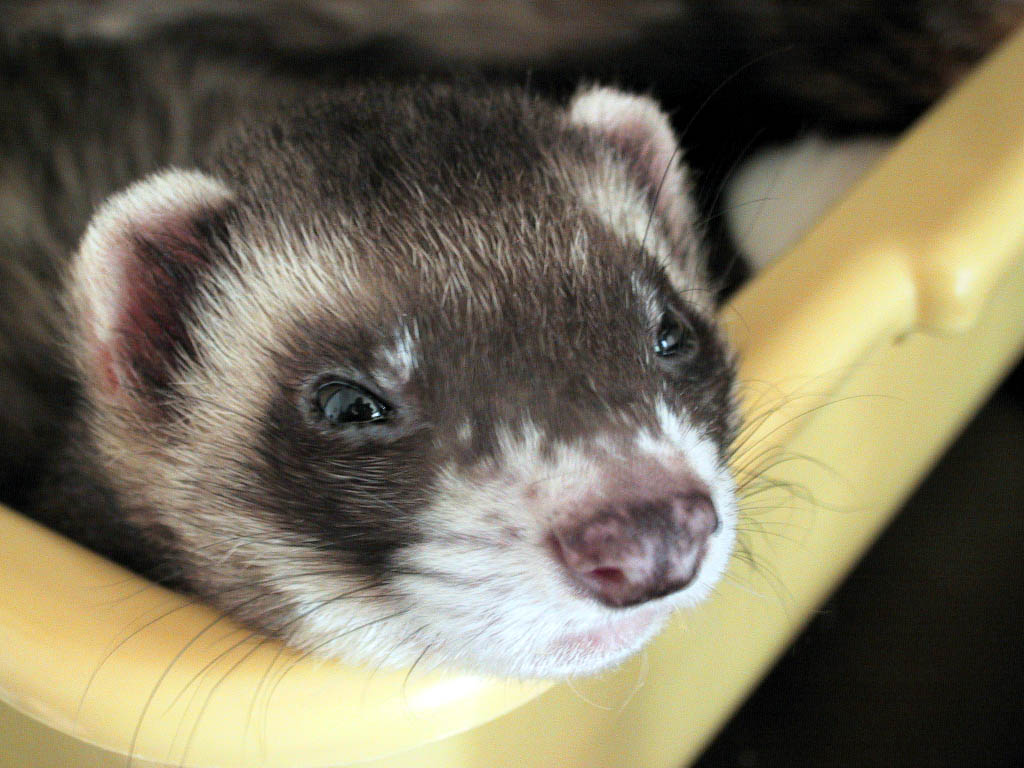
Adult ferrets typically measure around 35–50 cm in total length including the tail and weigh in a range that varies by sex and lineage; males are generally larger than females. Their bodies are slender with short legs, a pointed snout and sharp teeth adapted for a meat-based diet. Coat patterns and colours vary widely — common types include sable, albino, chocolate and silver — and markings may resemble those of wild polecats. Ferrets have scent glands and natural oils that give them a distinct musky odor.
Behaviour and social needs
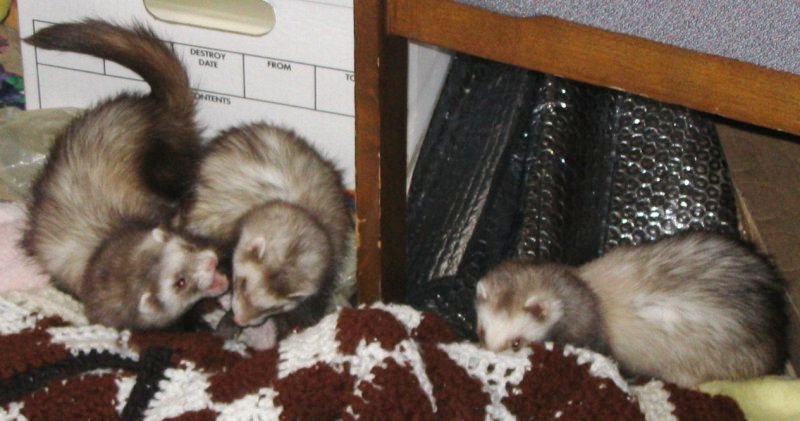
Ferrets are social, inquisitive and often active during dawn and dusk. They tend to do well in pairs or small groups and enjoy interactive play, tunnelling and hiding. Social behaviour can include a range of vocalizations and a characteristic playful leap. Their hunting instincts are strong; historically they were used for flushing rabbits and other burrowing animals in a practice called "ferreting." Domesticated ferrets retain many instinctive behaviours of their wild relatives, the European polecat.
Care essentials
- Diet: obligate carnivores that require a high-protein, high-fat diet formulated for ferrets or carnivores.
- Housing: a secure, multi-level enclosure with bedding, hiding places and supervised out-of-cage time for exercise.
- Enrichment: tunnels, toys, and safe digging or hiding opportunities to satisfy exploratory instincts.
- Companionship: many ferrets thrive with another ferret to play and rest with, reducing boredom and stress.
Health, reproduction and lifespan
Typical lifespans for well-cared-for ferrets are around 6–10 years, though this varies. Common health concerns include adrenal gland disease, insulinoma and dental problems; routine veterinary care and awareness of symptoms are important. Breeding produces litters of kits; responsible breeding and spaying/neutering are commonly recommended to reduce health and behavioural issues.
History, taxonomy and distinctions
Domestication of ferrets likely dates back several thousand years, with use primarily for pest control and hunting. Taxonomically they belong to a genus within the Mustelidae family. For context, see the general weasel grouping in the weasel genus and classifications linked to genus Mustela and the Mustelidae family. Though ferrets resemble wild polecats, they are distinct in behaviour and appearance due to selective breeding; in many regions hybrids or escapes can complicate local wildlife interactions.
Legal status and ownership rules for ferrets vary by jurisdiction; prospective owners should check local regulations and consult experienced veterinarians or breeders when considering a ferret as a pet.
Questions and answers
Q: What are ferrets?
A: Ferrets are domestic animals and the domestic form of the European polecat, in the weasel genus of the family Mustelidae.
Q: How long are ferrets and what is their weight?
A: Ferrets have an average length of 20 inches (51 cm) including a 5-inch (13 cm) tail, weigh about 1.5–4 pounds (0.7–2 kg).
Q: How long do ferrets usually live?
A: Ferrets usually live for about 7–10 years.
Q: Are male or female ferrets larger?
A: Males are larger than females.
Q: Are ferrets sociable animals and how are they usually kept?
A: Yes, ferrets are sociable animals, and are usually kept in groups of two or more.
Q: What do ferrets look like?
A: With their long thin body, ferrets look like a large weasel. They may have different colours and markings on their fur.
Q: Why do a lot of ferrets in one place sometimes have a strange smell?
A: This is caused by natural oils produced by the ferrets.
Related articles
Author
AlegsaOnline.com Ferret: domestic mustelid (Mustela putorius furo) — traits, history and care Leandro Alegsa
URL: https://en.alegsaonline.com/art/34081
Sources
- species.wikimedia.org : Mustela putorius furo · web.archive.org