
Pine marten (Martes martes)
The pine marten is a small, mainly arboreal mustelid of northern and western Europe. This article covers identification, behavior, diet, habitat, conservation and human interactions.
Overview
The pine marten (Martes martes) is a slender, tree‑adapted mammal in the mustelid family, a group that includes weasels, otters, badgers and wolverines. Widely distributed across many parts of Europe, it is known for its agile climbing, nocturnal and crepuscular activity, and a distinctive pale or creamy throat patch. The species is generally solitary and occupies territories that it marks and defends.
Image gallery
7 Images




Physical characteristics and behaviour
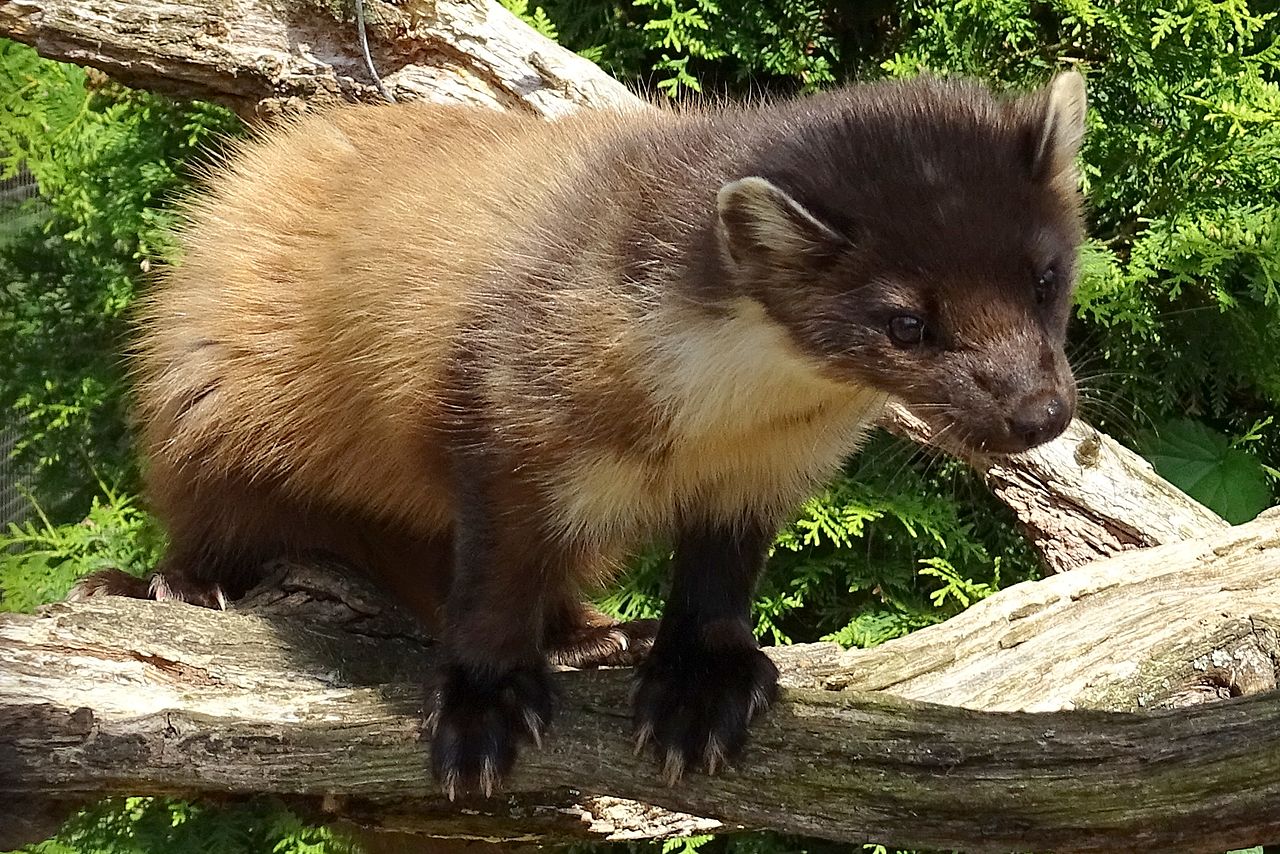
Pine martens have a lithe body, a bushy tail and semi‑retractable claws well suited for moving among branches. Fur colour ranges from chocolate brown to tawny, often with a lighter chest bib. They are opportunistic predators and effective climbers, spending much time above ground. Pine martens communicate with scent marking, vocalisations and by using dens in tree cavities or rocky crevices.
Diet and ecological role
As omnivores, pine martens feed on a varied mix of animal and plant foods. Their diet typically includes small mammals, birds and their eggs, insects and carrion; they also take fruit, nuts, berries and honey. Because of this variety, they play several ecological roles: controlling rodent populations, dispersing seeds when they eat fruit, and scavenging carcasses. For more on diet, see further information.
Range, habitat and shelter
Pine martens are most closely associated with woodland habitats, especially mature conifer and mixed forests where there is a complex structure of trees and understory. They use tree cavities, abandoned bird nests and rock crevices for sleeping and raising young. Their historical and present distribution varies by region; where forest cover has been reduced, local populations can retreat to remnant woodlands, hedgerows and gorges. For regional habitat guidance see range and habitat notes and examples of preferred pine forest environments.
History, human interactions and conservation
Historically, pine martens were valued for their fur and were persecuted where they were blamed for predating game birds. In some upland areas they were targeted by gamekeepers and other persecutors, which reduced local numbers; modern conservation often addresses that legacy. In certain regions, legal protection and reintroduction efforts have helped populations recover. Conflicts and protections vary by country — for example, disputes with land managers have been recorded on highland estates, while policies and regulation in the United Kingdom have sought to reduce harm from historic persecution; references to the law include Wildlife and Countryside Act 1981 and other measures. Some aspects of human–marten interaction are discussed in land management guidance and wildlife protection material such as historical accounts.
Importance and notable facts
- Ecosystem services: Pine martens help regulate small mammal populations and assist seed dispersal when they consume fruit.
- Behavioural notes: They are excellent climbers and may travel through woodland canopies as readily as along the ground.
- Conservation status: Although locally threatened in places by habitat loss and persecution, the species remains present across much of its former range and is the subject of conservation and monitoring programmes.
Pine martens remain an emblematic woodland carnivore of Europe: adaptable, secretive and influential in the structure of forest food webs. Their recovery and continued presence are often used as indicators of healthy, well‑connected forest habitats.
Questions and answers
Q: What is a pine marten?
A: The pine marten is a small predator that is native to Northern Europe and belongs in the mustelid family.
Q: What are some alternative names for the pine marten?
A: Some alternative names for the pine marten are European pine marten, baum marten, and sweet marten.
Q: What do martens eat?
A: Martens are predators that eat a variety of foods, including berries, birds' eggs, nuts, and honey.
Q: Where do pine martens live?
A: Pine martens live in pine forests and can move on the ground and in trees.
Q: Who are the main enemies of pine martens?
A: The main enemies of pine martens are gamekeepers on highland estates.
Q: Does the pine marten have any legal protection in the UK?
A: Yes, pine martens and their dens have protection under the Wildlife and Countryside Act 1981 and the Environmental Protection Act 1990 in the United Kingdom.
Q: What other animals are in the mustelid family?
A: Other animals in the mustelid family include mink, otter, badger, wolverine, and weasel.
Related articles
Author
AlegsaOnline.com Pine marten (Martes martes) Leandro Alegsa
URL: https://en.alegsaonline.com/art/76963
Sources
- collinsdictionary.com : "definition of 'baum marten'"
- collinsdictionary.com : "Definition of 'sweet marten'"
- iucnredlist.org : "Martes martes"
- doi.org : 10.2305/IUCN.UK.2016-1.RLTS.T12848A45199169.en
- arkive.org : "Pine marten (Martes martes)"