
Pharaoh: Rulers of Ancient Egypt, Their Role, Symbols and Legacy
Pharaohs were the monarchs of ancient Egypt, regarded as divine or semi-divine rulers. This article explains their titles, religious function, crowns and regalia, dynastic history, tombs, and lasting legacy.
Overview
The term pharaoh refers to the monarchs of ancient Egypt who combined political authority with religious significance. The English word derives from the Egyptian phrase for the royal household, via the Coptic Coptic form per-ʼaa, often rendered in modern sources as "great house" and reflected in later Greek and Arabic usages; see also linguistic roots. Pharaohs were commonly regarded by their contemporaries as appointed by, descended from or identified with deities, and they acted as intermediaries between the gods and the people.
Image gallery
10 Images


Political and religious role
As heads of state, pharaohs exercised supreme control over administration, law, taxation, military command and major building projects. At the same time, they performed essential religious duties: ritual offerings, temple patronage, and ceremonies intended to maintain divine order (ma'at). Early Egyptian rulers were associated with certain gods—most prominently the falcon god Horus in life and the sun god Re (or Ra) in some royal cults—and were sometimes styled as living gods or divine representatives. The precise balance between political power and religious authority varied over time and between individuals; a few female rulers assumed full pharaonic titles and functions.
Crowns, symbols and court
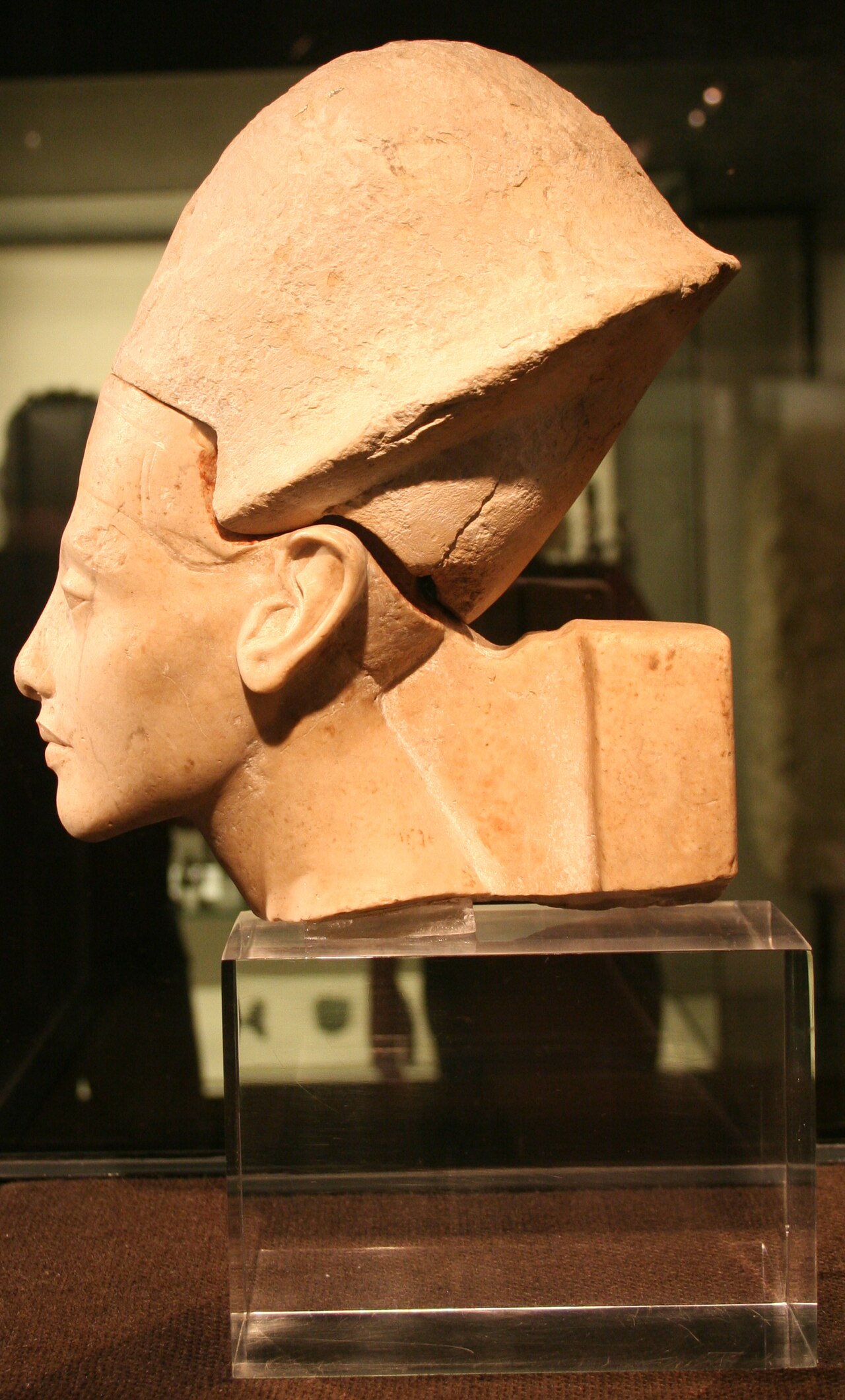
The visual language of kingship included distinctive crowns and regalia that conveyed territorial claims and sacred status. Before unification, rulers of Upper and Lower regions used different crowns: the tall white crown for Upper Egypt and the red crown for Lower Egypt. When a single ruler claimed both lands he wore the double crown, known as the Pschent, combining the two. Other royal insignia—such as the crook and flail, the nemes headcloth, the royal beard and the rearing cobra (uraeus)—served as potent emblems of authority and protection. Royal wives, princes and high officials each had prescribed roles; although pharaohs could have multiple wives and children, only one Great Royal Wife typically held the ceremonial status of queen.
Origins, dynasties and chronology
The Nile Valley fostered sustained human settlement for many millennia. The political entity recognized as ancient Egypt emerged after processes of state formation that culminated in the unification of Upper and Lower Egypt under a single ruler in the early dynastic period around the end of the fourth millennium BCE; archaeological traditions often identify an early ruler—commonly named Narmer or Menes—as the first unifier. Egyptological study traditionally organizes rulers into a sequence of dynasties—roughly thirty or so families or ruling houses—based on continuity, titulary and other evidence. Gaps, overlaps and regional rivalries produced periods when more than one dynasty held power simultaneously, and fragmentary records mean the lists of rulers and precise chronologies remain subjects of active research and revision. Ancient legends and king lists preserved in later sources help scholars but must be weighed against archaeological data; see discussions of early mythic traditions and king lists here.
Tombs, monuments and sources
Pharaohs invested enormous resources in monumental architecture and funerary complexes intended to secure their memory and afterlife. In the Old Kingdom the royal necropolises took the form of massive stone pyramids and associated mortuary temples; the best-known examples are the pyramids of Giza. In later eras, especially the New Kingdom, royal burials shifted to more concealed tombs in the Valley of the Kings and other protected sites to deter theft. Tombs and temples provide most of the written records of pharaonic ideology: inscriptions, religious texts, administrative documents, and wall paintings. These materials, along with archaeological finds, inform our understanding of daily life, statecraft and belief. Many smaller tombs, artifacts and inscriptions continue to be discovered, refining the historical narrative and occasionally revealing previously unknown rulers or regional dynasts; such discoveries demonstrate that the picture of pharaonic history is still evolving.
Distinctive features and notable examples
- Divine association: Pharaohs were commonly linked to deities such as Horus and later to solar deities, underscoring a hybrid religious-political identity.
- Regalia and iconography: Crowns, scepters and symbolic animals made royal power visually distinct; regalia signaled territory and sacred role.
- Monumental patronage: Major building programs—pyramids, temples, canals and fortifications—were instruments of policy and piety.
- Dynastic complexity: The sequence of rulers is divided into dynasties and interspersed with periods of fragmentation and foreign rule; scholarly lists utilize archaeological and textual sources together.
- Women in power: Although most pharaohs were men, some women assumed pharaonic authority or exercised comparable influence; famous names associated with royal power include Cleopatra and other prominent queens, while the individual identities and status of certain figures can be debated.
For general introductory material on the civilization that produced pharaohs, see resources on ancient Egypt, the broader Nile environment and its archaeology, and regional distinctions like Upper Egypt and Lower Egypt. Further reading often addresses the linguistic and cultural sources of royal vocabulary (for example, the term per-ʼaa and its later usage), the complex transmission of king lists and traditions, and continuing archaeological work that reshapes our understanding of who the pharaohs were and how they governed. For compact summaries of burial practice and tomb types see entries on royal tombs and the monumental pyramids.
Pharaohs remain central symbols of ancient Egyptian civilization: they embodied a unique fusion of sacred kingship, administrative authority and monumental ambition that shaped Egypt's art, religion and historical memory for three millennia.
Related articles
Author
AlegsaOnline.com Pharaoh: Rulers of Ancient Egypt, Their Role, Symbols and Legacy Leandro Alegsa
URL: https://en.alegsaonline.com/art/76339
Sources
- theconversation.com : "What the new pharaoh tells us about ancient Egypt"