
Plague of Athens (430–427 BC)
Major epidemic that struck Athens early in the Peloponnesian War, described by Thucydides; cause remains debated though modern analyses have suggested several candidates.
Overview
The Plague of Athens was a catastrophic epidemic that struck the city-state of Athens during the early years of the Peloponnesian War (430–427 BC). Contemporary accounts describe abrupt onset, rapid spread, and high mortality that overwhelmed public institutions and private life. The primary ancient narrative comes from the historian Thucydides, an eyewitness who recorded symptoms, social effects, and the sequence of the disease's appearance.
Image gallery
4 Images

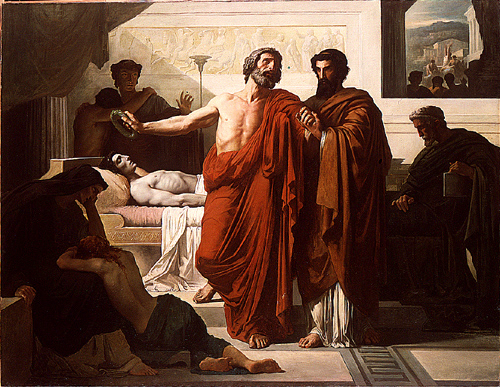

Spread and timeline
The disease first appeared during the second year of the war, when many rural inhabitants had been relocated within the city walls for protection, producing crowded and unsanitary urban conditions. Many scholars believe the infection entered Athens through its port at Piraeus, the vital conduit for food and supplies, and that it also affected allied cities and some parts of the eastern Mediterranean. The epidemic recurred in subsequent years and produced waves of sickness before eventually subsiding.
Symptoms, mortality, and contemporary response
Thucydides gives a detailed clinical description of symptoms and progression, which has guided later attempts to identify the pathogen. Reported signs included fever, delirium, skin lesions, and internal distress, followed by rapid death in many cases. The surge in fatalities destabilized civic functions, weakened military command (Pericles died during the outbreak), and provoked social and religious unrest. Public health measures were limited; isolation and flight from the city were common responses.
Identification and modern study
Scholars have proposed multiple candidates for the disease, such as typhus, typhoid fever, smallpox, and other infectious agents. In recent decades, multidisciplinary studies—combining textual analysis, archaeology, and ancient DNA—have offered suggestive but not definitive evidence; some ancient grave material has been tested for Salmonella and other organisms. Consensus remains elusive, and researchers continue to debate likely causes and routes of transmission.
Impact and legacy
The epidemic had enduring effects on Athenian society and the course of the war: it reduced the population, undermined leadership, and altered political dynamics. Historians use the episode to study ancient urban vulnerability, the social consequences of mass mortality, and the challenges of reconstructing disease history from fragmentary sources. For further synthesis and primary translations see ancient sources, modern overviews at academic summaries, archaeological reports at site studies, and molecular investigations at scientific reviews.
Key facts
- Primary contemporary witness: Thucydides (his account).
- Likely entry point: the port of Piraeus (harbor role).
- Political consequences: death of leaders and civic disruption (effects on Athens).
- Ongoing research: biological and historical analyses (modern studies).
The Plague of Athens remains an important case study for historians, epidemiologists, and archaeologists exploring how disease can reshape societies and the limits of interpreting ancient medical descriptions.
Related articles
Author
AlegsaOnline.com Plague of Athens (430–427 BC) Leandro Alegsa
URL: https://en.alegsaonline.com/art/77205