
Horus: Egyptian sky god, myth of the eye, and royal symbol
Horus is an ancient Egyptian deity associated with the sky, kingship, and protection. This article summarizes his origins, key myths (including the Eye of Horus), worship, iconography, and cultural legacy.
Overview
Horus is one of the best-known deities of ancient Egypt, traditionally associated with the sky, the sun and moon, and the institution of kingship. In myth he is commonly described as the son of the goddess Isis and the god Osiris. Hesitations in ancient sources led to multiple local forms and overlapping identities for Horus across millennia.
Image gallery
10 Images


Names, forms and characteristics
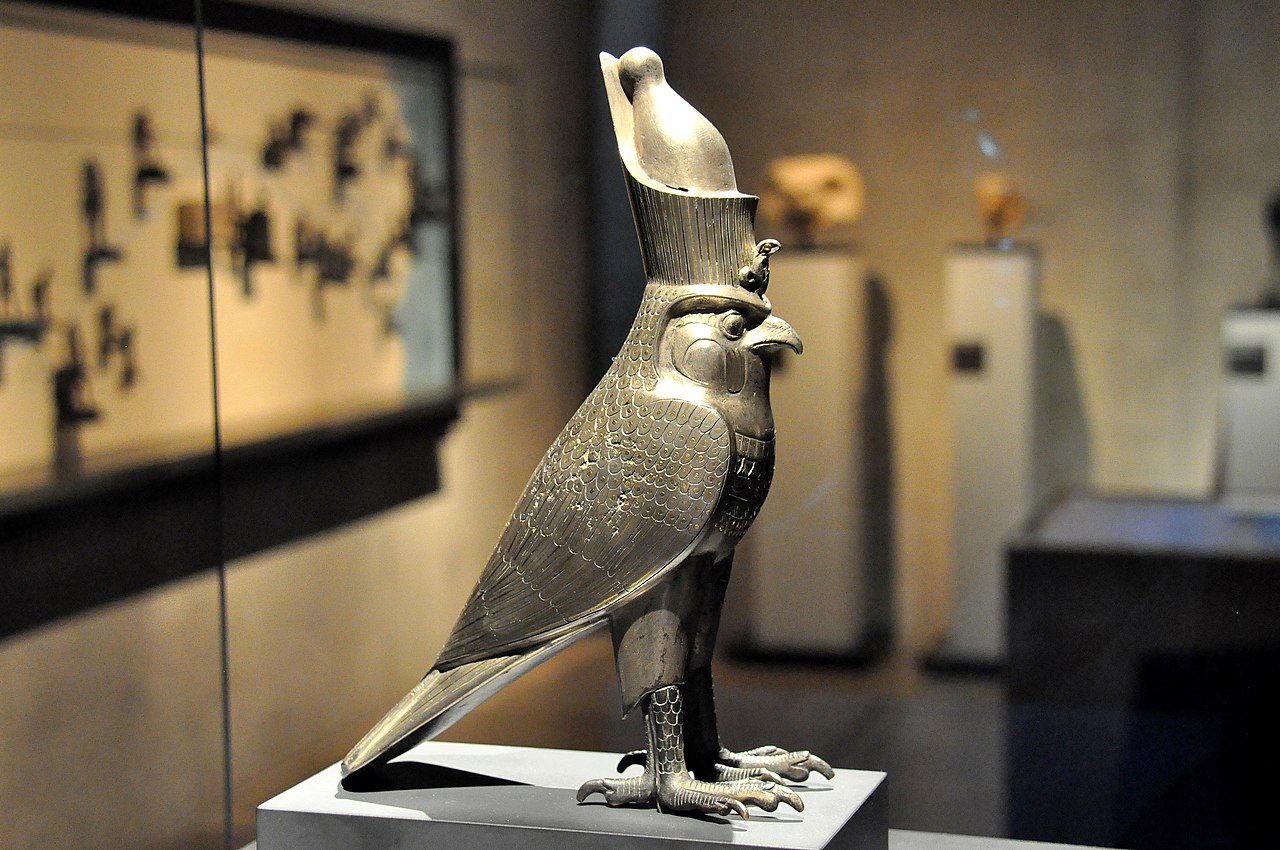
Horus appears in several distinct forms. As Horus the Elder he is a primordial sky god; as Horus, son of Isis, he is the avenger of his father and a symbol of rightful rule. He is commonly depicted as a falcon or as a man with a falcon head, and is often associated with the sun and the moon—sometimes called the right and left eyes of Horus.
Myth: rivalry, restoration, and the Eye
One of the central narratives describes Horus’s conflict with his uncle Set, who murdered Osiris and contested the throne. In episodes of this struggle Horus loses one of his eyes; that eye is then healed or restored by other deities. The symbol known as the Eye of Horus (wadjet) became a powerful amulet representing protection, healing and wholeness. Some myths say the tears or actions surrounding the eye’s loss and restoration explain the origins of humankind and certain natural phenomena, though versions vary by period and region.
Worship, kingship, and ritual importance
Horus had temples and cults throughout Egypt. Pharaohs were regularly identified with Horus in royal titulary and art, presenting the king as the living embodiment of Horus on earth and defender of maat (cosmic order). Rituals invoking Horus emphasized protection, legitimacy, and the continuity of royal power. Large temple complexes and smaller chapel shrines both honored him.
Iconography and legacy
Iconographic elements tied to Horus include the falcon, the double crown (when shown as a ruler), and the stylized Eye of Horus used in jewelry, amulets and funerary contexts. The symbol had practical and symbolic uses—from measurement and mathematics in ancient texts to modern recognition as an emblem of Egyptian art and spirituality. Horus’s influence extended beyond religious practice into state ideology and popular devotion within ancient Egyptian civilization.
Notable distinctions and further reading
- Different local traditions produced distinct Horus figures—Horus Behdety, Horus the Child, and others—each with specific attributes and myths.
- The story of Horus and Set survives in fragments across inscriptions, temple reliefs and later classical summaries; details vary by source and period.
- For introductions to primary texts and museum collections consult specialized resources on Egyptian religion and pharaonic kingship (kingship studies).
Horus remains a central subject for understanding ancient Egyptian religion, royal ideology and artistic symbolism. For curated examples and academic overviews, see museum catalogues and standard surveys of Egyptian myth and iconography (Set and related myths, Isis traditions). Additional online and print resources provide more detailed accounts of regional cults and archaeological finds (Osiris links, the Eye of Horus).
Questions and answers
Q: Who was Horus?
A: Horus was the Egyptian god of the Sky, and the son of Isis and Osiris.
Q: Why did Horus lose his eye?
A: Horus lost his eye during a fight with his uncle, Set.
Q: What is the Eye of Horus?
A: The Eye of Horus is one of the most important symbols in ancient Egypt and Egyptian civilization.
Q: What happened when Horus lost his eye?
A: When Horus lost his eye, his eye set out on a journey of its own.
Q: What did the other Gods try to do when the Eye of Horus began to cry?
A: When the other Gods tried to catch the eye of Horus, his eye began to cry.
Q: What did the tears of the Eye of Horus become, according to Egyptian belief?
A: In Egyptian belief, the tears of the Eye of Horus became the first people of Egypt.
Q: How did Horus become the king of Egypt?
A: After fighting his uncle, Set, Horus became the king of Egypt.
Related articles
Author
AlegsaOnline.com Horus: Egyptian sky god, myth of the eye, and royal symbol Leandro Alegsa
URL: https://en.alegsaonline.com/art/45185