
Giza Necropolis (Giza pyramid complex)
Ancient funerary complex on the Giza Plateau near Cairo, Egypt, containing the three great pyramids, the Sphinx, temples and cemeteries; a focal point of Egyptology and world heritage.
The Giza Necropolis, commonly called the Giza pyramid complex, is a monumental funerary landscape on the Giza Plateau near the modern city of Cairo in Egypt. It sits a short distance inland from the Nile and the ancient town of Giza, roughly five miles from the river. The site includes some of the most famous ancient structures in the world and remains central to study of the Old Kingdom and ancient Egyptian funerary practices.
Image gallery
10 Images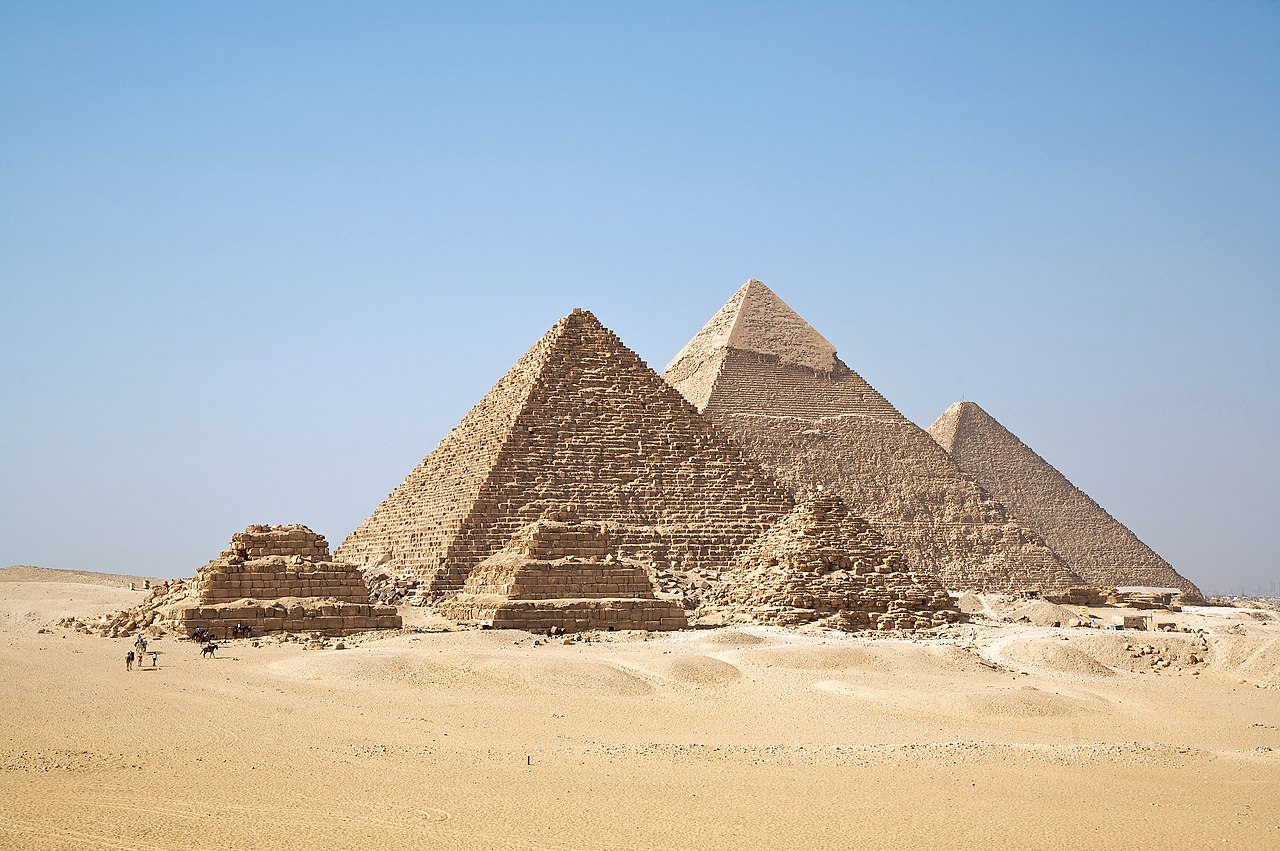




Main components
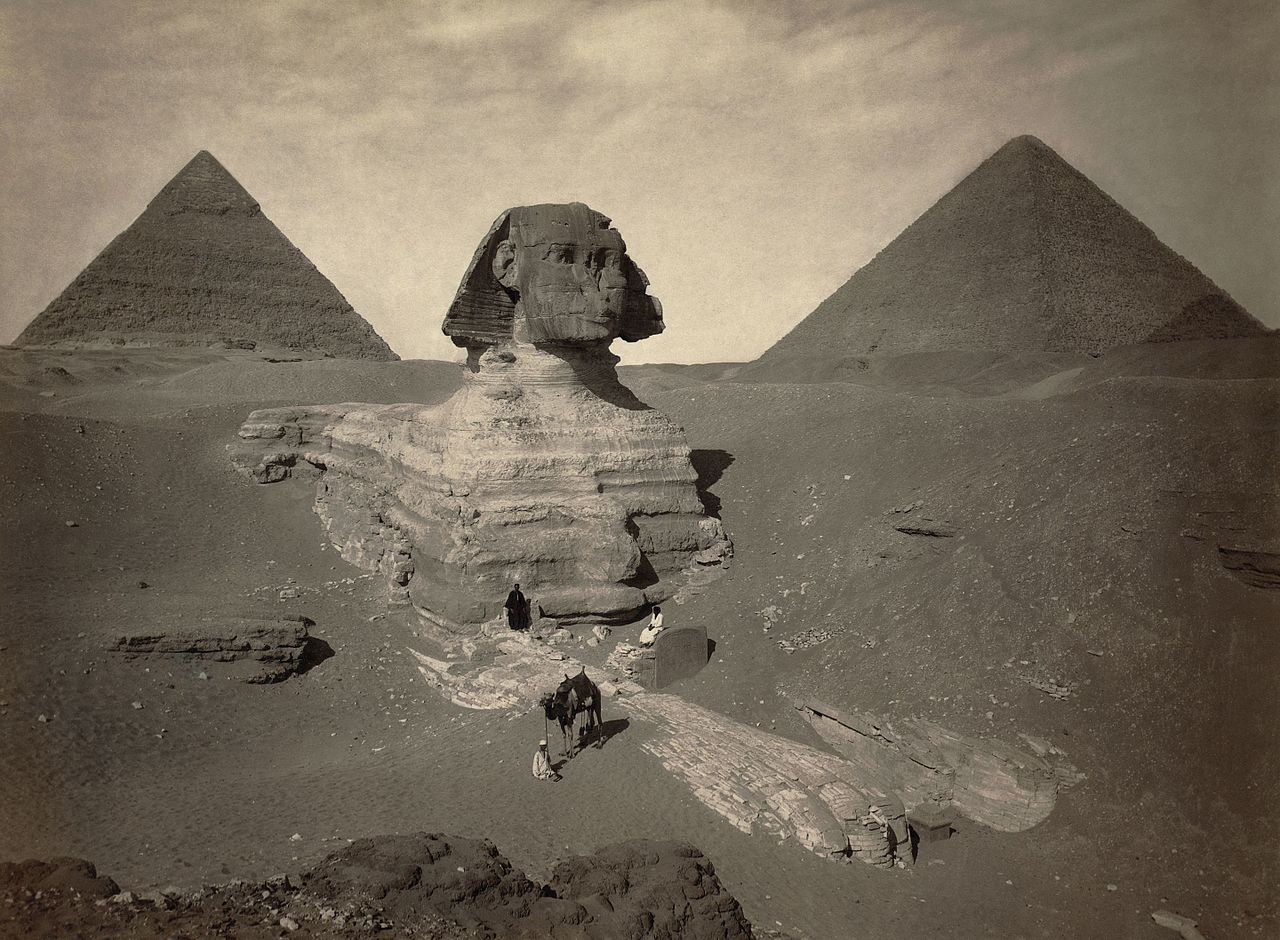
The complex is dominated by three principal pyramids—commonly associated with the pharaohs Khufu (the Great Pyramid), Khafre and Menkaure—together with the Great Sphinx. Around these major monuments are subsidiary pyramids, mastaba tombs, causeways, funerary and valley temples, and remnants of a workers' town and cemeteries. Important elements include:
- The Great Pyramid, the largest of the group and the only surviving structure listed among the classical Seven Wonders of the World; it features internal chambers and passageways and a carefully oriented layout (Great Pyramid).
- The Sphinx and associated temples, carved and erected as part of the funerary complex to serve ritual and protective roles.
- Smaller pyramids and tombs for queens, nobles and priests, plus causeways linking valley and mortuary temples.
Origins and construction
The three major pyramids were built during Egypt's Fourth Dynasty in the Old Kingdom, during the third millennium BCE. Construction techniques remain a subject of research and debate; scholars point to large-scale quarrying and transport of limestone and other stones, skilled labor organized in seasonal or permanent teams, and construction phases that probably required years or decades rather than a single brief campaign. The monuments exhibit precise orientation to the cardinal points and advanced planning in their internal layouts.
Archaeology and preservation
Archaeological study at Giza began in antiquity and expanded in the 19th and 20th centuries with systematic excavations and mapping by European and Egyptian archaeologists. Excavations have revealed the social and economic context of pyramid building, including workers' settlements, tools and inscriptions. The site is protected as a cultural heritage area and faces ongoing conservation challenges: weathering, pollution from nearby urban areas, tourism pressure, and earlier damage from stone robbing. International and Egyptian agencies continue restoration and stabilization efforts.
Importance and legacy
Giza is a global symbol of ancient Egypt's architectural and administrative achievement. It attracts millions of visitors annually and functions as a center for research in archaeology, engineering and archaeoastronomy. Beyond tourism, the necropolis informs our understanding of ancient religious beliefs about death and afterlife, state organization and craft specialization. Modern scholarship treats the site with caution regarding specifics—many details around workforce size and exact construction timetables remain estimations rather than settled facts.
For readers wishing to explore maps, visitor information and scholarly resources, the Giza Necropolis remains well documented in guide literature and academic publications, and its main features can be located in general references and site plans that accompany many studies of the Nile valley civilization. Further introductory materials are available through heritage organizations and museum collections that hold artifacts and research connected with the plateau (Cairo, Egypt). Contemporary popular accounts and academic works each offer different emphases—archaeological detail, historical context, or conservation challenges—so cross-referencing multiple sources is recommended for a fuller picture.
Readers should note that while the Great Pyramid is widely celebrated as the sole survivor of the classical wonders, other aspects of Giza's significance—its evolving landscape, ongoing excavations and modern environmental pressures—continue to change how scholars and the public engage with the site.
Questions and answers
Q: Where is the Giza Necropolis located?
A: The Giza Necropolis is located near the city of Cairo, Egypt, about 8 kilometres inland from the ancient town of Giza on the Nile and about 25 kilometres southwest of Cairo city centre.
Q: What is the Great Pyramid?
A: The Great Pyramid is a monument at the Giza Necropolis that is one of only seven remaining monuments of the Seven Wonders of the World.
Q: How long did it take to build the Great Pyramid?
A: It is thought that it took 20,000 workers and 20 years to construct the Great Pyramid.
Q: What other monuments are part of this complex?
A: The Giza pyramid complex includes several other monuments in addition to the Great Pyramid such as tombs and temples.
Q: How far away from Cairo city centre is this complex?
A: The Giza pyramid complex is about 25 kilometres southwest from Cairo city centre.
Q: How far away from Giza on Nile River is this complex? A: It's about 8 kilometres inland into desert from ancient town of Giza on Nile River.
Q: Who built this complex? A: It was constructed by an estimated 20,000 workers over a period of 20 years.
Related articles
Author
AlegsaOnline.com Giza Necropolis (Giza pyramid complex) Leandro Alegsa
URL: https://en.alegsaonline.com/art/39055