
Nile crocodile (Crocodylus niloticus)
Large African crocodile species found in rivers, lakes and wetlands across sub-Saharan Africa and Madagascar; known for powerful jaws, variable diet, and maternal care of nests.
Overview
The Nile crocodile (Crocodylus niloticus) is one of Africa's best-known large predators. It is the largest of the African crocodile species and occupies a variety of freshwater and brackish environments. Nile crocodiles are long-lived, apex predators with a reputation for strength, stealth and adaptability; they play an important ecological role in the systems they inhabit.
Image gallery
10 Images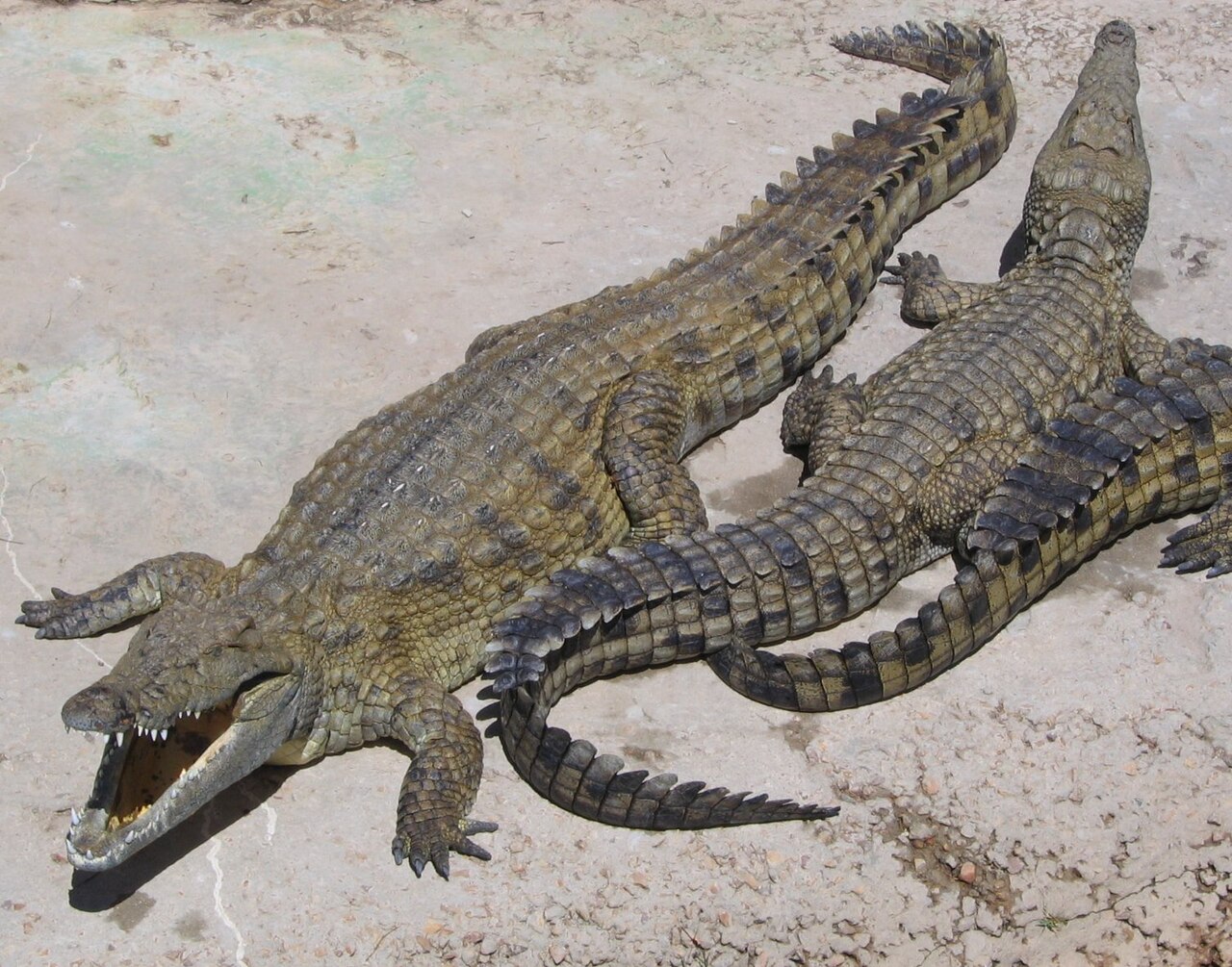


Physical characteristics
Adults are heavily built reptiles with thick skin, a long muscular tail and short, sturdy limbs. They have webbed rear feet for propulsion in water and a powerful bite powered by robust jaw muscles. Size varies by region and sex; males commonly grow larger than females. Individuals can approach lengths of about 5–6 metres (roughly 16–20 feet) and reach substantial mass, though typical adult sizes are often smaller depending on local conditions.
Distribution and habitat
Nile crocodiles are native to much of sub-Saharan Africa and Madagascar and are associated with permanent and seasonal water bodies. Typical habitats include rivers, lakes, marshes, floodplains, estuaries and mangrove swamps. Historically their range extended into the Nile Delta and parts of the eastern Mediterranean; today their presence is patchy in some northern or peripheral areas. They tolerate a range of salinities and can move between freshwater and coastal environments.
Diet and behaviour
They are opportunistic carnivores with a diet that shifts as they grow. Juveniles feed on invertebrates, amphibians and small fish while progressively larger crocodiles take larger vertebrate prey. Adult Nile crocodiles can capture ungulates and other sizeable mammals coming to drink, as well as fish, birds and carrion. Hunting strategies include ambush from the water's edge and nocturnal activity. Intraspecific competition and occasional predation on smaller crocodiles occur, so social interactions can be aggressive.
Reproduction and life cycle
Breeding typically involves aquatic courtship and mating. Females lay clutches of eggs in nests dug on riverbanks or in vegetation mounds; clutch sizes vary but can number several dozen. Mothers often guard nests during incubation and may assist hatchlings to water. Crocodilians exhibit temperature-dependent sex determination, so nest temperature influences the sex ratio of offspring. Juveniles mature over several years, with sexual maturity commonly reached in the first decade of life depending on growth rates.
Human interactions and conservation
Nile crocodiles have coexisted with people for millennia and are involved in folklore, economic use and conflict. They have been hunted for skins and meat and are sometimes targeted where they threaten livestock or people. Many countries manage populations through protection, sustainable use programs or local control measures. Conservation status varies regionally: some populations are stable or recovering where protected, while others are reduced by habitat loss, persecution and exploitation.
Further reading and resources
- General species overview
- African crocodile diversity
- Size records and measurements
- Metric conversions and scales
- Weight and mass data
- Comparative weights
- Madagascar populations
- Historical range in Jordan
- Historical records in Israel
- Habitat types and ecology
- Estuaries and brackish habitats
- Prey species examples
- Predator–prey relationships
- Population and conservation reports
For field identification, local regulations and safety guidance consult regional wildlife authorities or trusted conservation organizations. Observing these animals from a safe distance minimizes risk to both people and crocodiles.
Related articles
Author
AlegsaOnline.com Nile crocodile (Crocodylus niloticus) Leandro Alegsa
URL: https://en.alegsaonline.com/art/70213
Sources
- animals.nationalgeographic.com : "Nile Crocodile"
- arkive.org : "Nile crocodile - Crocodylus niloticus"