
Crocodile: biology, behavior, evolution and human interactions
Crocodiles are large amphibious reptiles in the order Crocodilia. This article describes their appearance, behavior, evolution, habitats, notable species and interactions with people and ecosystems.
Overview
Crocodiles are large, primarily aquatic reptiles known for their elongated bodies, powerful jaws, and semi‑aquatic lifestyle. Often described as amphibious reptiles, they spend much of their time in freshwater rivers, lakes and wetlands, and some species tolerate or travel into brackish and marine environments. They are ambush predators that rely on stealth, strong bite force and a combination of sensory adaptations to capture fish, mammals and other prey.
Image gallery
10 Images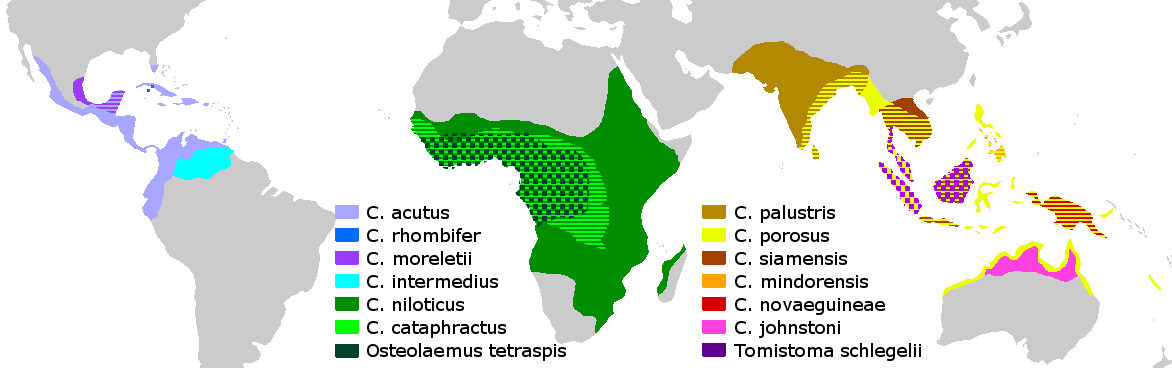


Physical characteristics and behavior
Crocodiles have a distinctive body plan: a broad, flattened skull, conical teeth designed to grip rather than chew, a long muscular tail used for propulsion and a protective armor of bony scutes beneath the skin. Their bite is extremely powerful when closing, while the muscles that open the jaw are comparatively weak. Many species display complex behaviors such as basking, vocalizing, cooperative hunting in some situations and parental care; females commonly guard nests and may assist hatchlings to water.
Habitat, distribution and seasonal strategies
Most crocodile species inhabit tropical and subtropical regions. They are typically associated with slow‑moving rivers, estuaries and wetlands but vary in tolerance for saltwater — for example the saltwater crocodile regularly uses coastal and marine environments. In arid regions some crocodiles survive seasonal droughts by estivating, a form of dormancy in which activity is greatly reduced to conserve water and energy (aestivate).
Evolution and classification
The modern crocodilian body plan has deep roots. Members of the larger crocodile lineage emerged by the Paleogene, with modern groups already established by the Eocene. Their ancestors extend back to the archosaur radiation of the Mesozoic, with early relatives present in the Upper Triassic. Today the common name "crocodile" is often used for members of the order Crocodilia, a group that also includes alligators, caimans and gharials, all sharing anatomical and reproductive traits inherited from these ancient archosaurian lineages.
Notable species and size variation
Crocodile species vary widely in size and habitat preferences. Small species like the African dwarf crocodile seldom exceed about 1.5 m and inhabit forest streams, while the saltwater crocodile is the largest extant species and can grow to several metres in length. Other well‑known species include the Nile crocodile and several New World species adapted to riverine and coastal systems. Size, snout shape and dentition often reflect dietary specialization and ecological niche.
Ecological role and human interactions
As apex or near‑apex predators, crocodiles influence prey populations and help maintain healthy aquatic ecosystems by removing sick or weak animals. They have cultural significance in many regions and have been hunted for meat and hides, leading to declines for some species. Conservation status varies: while some populations have recovered under protection and regulated use, others remain at risk from habitat loss, pollution and illegal hunting. Ongoing management seeks to balance human safety, sustainable use and species recovery.
- Typical diet: fish, crustaceans, birds, mammals depending on size and habitat.
- Reproduction: egg‑laying, often guarded nests and parental care of hatchlings.
- Conservation: ranges from least concern to endangered across different species.
For further background on anatomy, specific species accounts and conservation measures consult resources and field guides available through specialized databases and regional wildlife authorities (overview, classification).
Questions and answers
Q: What is a crocodile?
A: A crocodile is a large amphibious reptile that lives mostly in large tropical rivers and can be an ambush predator.
Q: Where does the Australian saltie live?
A: The Australian saltie travels in coastal salt water.
Q: When did the modern type of crocodile first appear?
A: The modern type of crocodile appeared first in the Eocene period.
Q: What group includes both crocodiles and dinosaurs?
A: Both crocodiles and dinosaurs are part of the group Archosaurs.
Q: How powerful is a crocodile's jaw?
A: A crocodile can quickly snap its jaw shut with much power, but has little strength when opening its jaws so that it can be held shut with hands.
Q: How big can a crocodile get?
A: Crocodiles range in size from African dwarf crocodiles which measure rarely over 5 feet (1.5 m) to saltwater crocdiles which can approach 23 feet (7 m).
Q: In very dry climates, what do some species of crocdiles do?
A: In very dry climates, some species of crocdiles may aestivate and sleep out the dry season.
Related articles
Author
AlegsaOnline.com Crocodile: biology, behavior, evolution and human interactions Leandro Alegsa
URL: https://en.alegsaonline.com/art/24263
Sources
- bbc.co.uk : bbc.co.uk
- crocodilian.com : "Crocodilian Biology Database - FAQ - How long can a crocodile stay underwater?"
- books.google.com : Crocodiles: Biology, Husbandry and Diseases