
Nodosauridae — armoured ankylosaurs without tail clubs
A family of heavily armoured, quadrupedal herbivorous ankylosaurs that lacked tail clubs; lived from the Late Jurassic to the Late Cretaceous across several continents.
The Nodosauridae are a family of ankylosaur dinosaurs closely related to other members of Ankylosauria. Fossils are known from sedimentary layers dating from the Upper Jurassic through the Upper Cretaceous, often recovered from marine and continental strata. Remains have been found on multiple modern continents including North America, Asia, Antarctica and Europe, indicating a broad geographic range during the Mesozoic.
Image gallery
6 Images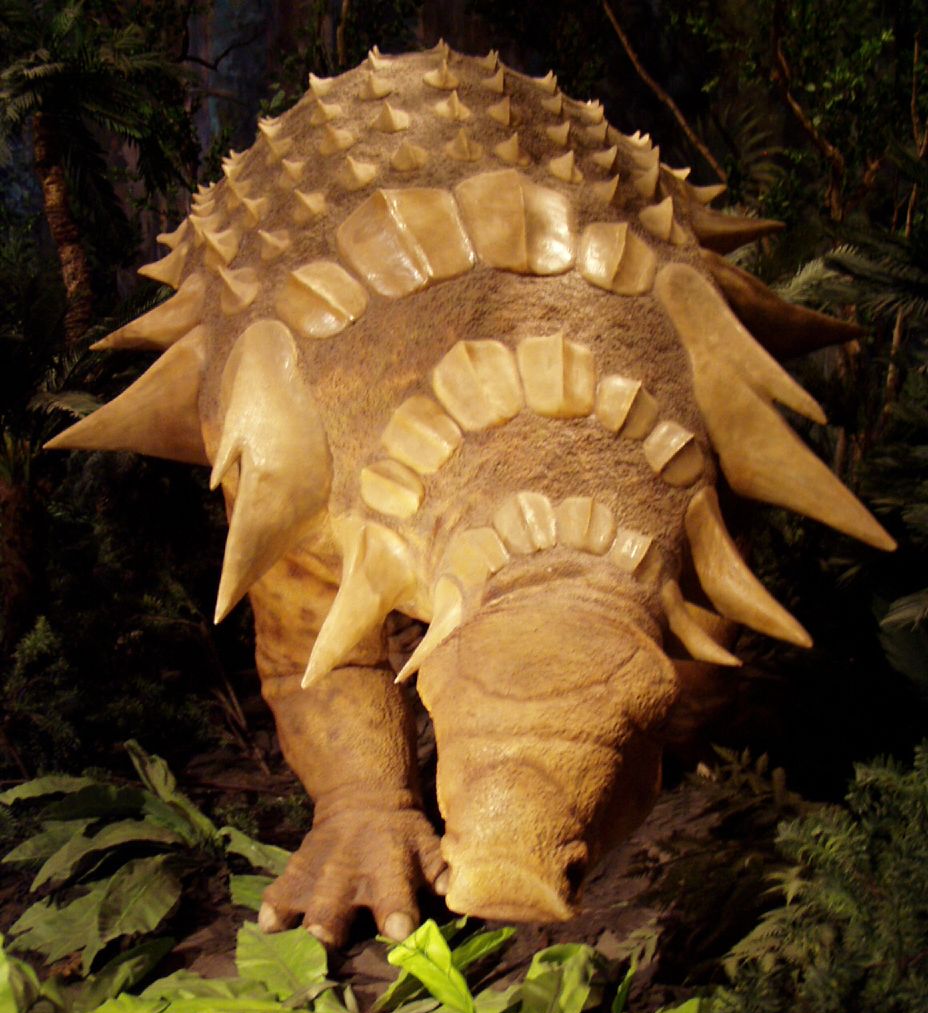


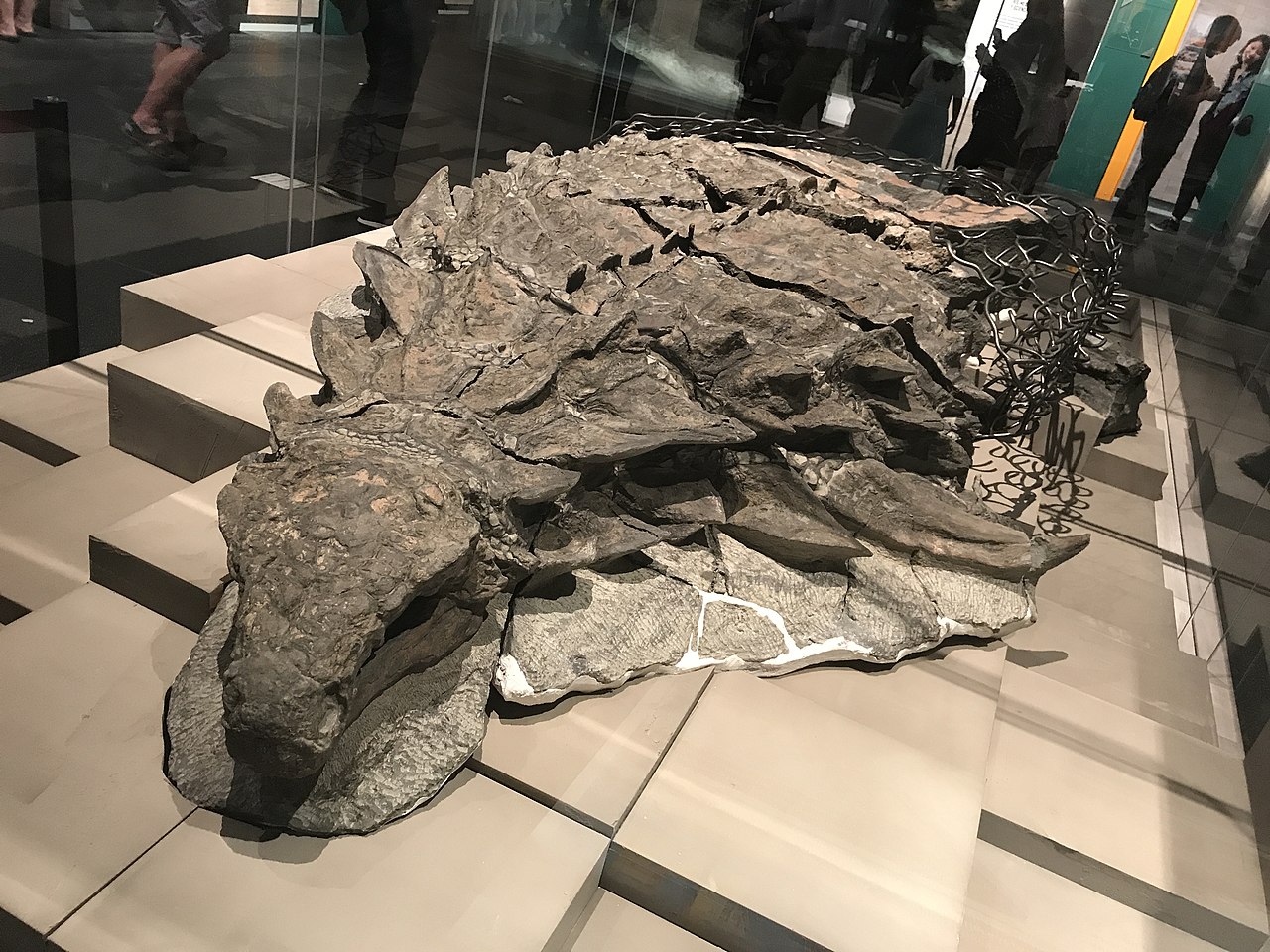


Overview and distinguishing traits
Nodosaurids share the stocky, low-slung body plan typical of ankylosaurs, but they are set apart by the absence of a terminal tail club and by distinctive arrangements of external armour. The clade is often treated as a single family within Ankylosauria; members of this group are therefore referred to collectively as the nodosaurid family. Most taxa possess pronounced keratinous or bony projections—commonly called spikes—around the neck and shoulders, which likely served as passive defence when threatened and may have been displayed in life.
Armor, skull and teeth
Like other armored dinosaurs, nodosaurids bore an extensive covering of osteoderms: plates and nodules embedded in the skin that formed defensive armour. These osteoderms are a form of armour and vary from rounded scutes to elongate spines concentrated on the dorsolateral surface. Skull material shows a heavily built cranium with small, leaf-shaped teeth adapted to a herbivorous diet; jaw structure suggests they were low browsers that processed vegetation with limited oral processing.
Notable genera and fossil evidence
Several well-preserved genera illustrate nodosaurid diversity and anatomy. Examples commonly cited in the literature include classic taxa known from articulated specimens and isolated armour plates. Many specimens preserve defensive arrangements of plates around the head and shoulders, providing direct evidence for the role of armour in protection of the head and shoulders.
Ecology and significance
Nodosaurids occupied a range of terrestrial habitats and are interpreted as slow-moving, heavily built herbivores that relied on armour and body shape for defence rather than active weapons like a tail club. Their fossils inform studies of dinosaur biomechanics, growth, palaeobiogeography and convergent development of dermal armour among vertebrates. Because of their distinctive osteoderms and spikes, nodosaurids are frequently featured in museum exhibits and educational discussions about dinosaur defence strategies.
Further reading and resources
For introductions, specimen catalogues and regional surveys consult museum literature, technical monographs and reviews focused on ankylosaur diversity. General overviews and specimen reports are available through curated paleontological collections and online repositories maintained by natural history institutions and academic groups; see representative references and databases for more detailed treatment.
Ankylosauria overview | Upper Jurassic context | Upper Cretaceous deposits
Stratigraphy and taphonomy | North American finds | Asian records
Antarctic discoveries | European specimens | Family-level taxonomy
Spinal and shoulder spikes | Head-and-shoulder protection | Osteoderm armour
Questions and answers
Q: What is Nodosauridae?
A: Nodosauridae is a family of ankylosaur dinosaurs that does not have club-shaped tails and often have spikes protecting their head and shoulders.
Q: Where can Nodosauridae be found?
A: Nodosauridae can be found in Upper Jurassic to Upper Cretaceous strata of what are now North America, Asia, Antarctica and Europe.
Q: Are Nodosauridae herbivorous or carnivorous?
A: Nodosauridae, like other ankylosaurs, are herbivorous dinosaurs.
Q: How do Nodosauridae protect themselves?
A: Nodosauridae often have spikes protecting their head and shoulders, as well as rows of osteoderms on the dorsolateral surfaces of the body.
Q: What is the size of Nodosauridae?
A: All nodosaurs, like other ankylosaurs, are medium-sized to large and heavily built quadrupedal dinosaurs.
Q: What kind of teeth do Nodosauridae have?
A: Nodosauridae have small denticulate teeth.
Q: What is the function of osteoderms on the dorsolateral surfaces of the body of Nodosauridae?
A: The osteoderms on the dorsolateral surfaces of the body of Nodosauridae provide a type of armor for protection.
Related articles
Author
AlegsaOnline.com Nodosauridae — armoured ankylosaurs without tail clubs Leandro Alegsa
URL: https://en.alegsaonline.com/art/70538
Sources
- tandfonline.com : "Phylogeny of the ankylosaurian dinosaurs (Ornithischia: Thyreophora)"
- doi.org : 10.1080/14772019.2011.569091
- doi.org : 10.1671/0272-4634-28.4.1102