
Nilgai (Boselaphus tragocamelus)
Large antelope of the Indian subcontinent. Males are called blue bulls; species is widespread in India, Nepal and Pakistan, with introduced populations abroad. Herbivore, social, and of minor conservation concern.
Overview
The nilgai (Boselaphus tragocamelus) is a large antelope native to the Indian subcontinent. Widely regarded as the biggest Asian antelope, it is notable for strong sexual dimorphism: mature males are bulkier and commonly called "blue bulls" because of a bluish-gray coat, while females and young are more tawny. The species was first given a scientific description in 1766 and has since been the subject of both cultural interest and wildlife management debates. For general species information see species overview.
Image gallery
10 Images





Physical characteristics
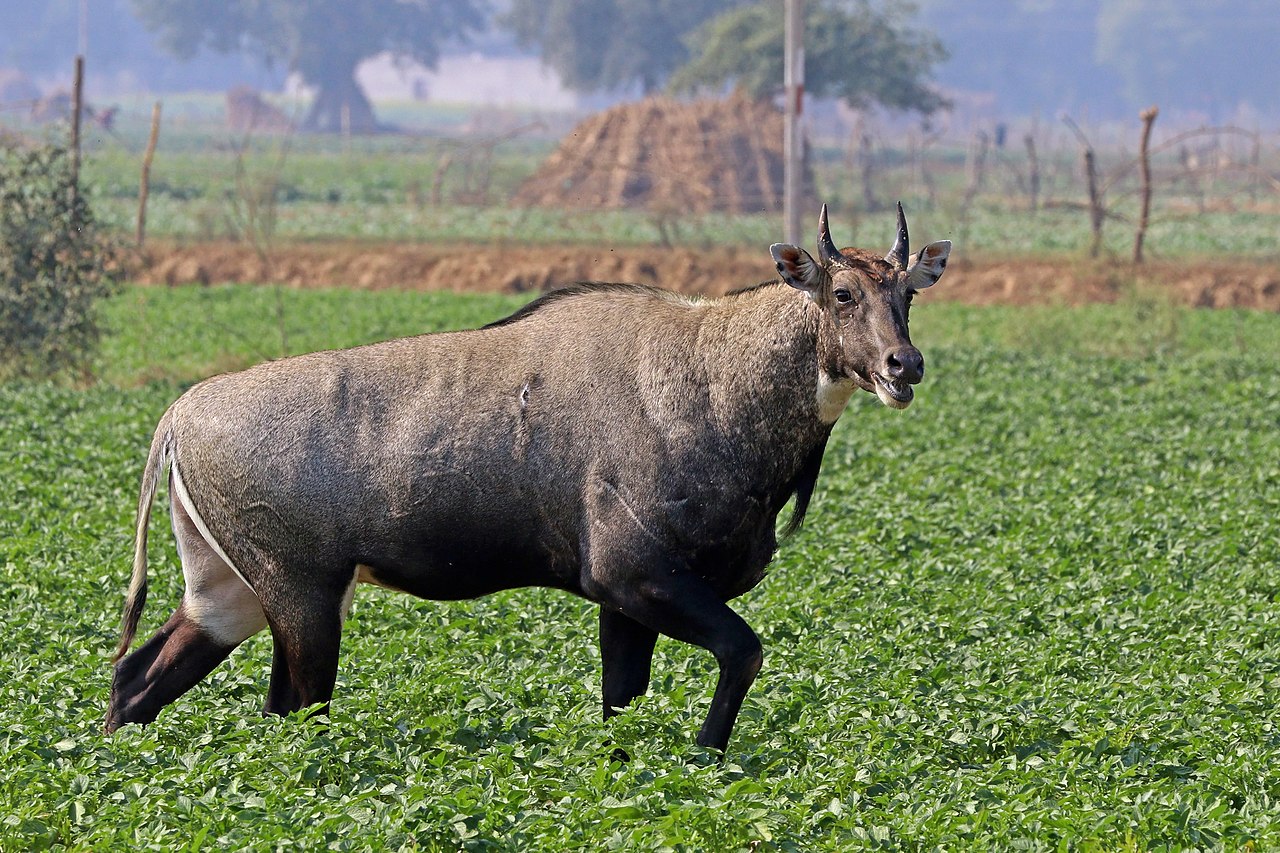
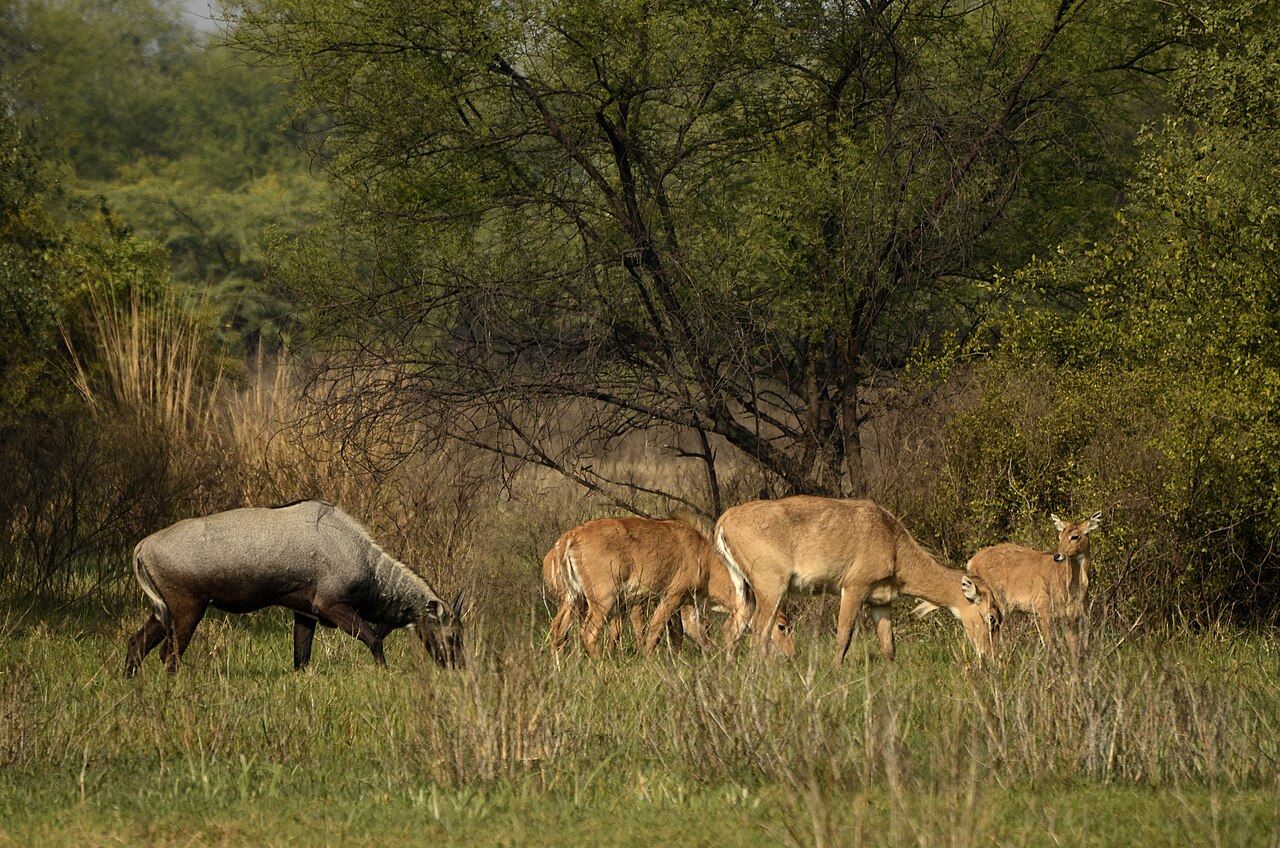
Nilgai have a robust, ox-like build with relatively short horns present on males only. Their legs are long and sturdy, adapted for moving through mixed grassland and scrub. Coat color varies with age and sex: adult males are grayish-blue, females are brownish. Other distinguishing features include a white patch on the throat and a series of facial markings. Horns are short, typically conical, and used in male displays and occasional fights.
Habitat and distribution
Nilgai occur across a variety of dry and moist habitats such as scrub forest, open woodland and agricultural mosaics. They are commonly found in India, Nepal and eastern Pakistan; for regional distribution maps and locality details consult range resources. The species has also been introduced outside Asia, where feral populations persist in some areas and are managed as game or pests.
Behavior, diet and reproduction
As herbivores, nilgai browse leaves, shoots and grasses and will feed on crops when available, which brings them into contact with people. They form loose herds—often groups of females with their young, plus separate bachelor groups of males—and exhibit crepuscular activity, being most active at dawn and dusk. Calves are usually hidden for a period after birth; males reach sexual maturity later than females, and seasonal breeding peaks in many parts of their range.
Conservation, human interactions and notable facts
The nilgai is locally common and classified as of relatively low global conservation concern, though local declines can result from habitat change and hunting. They are culturally significant in regions where religious protections affect how people interact with wildlife, while at the same time they may be regarded as agricultural pests and the focus of management programs. Introduced populations abroad have influenced local ecosystems and prompted control measures; for conservation and management perspectives see management resources and conservation notes.
Distinctions and further reading
- Largest antelope native to Asia, with pronounced male coloration.
- Social structure distinguishes breeding herds from bachelor groups.
- Adaptable to human-modified landscapes, which explains both its success and conflict with agriculture.
Related articles
Author
AlegsaOnline.com Nilgai (Boselaphus tragocamelus) Leandro Alegsa
URL: https://en.alegsaonline.com/art/70218
Sources
- merriam-webster.com : "Nilgai" · archive.org
- doi.org : 10.1098/rstl.1744.0089