
Nimravides — a North American Miocene saber-toothed felid
Nimravides is an extinct genus of saber-toothed cats from North America that lived during the middle to late Miocene. It is a member of the Felidae and is notable for its large canines and evolving body plan.
Overview: Nimravides is an extinct genus of saber-toothed felids that inhabited North America during the middle and late Miocene. Fossils assigned to this genus show a range of sizes and adaptations typical of machairodontine cats: elongated upper canine teeth, powerful forelimbs, and skull features adapted for a carnivorous lifestyle. Although its name resembles the family Nimravidae, Nimravides is placed within the true cat family, Felidae, rather than the nimravid lineage described elsewhere (Nimravidae).
Image gallery
4 Images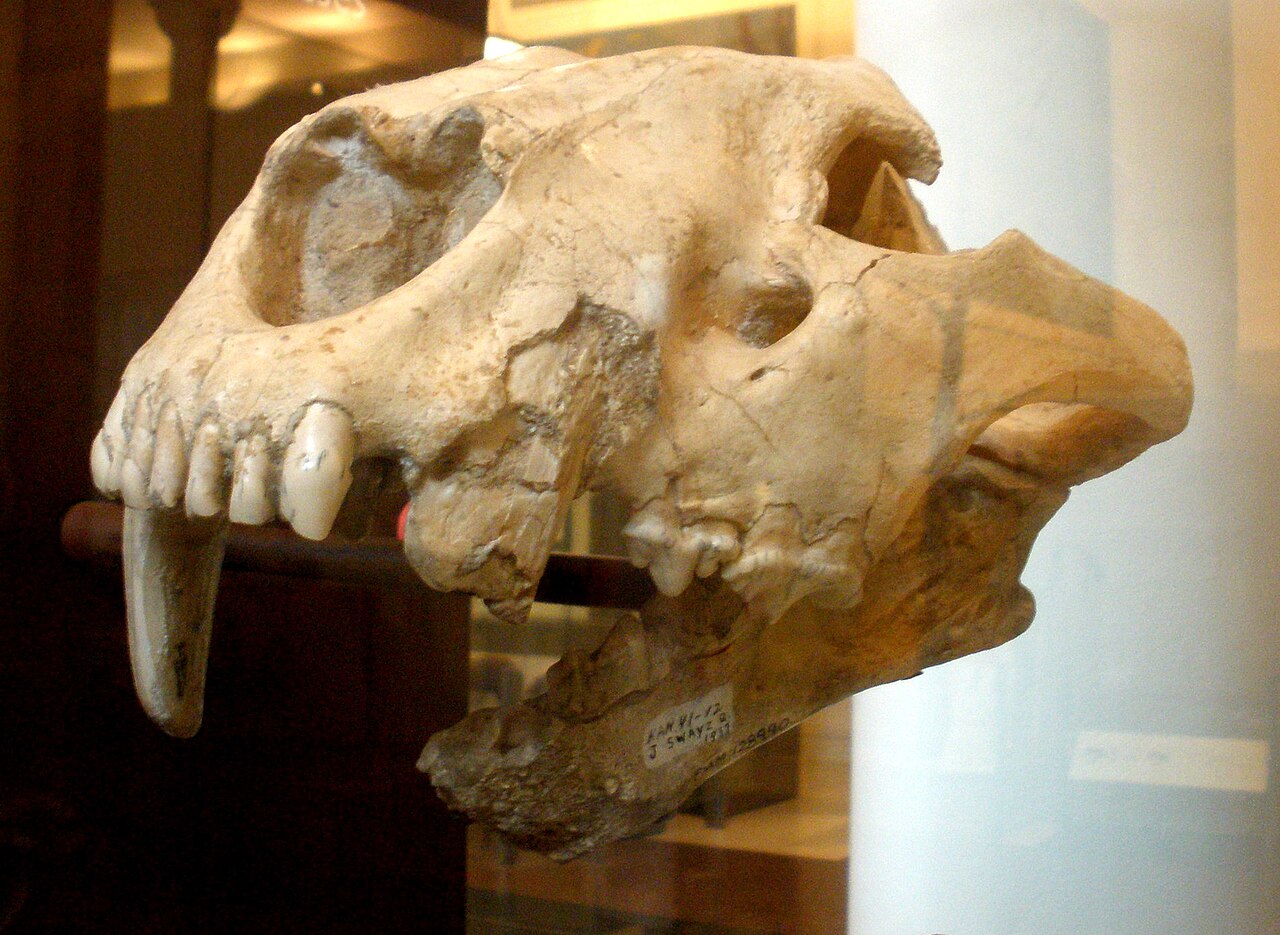


Characteristics and anatomy
Nimravides species show progressive changes over time. Early members are smaller and more primitive, whereas later species attained large, tiger-sized proportions with more specialized sabertooth features. Key characteristics include laterally flattened upper canines, shortened facial regions relative to modern cats, and robust forelimbs indicating an ambush predatory style. Dental and cranial morphology suggest a capability to deliver deep, slashing bites to large prey, coupled with strong neck musculature to control struggling animals.
Geological age and distribution
Fossils of Nimravides are known from middle to late Miocene deposits in North America, a period spanning roughly the mid- to late-Miocene epochs when grasslands expanded and many large herbivores diversified. The genus is documented at several fossil localities; its stratigraphic range helps paleontologists track the evolution of sabertooth adaptations among New World felids. For context on the age of these deposits see Miocene resources.
Species and taxonomy
- Nimravides nimravidus — one of the earlier-described species.
- Nimravides catacopsis — a later, large form often compared in build to primitive Old World machairodonts.
- Nimravides pedionomus
- Nimravides hibbardi
- Nimravides galiani
- Nimravides thinobates
These taxa show a mixture of primitive and derived features; some specimens resemble early Eurasian machairodonts, which has prompted comparisons but not reclassification. The genus is usually placed among felids related to the sabertooth radiation rather than in the separate nimravid family; see broader felid context in Felinae.
Importance and paleobiology
Nimravides contributes to our understanding of convergent evolution among sabertooth predators and the diversity of Miocene carnivore communities in North America. Study of its fossils informs reconstructions of hunting behavior, predator–prey dynamics, and how climatic and environmental changes influenced large carnivores. Ongoing revisions of specimens and new finds continue to refine the genus's relationships within the sabertooth group and the broader family Felidae.
Questions and answers
Q: What is Nimravides?
A: Nimravides is a prehistoric saber-toothed cat that lived in North America during the middle and late Miocene.
Q: To which family does Nimravides belong?
A: Despite its scientific name, Nimravides belongs to the family Felidae.
Q: Are the earlier species of Nimravides more primitive than the later forms?
A: Yes, the earlier species of Nimravides are smaller and more primitive than the later forms.
Q: What is the size of Nimravides catacopsis?
A: Nimravides catacopsis is tiger-sized.
Q: Does Nimravides catacopsis resemble any other species?
A: Yes, Nimravides catacopsis resembles the primitive Machairodus aphanistus, a species known from the late Miocene of Eurasia.
Q: Can you name some of the species of Nimravides?
A: Some of the species of Nimravides are †Nimravides nimravidus, †Nimravides catacopsis, †Nimravides pedionomus, †Nimravides hibbardi, †Nimravides galiani, and †Nimravides thinobates.
Q: When did Nimravides exist?
A: Nimravides existed during the middle and late Miocene in North America.
Related articles
Author
AlegsaOnline.com Nimravides — a North American Miocene saber-toothed felid Leandro Alegsa
URL: https://en.alegsaonline.com/art/70239