
Mii: Nintendo's customizable avatar system
Mii is Nintendo's system for creating simple, cartoon-like avatars used across its consoles and many games, allowing players to personalize appearance and use the same character in multiple titles.
Overview
Miis are simplified, customizable avatars created by players to represent themselves, friends, or fictional characters within Nintendo games and system interfaces. Designed to be easy to build and recognize, Miis combine a small set of facial elements and body parameters so users can create a wide variety of looks without complex modeling. They have become an identifiable part of Nintendo's user experience, serving both functional and social roles in party games, racing titles, and social simulators.
Image gallery
4 Images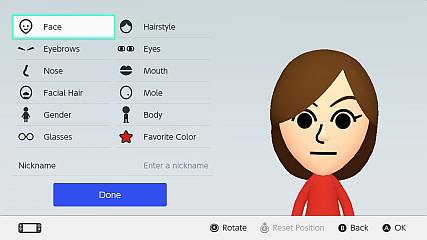


Design and customization
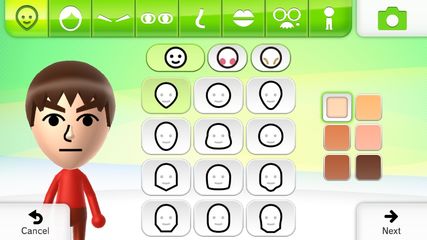
The Mii creation tools emphasize intuitive controls rather than photorealism. A typical Mii is composed of selectable facial features and adjustable proportions: eye shape and placement, nose and mouth types, hair styles and colors, facial hair, and optional accessories. Players can change an avatar's overall silhouette using sliders for height and bulk, and often fine-tune the size and position of individual features.
- Hairstyles and eye styles provide the main visual identity.
- Accessories such as hats or glasses add character.
- Proportions like height and weight let users alter the avatar's body outline.
Some consoles offer photo-based tools that generate a Mii from a camera image, producing a starting point players can edit. The goal is playful resemblance—often closer to a caricature than to a detailed portrait—which encourages expressive, recognizable avatars with minimal effort.
History and platform support
Miis first appeared on the Wii, where a dedicated Mii Channel provided a central place to create and manage avatars. Since then, Mii functionality has appeared across Nintendo platforms. Creation and storage tools have evolved but the core idea—portable, user-made avatars—has persisted.
- Wii – introduced the Mii Channel and broad use in system and game software.
- Nintendo 3DS – included Mii Maker and local sharing features.
- Wii U – integrated Miis into the system and many titles.
- Nintendo Switch – offers Mii creation in system settings and wider color options.
- Nintendo DS – some games included in-game Mii creation even though the console lacked a system-wide editor.
- More generally, Nintendo's consoles have used Miis as a cross-title identity element.
Uses, examples and cultural role
Miis appear in games that either center on player avatars or integrate them alongside established characters. Their most visible uses are in casual and social titles where personal representation reinforces engagement—sports compilations, life-simulation games, and party collections often allow players to see themselves inside gameplay. Notable examples include Wii Sports, which popularized using Miis as competitors, and racing or fighting titles that support user avatars, such as Mario Kart Wii and later crossovers. Dedicated Mii-centric games let players build narratives or manage communities using their creations.
Notable distinctions
Miis are distinct from full-featured avatars in their simplicity and portability: the same Mii can often be used across multiple games and system menus, creating continuity for a player's presence. Because they lean toward caricature, Miis are intentionally stylized to be expressive at low detail. Over time, Nintendo has refined Mii tools—adding more color choices, photo-based creation, and export features—while keeping the original emphasis on easy, accessible personalization. The Mii system remains a recognizable element of Nintendo's approach to making games welcoming and social for a broad audience, blending identity, portability, and playful design into a compact avatar format. Caricature-style design and simple controls help explain why Miis continue to appear in new titles and system designs.
Related articles
Author
AlegsaOnline.com Mii: Nintendo's customizable avatar system Leandro Alegsa
URL: https://en.alegsaonline.com/art/64820
Sources
- kotaku.com : "Using Magic, The 3DS Can Make A Mii Using A Photo"