
Wii — Nintendo home video game console
The Wii is Nintendo's 2006 home video game console known for its motion-based controls, broad appeal to casual and core gamers, backwards compatibility (original model), and sales exceeding 100 million units.
Overview
The Wii is a home video game console produced by Nintendo. Introduced in 2006, it distinguished itself from competing systems by emphasizing motion-based controls and simple interfaces that made games accessible to a wider audience. The system shipped with family-oriented titles such as Wii Sports, which demonstrated the appeal of physical, gesture-driven gameplay and helped the console reach a large, diverse market.
Image gallery
10 Images


Hardware and controllers
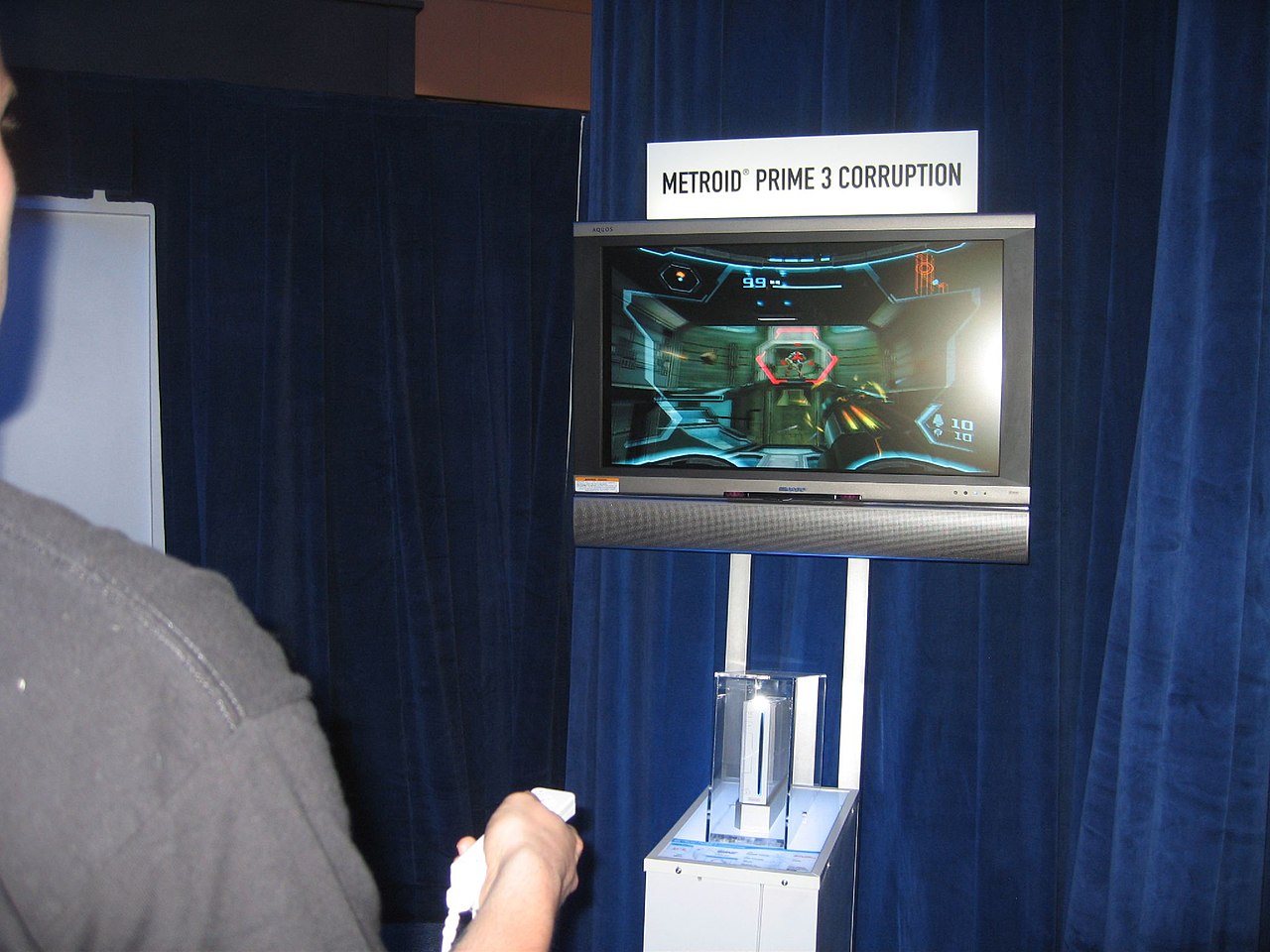
Technically, the Wii used a compact, energy-efficient design with internal flash memory and support for removable storage via SD cards. A defining element was its control scheme centered on the Wii Remote — a wireless controller that detects motion and pointing through built-in sensors and a sensor bar placed near the display. Additional peripherals expanded functionality and play styles.
- Wii Remote (Wiimote) — motion sensing and pointing.
- Nunchuk — supplemental controller with analog stick for more traditional control.
- Classic Controller — for virtual console and legacy-style games.
- Wii Balance Board — accessory used by fitness and balance-focused titles.
Software, services, and compatibility
The Wii's software ecosystem combined packaged retail games with downloadable content and legacy titles. The console offered digital storefronts and channels that allowed players to purchase or download older games through a Virtual Console service and to access simple apps such as messaging, photo viewing, and streaming utilities. Early Wii models were backward compatible with Nintendo GameCube software and accessories; later revisions removed that support to reduce manufacturing costs.
History and market impact
After its launch the Wii achieved rapid commercial success and helped expand the video game audience beyond traditional demographics. It sold over 100 million units, becoming one of Nintendo's best-selling home consoles and a major commercial milestone. Nintendo later released revised hardware versions, including a Family Edition that omitted GameCube compatibility and a pared-down Wii Mini. The Wii was succeeded by the Wii U, and Nintendo's later success with the hybrid Nintendo Switch continued the company's prominence in the market.
Uses, examples, and legacy
The Wii is remembered for popularizing motion-controlled gaming and for titles that encouraged physical activity, social play, and local multiplayer. It found uses beyond traditional gaming, including fitness programs, rehabilitation exercises in clinical and therapeutic settings, and casual party play. While its online features were more limited than some competitors of the era, the Wii's impact on game design and on broadening the player base has been widely acknowledged by industry observers.
Notable distinctions and facts
The Wii combined approachable hardware, distinctive input methods, and a library that ranged from casual party games to core franchise entries. Critical reaction at release was generally positive, praising innovation and accessibility while noting graphical and online limitations compared with contemporaries. Its commercial and cultural effects—especially in popularizing motion controls and family-focused software—remain central to its legacy.
Questions and answers
Q: What is the Wii?
A: The Wii is a video game home console made by Nintendo.
Q: When did the Wii first come out in North America?
A: The Wii first came out on November 19, 2006, in North America.
Q: What video games can be played on the Wii?
A: The Wii plays video games made just for the Wii.
Q: Can the original Wii model also play games for the Nintendo GameCube?
A: Yes, the original Wii model also plays games for the Nintendo GameCube.
Q: What console succeeded the Wii?
A: The Wii was succeeded by the Wii U on November 18, 2012, which can play and use all Wii games and controllers.
Q: Is the Wii Nintendo's highest-selling home console?
A: No, the Wii is Nintendo's second highest-selling home console, after the Nintendo Switch.
Q: When were the original Wii and Wii Family Edition discontinued?
A: The original Wii and Wii Family Edition were discontinued on October 21, 2013.
Related articles
Author
AlegsaOnline.com Wii — Nintendo home video game console Leandro Alegsa
URL: https://en.alegsaonline.com/art/108019
Sources
- nintendo.co.uk : "Nintendo launches Wii Family Edition on 4th November and Wii Fit Plus bundle on 2nd December"
- officialnintendomagazine.co.uk : "New black Wii bundle includes Mario CD"
- nintendo.com : "Nintendo introduces Wii Mini that's all about games"
- kotaku.com : "Kotaku - The Gamer's Guide"
- nintendo.co.uk : What's in the box | Wii | Nintendo
- nintendo.com : "Wii mini Official Site - Buy Now"
- engadget.com : "Nintendo stops selling Wii consoles in Japan"
- gamespot.com : "Wii discontinuation in Japan won't affect availability in United States"
- mcvuk.com : "Time also called on Wii in Europe | Games industry news | MCV"
- wii.ign.com : "Connectivity Returns"
- 1up.com : "Wii Get It Now: Technical Specs from 1UP.com"
- wii.ign.com : "Wii Launch Guide" · web.archive.org
- analog.com : "Analog Devices And Nintendo Collaboration Drives Video Game Innovation With iMEMS Motion Signal Processing Technology"
- officialnintendomagazine.co.uk : "Nintendo Issue Replacement Wii Wrist Straps"