
MiniDisc: Sony’s portable magneto‑optical audio format
MiniDisc (MD) is a small magneto‑optical disc format developed by Sony for portable, recordable audio and later data storage; known for rewritable cartridges, editing features, and ATRAC compression.
Overview
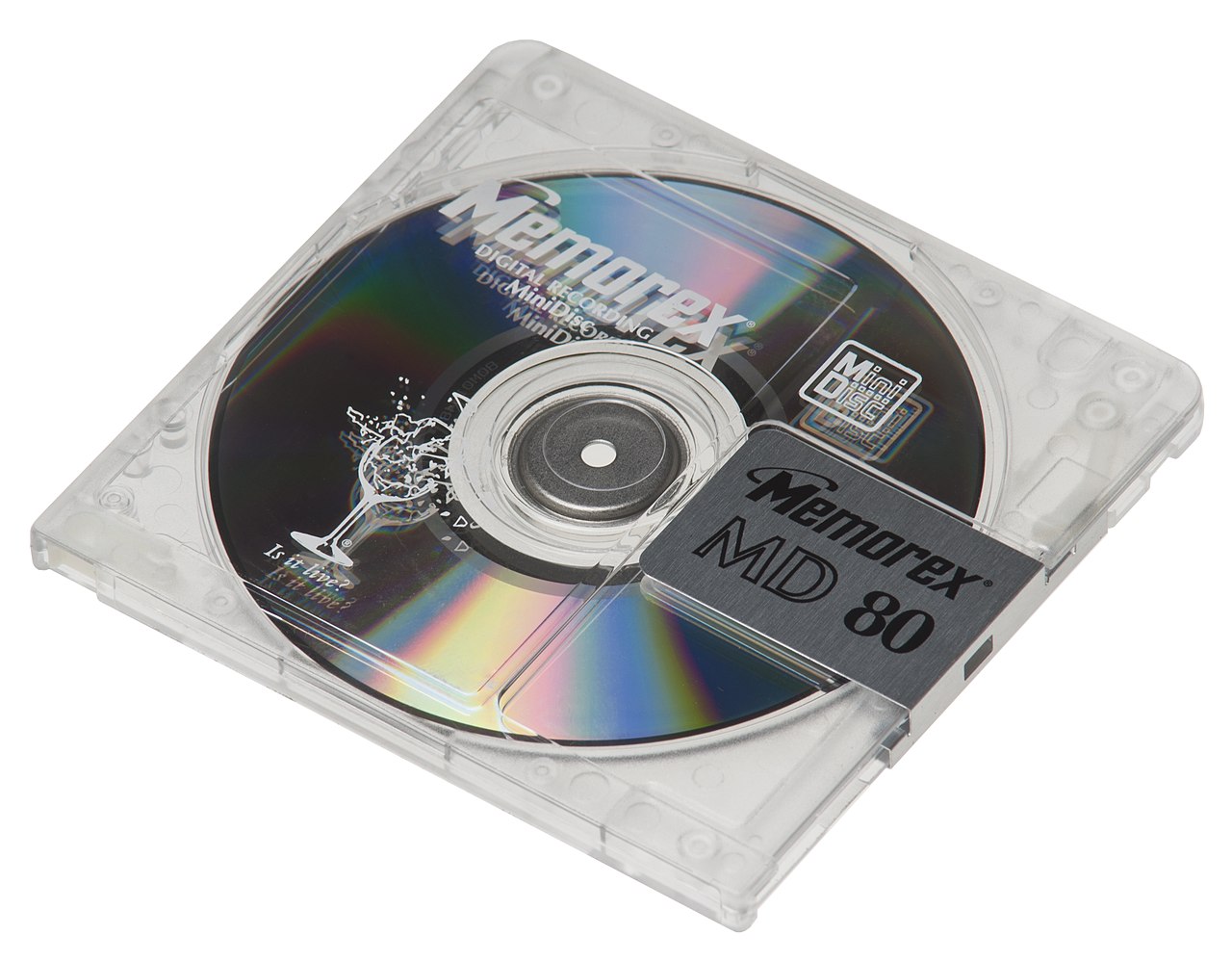
The MiniDisc (MD) is a compact magneto‑optical storage format created as a modern alternative to audio cassettes and, in some markets, compact discs. Encased in a protective cartridge, MiniDiscs were designed for portable players and recorders, offering convenient handling, editability, and the ability to make multiple recordings on a single medium. Early MD systems used perceptual audio compression to store many minutes of music in a small physical package while later models added options for uncompressed audio and general data storage.
Image gallery
10 Images





Design and technical characteristics
At its core a MiniDisc is a magneto‑optical disc: data is recorded and read by a combination of optical pickup and magnetic processes, a design that provides durability and re‑writeability. The disc sits inside a hard plastic cartridge that protects the medium from dust and handling. Most consumer MiniDisc audio used Sony's ATRAC family of perceptual codecs to reduce file size while retaining perceived audio quality. Some later products and the Hi‑MD variant supported linear PCM recording for CD‑quality, uncompressed audio.
Capabilities and user features
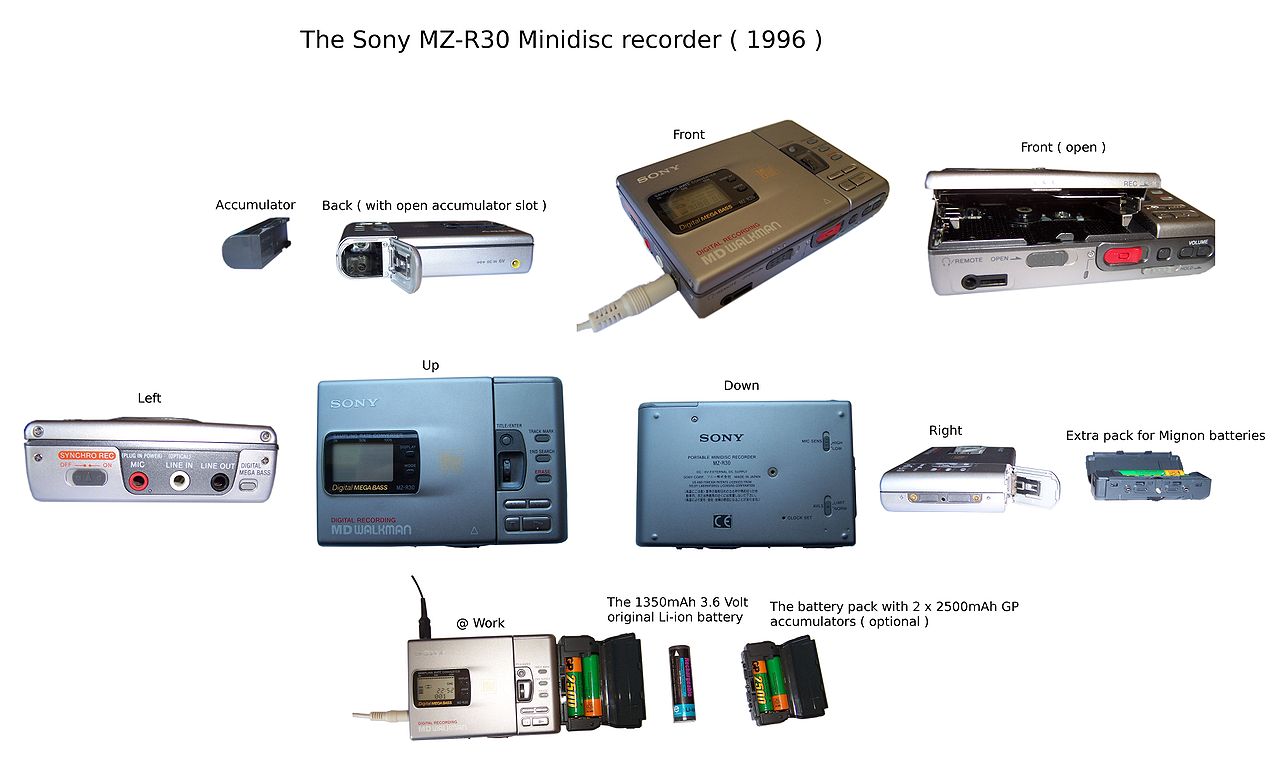
MiniDisc recorders provide a number of practical editing and recording functions that were attractive to field recordists, musicians, and listeners: users can split, rename, delete, and rearrange tracks directly on the disc without re‑recording an entire program. Real‑time recording from microphones, line inputs, or optical connections was common, and many players included anti‑skip buffering for portable use. The format also supported versions for computer data, allowing files to be stored and transferred in addition to audio.
History and development
Sony introduced MiniDisc in the early 1990s as a digital, portable successor to the analog cassette. It found particular popularity in Japan and among professional and enthusiast users who valued its editability and robustness. Over time the format evolved: lower bitrate long‑play modes increased recording time, a data variant expanded its role as removable storage, and the Hi‑MD family added higher capacity and uncompressed recording options. Despite technical merits, MiniDisc faced competition from recordable CDs, MP3 players, and flash memory devices, which contributed to its niche status by the 2000s.
Common uses and examples
- Personal music playback and mix creation using portable players and recorders.
- Field recording of interviews, lectures, and live performances with on‑device editing.
- Archival transfers and workstation use when uncompressed Hi‑MD recording was required.
- Data backing and file transport using MD Data media and compatible drives.
Notable variants and legacy
Notable variants include recordable and rewriteable MD media, MD Data for computer files, and Hi‑MD, which increased storage and added linear PCM capability. The format introduced consumers to in‑device non‑destructive editing and compact cartridge protection, influences that persisted in later portable and digital audio products. Today MiniDisc is chiefly of interest to collectors, audio aficionados, and professionals who value its specific workflow and build qualities.
For further technical details and historical perspective see resources on the magneto‑optical principle and the format's codecs: magneto‑optical technology, comparisons with the audio cassette, information from the original manufacturer Sony, and general discussions of digital music formats audio formats. Additional reading covers data‑oriented uses MD for data, the compression family ATRAC and related codecs, similarities and differences with MP3 MP3, and practical recording techniques including microphone input options microphone recording.
Related articles
Author
AlegsaOnline.com MiniDisc: Sony’s portable magneto‑optical audio format Leandro Alegsa
URL: https://en.alegsaonline.com/art/65204