
Mind map: visual method for organizing ideas and information
A mind map is a radial diagram that represents ideas, tasks, or concepts connected to a central topic. Used for brainstorming, studying, planning and problem solving, with textual and visual elements.
Overview
A mind map is a visual diagram that arranges words, concepts, tasks or images around a central idea. From the middle node, branches radiate outward to show relationships, subtopics and associative links. Mind maps are designed to capture thinking in a non‑linear way, making it easier to see connections at a glance and to store ideas in a compact, memorable form.
Image gallery
10 Images


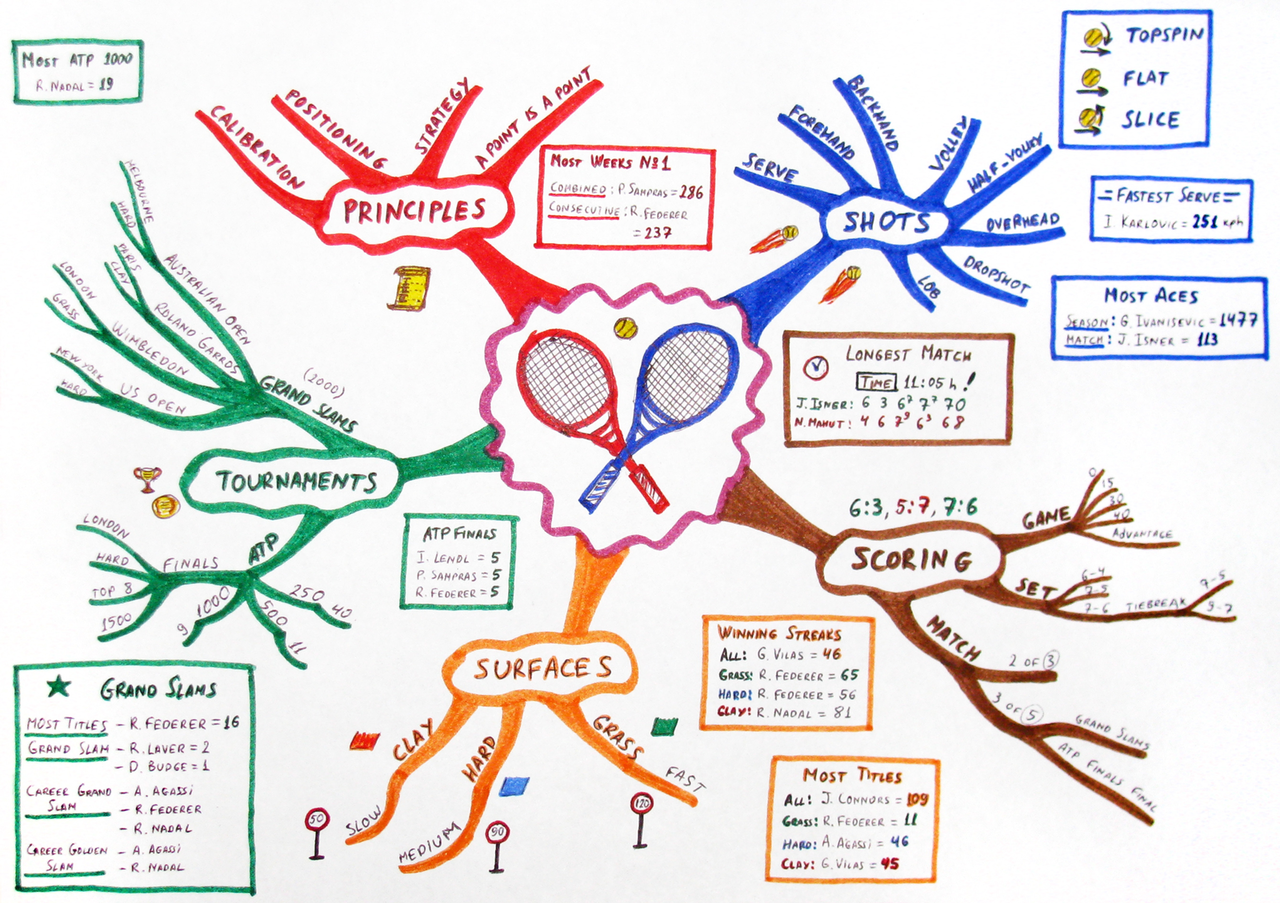


Structure and common elements
Typical components include a central word or image, primary branches that represent main themes, and secondary branches that break those themes into finer points. Many practitioners use color, icons, short keywords rather than sentences, and varying line thickness or shape to emphasize importance. The overall layout is radial rather than strictly hierarchical.
- Central node: the main topic or question.
- Branches: major categories or themes.
- Nodes: individual ideas, tasks or examples.
- Visual cues: colors, symbols, and images to aid memory.
Uses and examples
Mind maps are used for brainstorming, note‑taking, study planning, outlining essays, project breakdowns and decision making. For example, a student might map a course module into topics and subtopics before revision; a team could sketch a product launch with branches for marketing, logistics and risks; a writer can draft a story by mapping characters and plotlines.
How to create an effective mind map
Start with a clear central word or picture, limit branch labels to single words or short phrases, and group related items on the same branch. Use colors and images to make the map easier to scan. Keep maps concise—they work best as visual summaries rather than complete transcripts. Digital mind‑mapping tools allow rearranging branches, adding links and sharing with others.
History, distinctions and limitations
The modern term "mind map" became widely known through popular writers and trainers who promoted the radial note‑taking method in the late 20th century, though diagrammatic thinking has older precedents. Mind maps differ from linear outlines and from concept maps: outlines are ordered lists, while concept maps emphasize labeled relationships between nodes. Evidence about learning benefits is mixed; mind maps can improve recall and creativity for some users but are not a universal solution. For practical guides and software options, see further reading.
Related articles
Author
AlegsaOnline.com Mind map: visual method for organizing ideas and information Leandro Alegsa
URL: https://en.alegsaonline.com/art/65148