
MINIX — A minimal Unix-like microkernel operating system
MINIX is a compact Unix-like OS created for teaching. It uses a microkernel design, helped inspire early Linux development, and later versions prioritize reliability under a permissive BSD license.
MINIX is a compact, Unix-like operating system designed originally for teaching operating system concepts. The name combines "minimal" and "Unix" to emphasize a small, comprehensible design. As a Unix-like system it supports many familiar interfaces and concepts while remaining intentionally simple so that students can read and understand most of the code.
Image gallery
8 Images



Architecture and characteristics
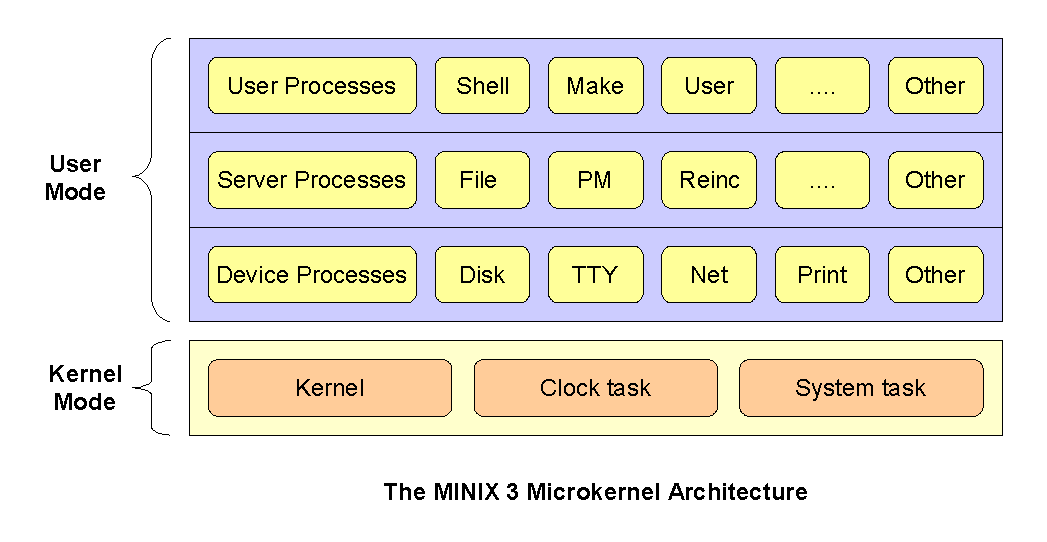
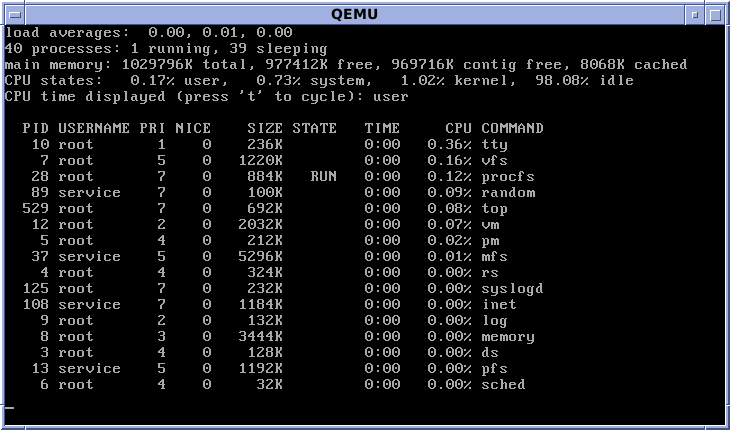
MINIX is built around a microkernel philosophy: the kernel provides only a minimal set of low-level services, and higher-level functions run as separate user-space servers. This separation encourages modularity and fault isolation. Typical characteristics include message-passing between components, small trusted kernel code, easily replaceable servers (file system, device drivers, network stack), and a focus on robustness and clarity rather than raw performance.
History and influence
MINIX was written by Andrew S. Tanenbaum to serve as an educational tool that demonstrated practical operating system design. Published in the late 1980s, its readable source code and teaching materials made it widely used in classrooms. MINIX also played a role in the early development of other systems: its availability and design influenced developers such as Linus Torvalds and the initial work leading to the Linux kernel, though Linux chose a different, monolithic kernel approach.
Uses, versions, and licensing
Although originally intended for education, later MINIX releases shifted toward production goals like reliability and self-healing. MINIX 3, for example, emphasizes system availability by monitoring and automatically recovering failing servers. The system is available under a permissive BSD license and its sources are open, which makes it accessible to students, hobbyists, and researchers.
How MINIX differs from other Unix-like systems
- Microkernel vs monolithic: MINIX separates services into user-space components, while many Unix-like systems (including mainstream Linux) use large monolithic kernels.
- Educational focus: MINIX emphasizes simplicity and readability of source code to teach concepts rather than to serve as a high-performance server OS.
- Reliability features: newer MINIX variants include mechanisms to detect and recover from component failures automatically.
For learners, MINIX remains valuable because its compact structure makes it practical to trace how core OS functions—process management, interprocess communication, file systems, and device handling—are implemented. For those seeking more information or source code, refer to the project's documentation and repositories linked from official pages and educational materials (overview, source).
Questions and answers
Q: What is MINIX?
A: MINIX is a computer operating system based on a microkernel architecture.
Q: Who wrote the MINIX operating system?
A: MINIX operating system was written by Andrew S. Tanenbaum.
Q: What was the purpose behind writing the MINIX operating system?
A: Andrew S. Tanenbaum wrote the operating system so it could be used for educational purposes.
Q: How did MINIX help Linus Torvalds?
A: MINIX helped Linus Torvalds design the Linux kernel.
Q: What is the origin of the name MINIX?
A: The name MINIX comes from the words minimal and Unix.
Q: What license was MINIX released under?
A: MINIX was released under the BSD license.
Q: Is MINIX a free and open source operating system?
A: Yes, MINIX is a free and open source operating system.
Related articles
Author
AlegsaOnline.com MINIX — A minimal Unix-like microkernel operating system Leandro Alegsa
URL: https://en.alegsaonline.com/art/65253
Sources
- adti.net : adti.net/samizdat/brown.reply.june.04.html
- cs.vu.nl : cs.vu.nl/~ast/brown/
- minix3.org : minix3.org/doc/faq.html
- minix3.org : "The Minix licence"