
January–February 2019 North American cold wave
Late January–early February 2019 Arctic outbreak driven by a polar vortex disruption that produced record lows, extreme wind chills, widespread impacts and several deaths across parts of the US and Canada.
Overview
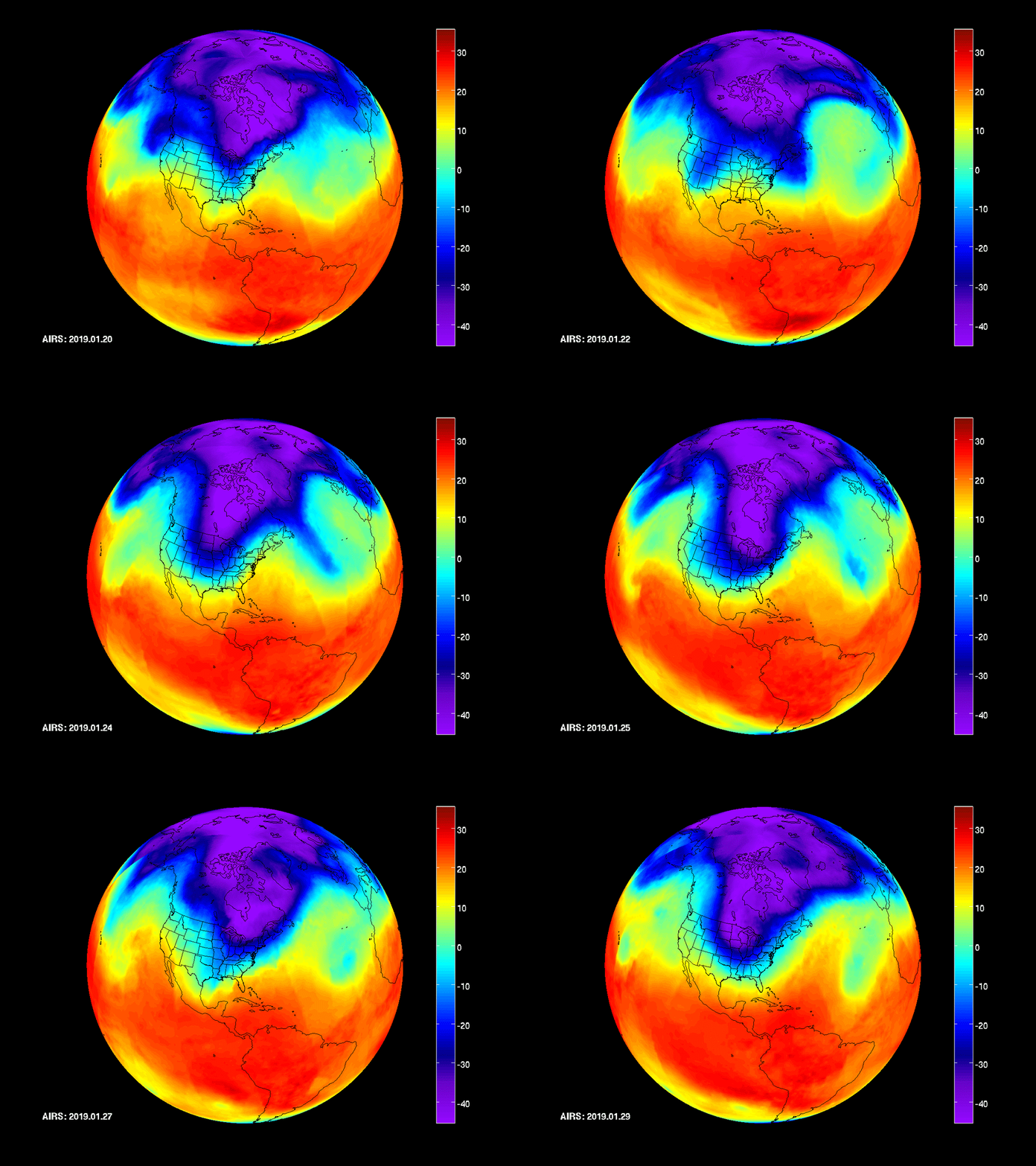
In late January and into early February 2019, an intense outbreak of Arctic air moved south into central and eastern North America. Meteorologists linked the event to a disruption of the upper‑level polar vortex, which allowed a lobe of very cold polar air to spill across the Midwestern United States and Eastern Canada. The cold wave followed a winter storm that produced notable snowfall in affected areas and then was reinforced by extremely cold, dry air. Official tallies of deaths associated with the outbreak varied by jurisdiction; public reports placed the number of fatalities in a range between eight and twenty‑one.
Image gallery
5 Images


Meteorological background
The episode was associated with a displacement and weakening of the stratospheric polar circulation that seasonally helps confine Arctic air. When that circulation becomes distorted, deep southward dips in the jet stream—often described as troughs—can develop, permitting Arctic air masses to penetrate to latitudes that more commonly experience milder winter conditions. Clear skies, light winds and long nights in many areas then permitted strong radiational cooling, helping sustain near‑record and record low temperatures for several consecutive nights.
Timeline and measurements
The outbreak developed after a substantial winter storm that affected parts of the region; some local reports described snowfall totals approaching a foot in places before the air mass plunged southward. Observing stations in major metropolitan areas recorded extreme values. For example, the Chicago area saw readings near O'Hare International Airport fall to about −23 °F (−31 °C) on January 30. Nearby locations recorded comparable lows: a site near Northerly Island reported around −21 °F (−29 °C) and Midway International Airport reported about −22 °F (−30 °C). Wind chill values in some locations dropped far below zero, producing a rapid frostbite risk and greatly elevated hypothermia danger.
Affected areas
The cold wave affected a broad swath of central and eastern North America. In the United States it impacted multiple states reported in contemporary summaries, including a group of states such as Michigan, New York, Illinois, Wisconsin, Minnesota, North Dakota and Indiana. In Canada, portions of Manitoba and Ontario experienced the extreme cold.
Impacts
- Public health: Authorities warned that exposed skin could develop frostbite within minutes in the coldest locations. Emergency services treated cases of cold exposure, and the event was linked to multiple fatalities.
- Transportation: Prior snowfall combined with extreme cold produced hazardous road conditions, prompted school and business closures, and disrupted flights due to icing concerns and equipment limits in very low temperatures.
- Infrastructure: Increased heating demand placed pressure on utilities; frozen pipes and challenges for snow‑removal operations were reported in some communities.
- Economic and social: Short‑term economic disruption occurred as commerce and services paused and as municipalities allocated resources to warming centers and emergency response.
Responses and preparedness
Local and state agencies issued warnings and advisories, opened temporary warming centers, and activated emergency plans to support vulnerable populations. Public communications emphasized minimizing outdoor exposure, checking on older adults and those without reliable home heating, and protecting pets and outdoor workers. Some jurisdictions extended or clarified guidance on utility relief and emergency sheltering to help residents cope during the coldest nights.
Aftermath and significance
The January–February 2019 cold wave was one of several episodic Arctic outbreaks that periodically affect temperate North America. While polar vortex displacements are a recognized mechanism for such events, the particular severity of any single outbreak depends on the depth of the jet‑stream trough, surface conditions, and local factors such as snow cover. The event underscored the vulnerability of certain populations and systems to sudden extremes and reinforced the value of advance planning, resilient infrastructure and timely public messaging during winter weather.
Further reading and sources
Contemporary meteorological summaries, regional emergency management reports and news coverage from the period provide detailed accounts of the sequence of events, measured values and specific local impacts. For archived statements and local advisories, consult regional weather services and official agency releases from that time period (polar vortex briefing, winter storm summary). Additional regional accounts include municipal and provincial information portals and transport authorities (Chicago area reports, Manitoba advisories).
Related articles
Author
AlegsaOnline.com January–February 2019 North American cold wave Leandro Alegsa
URL: https://en.alegsaonline.com/art/49480
Sources
- nbcnews.com : Relief coming for blast-chilled Midwest, but not until after another record-low day
- weather.com : Winter Storm Jayden Spread Snow From Northern Plains to Great Lakes and Northeast (RECAP)
- w2.weather.gov : "NOWDATA - NOAA Online Weather Data"