
Johnstown Flood (Great Flood of 1889)
The catastrophic collapse of the South Fork Dam on May 31, 1889, released a wall of water that inundated Johnstown, Pennsylvania, killing 2,209 people and causing massive destruction and legal controversy.
Overview: The Johnstown Flood, often called the Great Flood of 1889, struck on May 31, 1889 when a private reservoir dam failed and sent a vast volume of water down the valley into Johnstown, Pennsylvania in the eastern United States. The sudden surge, estimated as tens of millions of tons of water, struck along the Little Conemaugh River and destroyed neighborhoods, mills and bridges. Contemporary counts list 2,209 dead and roughly $17 million in property damage.
Image gallery
10 Images
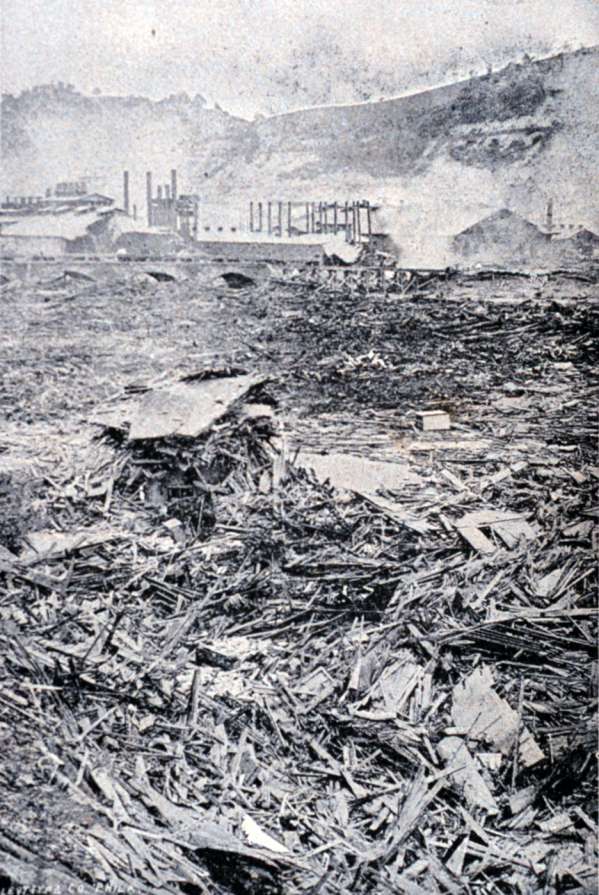


Causes and dam failure
After several days of heavy rain, the privately owned South Fork Reservoir became dangerously full. The reservoir was held by the South Fork Dam, about 14 miles upstream. Structural weaknesses and alterations made by the reservoir's owners — a club of wealthy local businessmen who used the lake for recreation — reduced the dam's ability to release floodwater safely. When the dam gave way, a devastating wave of water and debris rushed downstream.
What happened in Johnstown
As the torrent descended, it picked up trees, broken buildings and railcars. Debris collected at constrictions, including bridges and trestles, creating temporary dams that intensified flooding and fires when they burned. Entire blocks were swept away; many victims drowned or were crushed by falling structures. News reports and photographs from the time brought national attention to the scale of the catastrophe.
Relief, response and legal aftermath
Relief efforts were mobilized quickly. The American Red Cross, led by Clara Barton, played a prominent role in providing medical care, supplies and coordination of aid. Thousands of volunteers and donations poured into the region. Lawsuits filed by survivors against the dam owners largely failed, provoking public debate about responsibility for industrial and recreational infrastructure. The disaster contributed to later changes in engineering practice and public expectations for dam safety and liability.
Legacy and significance
The Johnstown Flood remains one of the deadliest disasters in 19th-century America and a touchstone in discussions of industrial privilege, public safety, and emergency relief. It spurred improvements in flood engineering, influenced legal thinking about hazardous activities, and is commemorated by museums, memorials and annual remembrances in the Johnstown area. For concise reference facts see:
- Date: May 31, 1889 (Johnstown Flood)
- Location: Johnstown, Pennsylvania
- River: Little Conemaugh River
- Cause: failure of South Fork Dam after heavy rain
- Reported deaths: 2,209
- Estimated damages: $17 million
Related articles
Author
AlegsaOnline.com Johnstown Flood (Great Flood of 1889) Leandro Alegsa
URL: https://en.alegsaonline.com/art/50939
Sources
- wdl.org : "Johnstown, Pennsylvania, 1904"