
Bay of Bengal: geography, history, climate, and economic importance
The Bay of Bengal is the northeastern arm of the Indian Ocean. This article summarizes its geography, physical features, climate influences, historical role, economic uses, and environmental challenges.
Overview: The Bay of Bengal is the large, roughly triangular sea indentation forming the northeastern part of the Indian Ocean. It lies west of the Malay Peninsula and east of India, opening southward into broader ocean waters. The name reflects the historic and geographic connection with the Bengal region: on its northern shore are the Indian state of West Bengal and the country of Bangladesh.
Image gallery
10 Images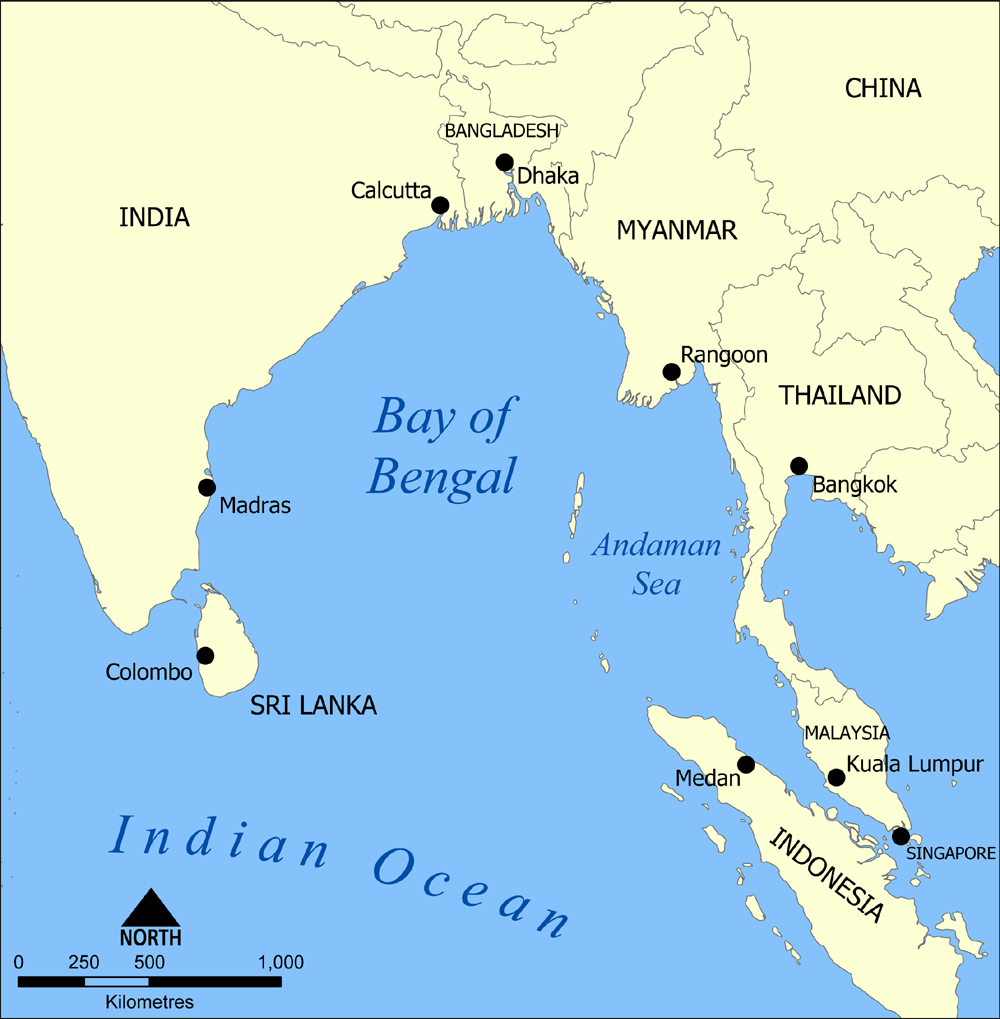





Physical characteristics
The bay has a wide continental shelf, large river deltas and extensive shallow areas that result from enormous sediment loads carried by the Ganges, Brahmaputra and other rivers. Its shoreline includes mudflats, sandy beaches and the vast mangrove swamps of the Sundarbans. Because of the way coastlines and currents converge, the bay often appears on maps as a broad triangle pointing south.
Climate and oceanography
Monsoons dominate the Bay of Bengal’s seasonal rhythm: the summer southwest monsoon brings heavy precipitation and strong winds, while the winter northeast monsoon changes wind and current patterns. The bay is also a frequent source of tropical cyclones that form over warm, shallow waters and can bring devastating storm surges to low-lying coasts.
History and human use
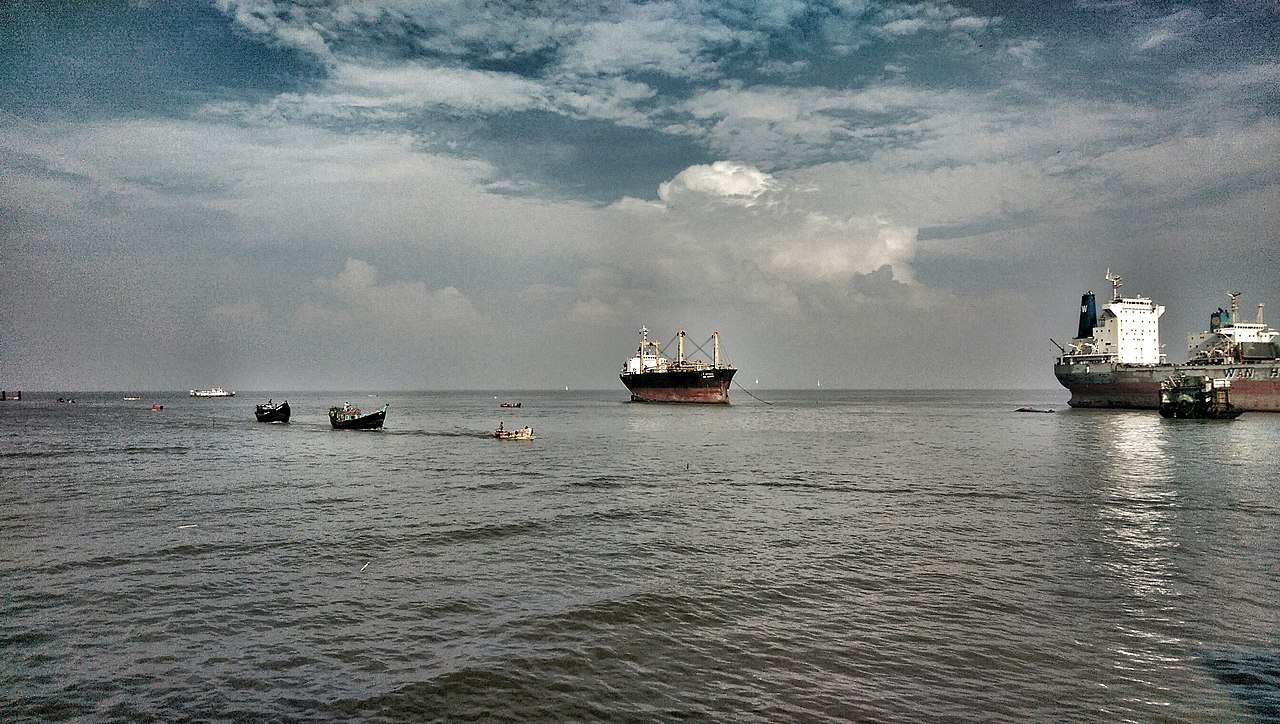
For centuries the bay has supported maritime trade and cultural exchange between South Asia and Southeast Asia. Coastal peoples have relied on rich fisheries and the fertile deltas for agriculture. Important modern ports and harbors ring the bay, serving regional shipping, fishing fleets and, increasingly, offshore energy exploration. Notable port cities on its shores include Kolkata (via the Hooghly), Chittagong (Chattogram) and Mongla in Bangladesh, and several major Indian and Myanmar ports.
Economic and ecological importance
- Fisheries: a major source of livelihood and food for millions of coastal inhabitants.
- Shipping lanes: crucial for intra-Asian and international trade connecting East, South and Southeast Asia.
- Energy: prospects for offshore oil and gas have attracted exploration activity.
- Coastal protection: mangroves and tidal flats provide natural buffers against storms and erosion.
Challenges and notable facts
The Bay of Bengal faces significant environmental pressures: coastal erosion, habitat loss, pollution, overfishing and the impacts of climate change such as sea-level rise and more intense cyclones. Its shallow bathymetry and heavy sedimentation influence navigation, fisheries productivity and the shape of coasts and deltas. Because of these factors the bay is a focal point for regional cooperation on disaster preparedness, sustainable fisheries and habitat conservation.
The Bay of Bengal remains both strategically important and environmentally sensitive: its currents, storms and rich biological productivity continue to shape the lives and economies of the nations around its rim.
More on the Bay of Bengal • Indian Ocean context • Malay Peninsula region • India and its coastline • Geographic shape • West Bengal • Bangladesh
Related articles
Author
AlegsaOnline.com Bay of Bengal: geography, history, climate, and economic importance Leandro Alegsa
URL: https://en.alegsaonline.com/art/9666