
Indian Territory: lands set aside for Native American nations in the United States
Indian Territory refers to lands within the United States reserved for Native American tribes, especially the area that became Oklahoma; it shaped tribal governance, treaties, relocation, and eventual statehood.
Overview
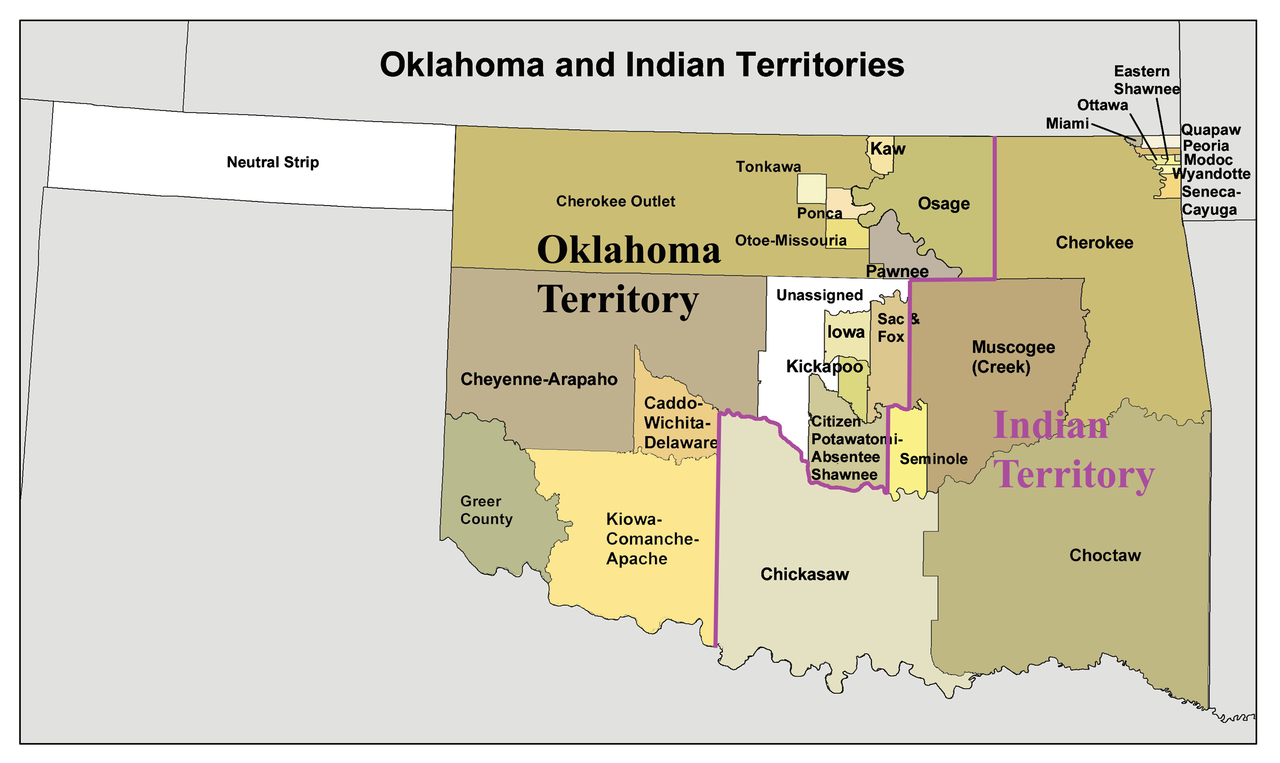
The term "Indian Territory" (also called "Indian Country" or "Indian Territories") describes lands that the United States set aside for the use and residence of Native American peoples. It is most commonly associated with the large area in the central United States that later became the state of Oklahoma. In broader use, it can refer to any region where tribal nations retained recognized control under treaties or federal policy. The phrase links to the history of federal Indian policy and settler expansion in the United States and the rights of Native Americans.
Image gallery
10 Images


Key characteristics and components
Indian Territory was not a single, uniform polity. It included multiple tribal nations, each with its own government, laws, and social structures. Many of the groups resettled there in the 19th century were the so-called Five Civilized Tribes—Cherokee, Choctaw, Chickasaw, Creek (Muscogee), and Seminole—but many other nations and bands also lived within or adjacent to these lands.
History and development
During the 19th century U.S. federal policy increasingly pushed Native nations from lands east of the Mississippi into designated western districts. The Indian Removal Act (1830) and subsequent treaties formalized relocation for many tribes. Over decades the territory’s boundaries, governance, and legal status evolved through treaties, congressional acts, and court decisions. Policies such as the Dawes Act (1887) and the Curtis Act (1898) broke up communal landholdings and altered tribal authority.
Uses and significance
Indian Territory functioned as a refuge, a place of tribal self-government, and a flashpoint in U.S. expansion. It was central to cultural survival for many nations but also to conflicts over land, jurisdiction, and resources. Economic activity ranged from subsistence and tribal commerce to ranching and rail-related development as non‑Native settlement increased.
Transition and legacy
The political entity known as Indian Territory largely ceased to exist when the surrounding region was reorganized and Oklahoma was admitted as a state in 1907. The legacy of the territory endures in tribal institutions, treaty rights, legal cases about jurisdiction and sovereignty, and in the contemporary geography of reservations and tribal nations. Important distinctions remain between the historical Indian Territory, modern reservations, and federally recognized tribal lands.
Notable facts
- Many relocated nations adapted their constitutions, schools, and courts in the territory.
- Federal legislation and court rulings during the 19th century repeatedly reshaped land tenure.
- The topic is central to current legal debates about tribal jurisdiction and treaty obligations.
Related articles
Author
AlegsaOnline.com Indian Territory: lands set aside for Native American nations in the United States Leandro Alegsa
URL: https://en.alegsaonline.com/art/47138