
Southern Ocean
Ocean encircling Antarctica, linking southern reaches of the Atlantic, Pacific and Indian Oceans; central to global climate, ocean circulation and distinctive polar ecosystems; commonly delimited near 60°S.
Overview
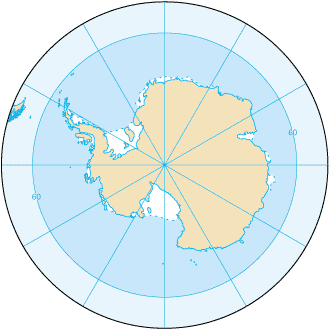
The Southern Ocean is the body of water that surrounds the continent of Antarctica and links the southern extents of the Atlantic, Pacific and Indian Oceans. It is often treated as a distinct oceanic region and is referred to in general sources as the Southern Ocean or the Antarctic Ocean. The northern limit has been discussed since the 18th century; a practical convention used by many international bodies places the boundary near 60° south latitude, though cartographic and jurisdictional definitions can vary.
Image gallery
10 Images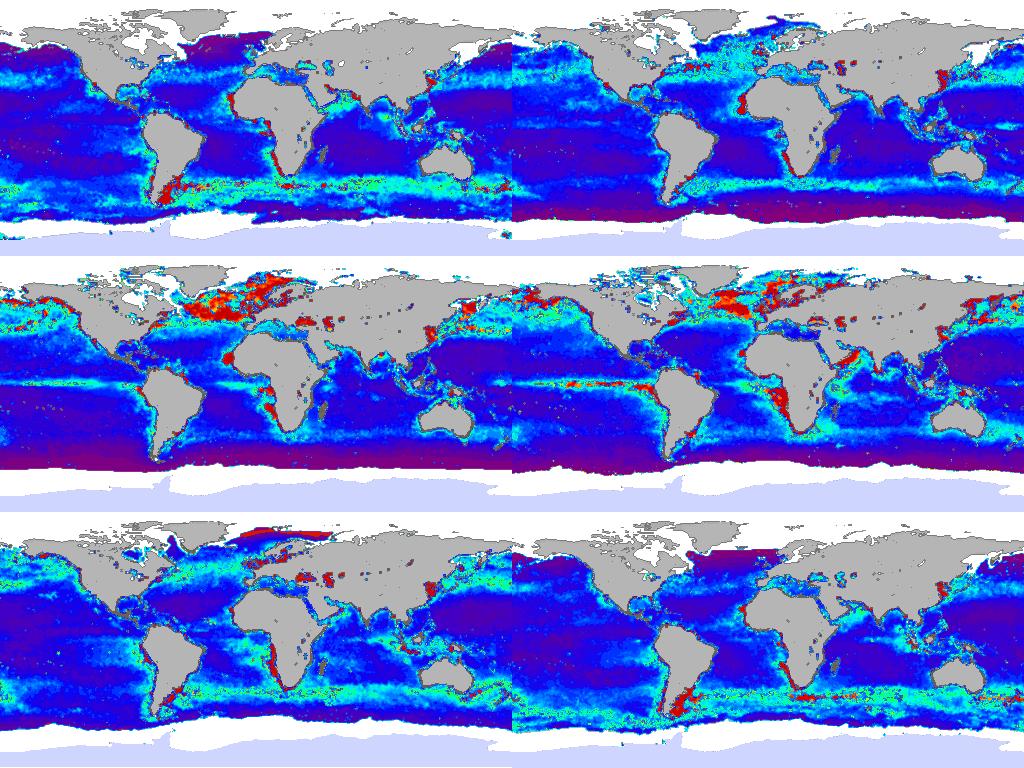


Physical characteristics and oceanography
The Southern Ocean covers roughly 20.3 million square kilometres and has a lengthy, indented coastline along Antarctica (reported at around 17,968 km). It is unique among the world's oceans in that it is defined largely by oceanographic features rather than by enclosing continents. The eastward-flowing Antarctic Circumpolar Current (ACC) connects the major ocean basins, transports large volumes of water, and helps regulate global heat and salt distributions. Water mass formation around Antarctica, including the export of dense Antarctic Bottom Water, contributes to the global thermohaline circulation and influences deep ocean properties.
Sea ice, climate role and notable regions
Seasonal sea ice expands and retreats across large areas each year, strongly affecting albedo, ocean-atmosphere exchange and habitat availability. Polynyas and marginal seas such as the Ross Sea, the Weddell Sea and the Scotia Sea are especially important for sea-ice dynamics and marine productivity. The Southern Ocean is a major sink for atmospheric carbon dioxide and plays a key role in redistributing heat between latitudes, so changes there have wide climatic implications.
Biology and ecosystems
Cold, nutrient-rich waters support abundant phytoplankton blooms that sustain large populations of Antarctic krill, the foundation of many polar food webs. Krill in turn feed penguins, seals, whales and numerous seabirds. The region hosts specialised and often highly seasonal ecosystems adapted to extreme light and ice conditions. Conservation concerns focus on the impacts of warming, changing sea-ice patterns and fishing pressure on these interconnected communities.
Human presence, research and governance
- Scientific research: International research stations and seasonal field programs study climate, glaciology, marine biology and oceanography using ships, autonomous platforms and satellites.
- Fisheries and management: Commercial fishing is limited to a few species and is subject to international regulation under agreements such as those overseen by regional management bodies; conservation measures aim to balance exploitation and ecosystem protection.
- Governance: Activities in and around the Southern Ocean are influenced by the Antarctic Treaty System and related organisations; national, regional and international institutions contribute to monitoring and management, and to continental and maritime studies.
History, mapping and resources
Maps and geographic practice have changed over centuries; while some cartographers formerly treated the waters south of particular continents as extensions of neighbouring oceans, the more recent, oceanographic approach emphasizes the circumpolar current and frontal zones. For general guidance on boundaries and conventions consult overview materials and specialised resources on latitude and maritime limits such as pages about latitude conventions and about the Antarctic region available through authoritative portals represented here by placeholders like regional summaries and governance texts at management sites.
Related articles
Author
AlegsaOnline.com Southern Ocean Leandro Alegsa
URL: https://en.alegsaonline.com/art/92306