
Honeydew: sugary insect secretion from sap-feeding insects
Honeydew is the sticky, sugary excretion produced by sap-feeding insects. It influences plant health, fosters mutualisms (with ants and bees), and can be transformed into dark honey valued in some regions.
Honeydew is a sweet, sticky liquid produced as a waste excretion by many sap-feeding insects. It forms when animals such as aphids and some scale insects tap into the phloem or other internal fluids of plants and remove nutrients. Because plant sap is rich in sugars but relatively poor in certain amino acids and other nutrients, these insects must process and eject excess sugary fluid; the result is honeydew, a concentrated sugar solution and liquid residue that is often very sticky.
Image gallery
6 Images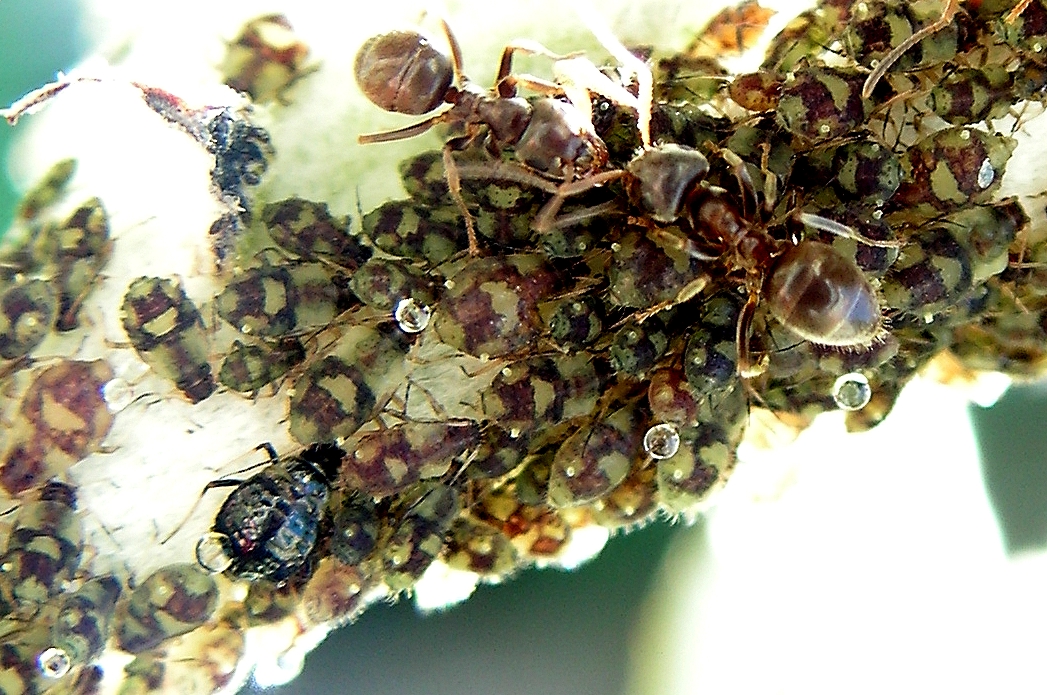


Formation and composition
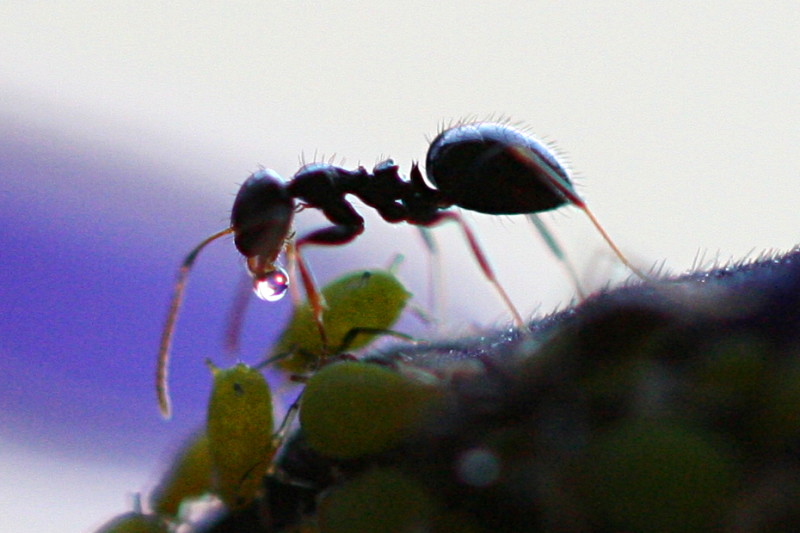
Honeydew is produced when an insect inserts its mouthparts into plant tissue to access plant sap. The sap within a plant is frequently held under tension and some pressure; when insects feed, that internal pressure can push sap into the insect faster than it can use or assimilate it. Excess fluid is expelled from the rear of the insect as a droplet of honeydew. Its composition varies with the host plant and the insect species, but it typically contains a high proportion of simple sugars (like glucose and fructose), small amounts of amino acids, water, and sometimes secondary plant compounds.
Ecological interactions and effects
Honeydew plays an important ecological role. It is a food resource for many animals: certain insects (including some wasps and honey bees) collect it directly, and ants commonly tend and herd sap-feeders to harvest droplets. In many mutualisms, ants harvest honeydew from aphids and in return protect those aphids from predators such as lady beetles. Honeydew can also coat leaves and stems; when it accumulates it may promote growth of sooty molds and other fungi that darken plant surfaces and reduce photosynthesis.
Human uses and significance
Bees can convert honeydew into a distinctive dark honey known as honeydew honey. This variety differs from floral honeys in color, flavor and texture and is produced in notable quantities in parts of Europe and Asia. In some cultures honeydew honey is prized for its strong taste and sometimes attributed traditional medicinal qualities, though scientific evidence for therapeutic claims varies. For beekeepers and farmers, honeydew events can be both beneficial—by supporting pollinators and producing specialty honey—and problematic if resulting sooty molds or ant activity harm crops.
Management, distinctions and notable facts
- Honeydew differs from nectar: nectar is produced by plants to attract pollinators, while honeydew is an insect excretion.
- Because honeydew can attract a diversity of scavengers and mutualists, its presence often alters local insect communities and food webs.
- Integrated management of honeydew-related problems focuses on controlling the sap-feeding insects, reducing ant protection of pests, and maintaining plant health to limit excessive exudation.
Overall, honeydew is a small but influential product of sap-feeding insects that connects plant physiology, insect behavior and wider ecological and agricultural outcomes. For more general background see honeydew honey descriptions or summaries of sap-feeding insect ecology via specialist resources like ant behavior summaries and regional apiculture guides. Additional reading on related concepts can be found through introductory entomology and plant physiology material: for example, overviews of insect-plant interactions and the role of plant sap in ecosystem processes.
Questions and answers
Q: What is honeydew?
A: Honeydew is a sticky liquid sugar that aphids and some scale insects make when they eat plant sap.
Q: How is honeydew made?
A: In order to eat plant sap, an aphid or scale insect pushes its mouth parts into the plant. The pressure inside the plant pushes the sap into the insect, and sometimes the sap is forced out of the rear of the insect, which is how honeydew is made.
Q: What problems can honeydew cause for plants?
A: Honeydew on plants can cause sooty mould, which appears as white powder on the plant.
Q: What insects collect honeydew?
A: Some insects, such as some wasps and bees, collect honeydew.
Q: What is honeydew honey?
A: Honeydew honey is a dark, strong honey made by some honey bees using honeydew.
Q: Where is honeydew honey valuable?
A: Honeydew honey is valuable in parts of Europe and Asia.
Q: How do ants and aphids interact regarding honeydew?
A: Ants collect honeydew from aphids, often directly from the aphids themselves. This helps the aphids because the ants chase predators, such as lady beetles, away from them.
Related articles
Author
AlegsaOnline.com Honeydew: sugary insect secretion from sap-feeding insects Leandro Alegsa
URL: https://en.alegsaonline.com/art/44991