
Liquid (state of matter): properties, behavior, and examples
A liquid is a state of matter with definite volume but no fixed shape. This article explains molecular behavior, physical properties, phase changes, pressure in liquids and practical uses.
Overview
A liquid is one of the classical states of matter that lies between a solid and a gas in its mechanical behavior. Unlike a solid, a liquid does not retain a fixed shape; instead it conforms to the shape of its container while maintaining an approximately constant volume. The particles in a liquid are close together but can move past one another, allowing the substance to flow and change form under even small applied forces.
Image gallery
6 Images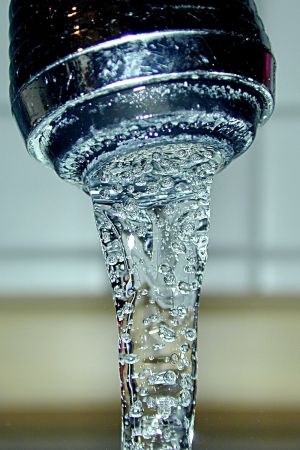


Key characteristics
Several macroscopic properties and molecular features distinguish liquids. Surface tension and cohesion arise from intermolecular attractions and give liquids a tendency to minimize surface area. Liquids are relatively viscous compared with gases; viscosity measures resistance to flow and varies widely from low-viscosity fluids like many oils to highly viscous substances such as tar. Most liquids are difficult to compress because their molecules are already closely packed.
Temperature changes can drive phase transitions: cooling a liquid below its freezing or melting point yields a solid, while heating it to its boiling point converts it to a gas. Common examples include water, many oils, and biological fluids such as blood.
Hydrostatic pressure and density
One important consequence of liquid behavior under gravity is that pressure increases with depth. At a point a distance z below the free surface in a liquid of uniform density, the hydrostatic pressure p is given by the relation p = ρ g z, where ρ is the liquid's density and g represents gravitational acceleration. This relationship explains everyday phenomena such as why deep water exerts greater force on submerged objects and why containers must withstand higher loads near their bottoms. The column of liquid above any point transmits pressure to lower layers; Pascal's principle extends this concept to enclosed fluids and underpins hydraulic machinery.
Applications and importance
Liquids play central roles in technology, biology and the environment. Hydraulic systems exploit the near-incompressibility of liquids to transmit force; lubricants with tailored viscosity reduce wear in engines; heat transfer fluids move thermal energy in cooling and heating systems; and water is essential for chemistry and life. Biological liquids (for example, blood) transport nutrients, gases and wastes in organisms. Many industrial processes depend on controlling phase changes—evaporation, condensation, freezing—for distillation, refrigeration and material processing.
Variations and notable distinctions
Not all liquids behave identically. Newtonian liquids have a constant viscosity independent of shear rate, but non-Newtonian fluids change viscosity under stress (examples found in food, paints and polymers). Surface effects become dominant in very small volumes, giving rise to capillarity and wetting phenomena that matter in biology and microfluidics. In contrast to gases, liquids have short-range order (molecules remain near neighbors) but lack the long-range order of solids. The study of liquids falls into subfields such as hydrostatics, which treats fluids at rest, and hydrodynamics, which analyses fluids in motion.
- Typical examples: water, oils, blood, mercury and liquid metals.
- Key measured quantities: density, viscosity, surface tension, and vapor pressure.
- Related concepts: pressure, buoyancy and container interactions (adhesion and wetting).
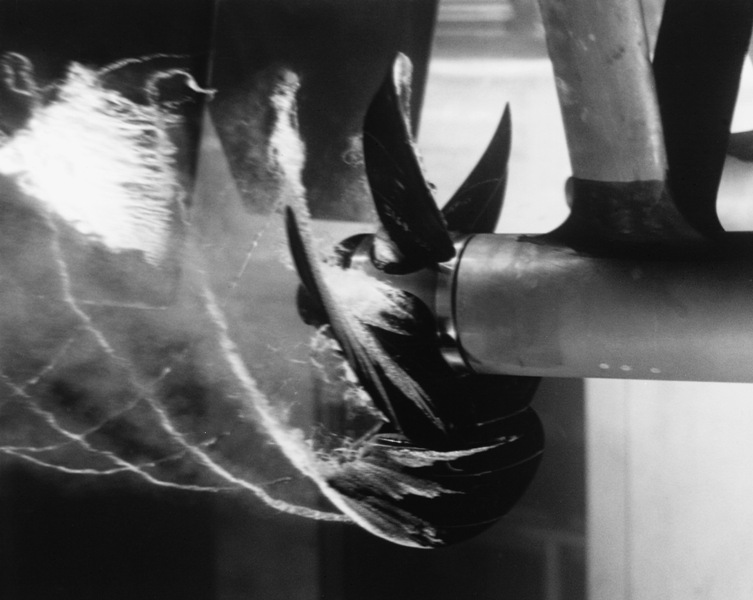
For further reading on basic fluid properties, historical developments in hydrostatics and applied fluid systems, consult introductory physics and engineering resources or specialized texts in fluid mechanics. Many practical demonstrations and experiments illustrate how liquid properties determine everyday behavior from dripping faucets to the flight of ships and the functioning of biological circulatory systems.
Questions and answers
Q: What is a liquid?
A: A liquid is a form of matter that falls between solid and gas. It has an almost-fixed volume but no set shape, and its molecules can freely move among themselves.
Q: How does gravity affect liquids?
A: Gravity makes liquids take the shape of the container they are in because every small force causes them to change their shape by flowing.
Q: What is viscosity?
A: Viscosity is a measure of how slowly or quickly fluids flow. Fluids with high viscosity, such as tar, may seem solid.
Q: Is it possible to compress a liquid?
A: No, it is difficult to compress a liquid.
Q: At what temperature does a liquid become a solid?
A: If a liquid is cooled down below its melting point or freezing point (which varies depending on the type of liquid), it will become a solid.
Q: At what temperature does a liquid become gas?
A: When heated up above its boiling point, the liquid will become gas.
Q: How do you calculate pressure in liquids?
A: Pressure in liquids can be calculated using the equation p = ρgz where z is the depth of the point below the surface, g is how strong gravity is pulling on the liquid, and ρ is density which tells us how heavy set amount of the liquid is.
Related articles
Author
AlegsaOnline.com Liquid (state of matter): properties, behavior, and examples Leandro Alegsa
URL: https://en.alegsaonline.com/art/58379
Sources
- chemicool.com : "Definition of liquid - Chemistry Dictionary"
- brainyquote.com : "Definition of Liquid"
- spacegrant.hawaii.edu : "Teacher Page: Viscosity"
- physlink.com : "Can you compress a liquid (water)?"