
Electrical conductor
Material that permits the flow of electric charge; properties, common materials, uses, temperature effects, safety and distinctions from insulators, semiconductors and superconductors.
Overview
An electrical conductor is any substance that allows the movement of electric charge and therefore supports the flow of electricity. Many conductors also transmit heat and can carry mechanical waves such as sound, but the defining property in electrical contexts is their ability to let charge move under an applied electric field.
Image gallery
3 Images

Key properties
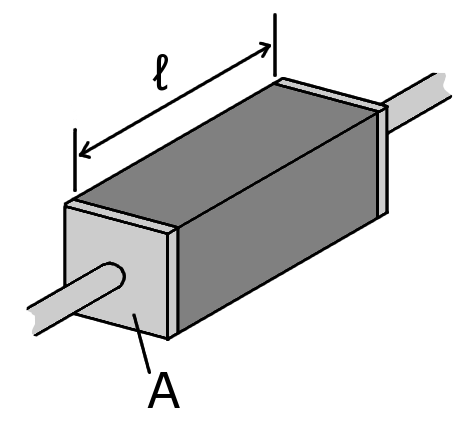
The ease with which a material carries charge is quantified by electrical conductivity, while the opposition to flow is its electrical resistivity. Conductivity and resistivity are inverses: high conductivity means low resistivity. Most metallic conductors increase in resistivity as temperature rises, because lattice vibrations scatter charge carriers. By contrast, superconductors are special materials that, below a critical temperature, exhibit essentially zero electrical resistance.
Common conductor materials
Conductors used in everyday and industrial applications are chosen for conductivity, mechanical strength, corrosion resistance and cost. Typical examples include:
- Copper — widely used for power and signal wiring
- Aluminum — lighter and used in overhead power lines
- Silver and gold — very high conductivity and used in specialized or corrosion-resistant contacts
- Water — especially when containing dissolved salts; pure water is a poor conductor
- Biological materials such as living tissues and components of the human body, which conduct because of ions in fluid
- Metals in general, including iron (iron), are the backbone of electrical distribution systems
Applications and examples
Conductors are used wherever controlled transfer of electric current is required: building wiring, power transmission, grounding, busbars, and electronic interconnects. Flexible conductors and cables are formed into wires and multi‑core assemblies. In high‑temperature or ionized environments, ionized gas or plasma can provide excellent conduction and is exploited in devices such as fluorescent lamps and plasma torches.
Safety, insulation and handling
Because many common materials can conduct, safety depends on preventing unintended contact with live conductors. Materials that inhibit charge flow are called insulators; wires are typically covered by insulating jackets made from plastic or other polymers. Liquids that are impure often conduct because dissolved ions permit current, so water near electrical equipment poses a hazard.
Distinctions and notable facts
Not all materials fall into a simple conductor/insulator dichotomy. Semiconductors occupy an intermediate regime: their conductivity depends strongly on temperature, impurities (doping) and applied fields, and they form the basis of modern electronics. At extreme conditions—very low temperatures for superconductors or very high temperatures for plasmas—materials can show qualitatively different conduction behavior. Understanding the microscopic mechanisms (free electrons in metals, ions in solutions, charge carriers in semiconductors) is essential for selecting the right conductor for any application.
Related articles
Author
AlegsaOnline.com Electrical conductor Leandro Alegsa
URL: https://en.alegsaonline.com/art/30693