
Electrical filament: function, materials, history, and uses
A filament is a thin wire or element that emits light or electrons when heated or energized; used in incandescent lamps and vacuum tubes, commonly made of tungsten and shaped to maximize output.
Overview
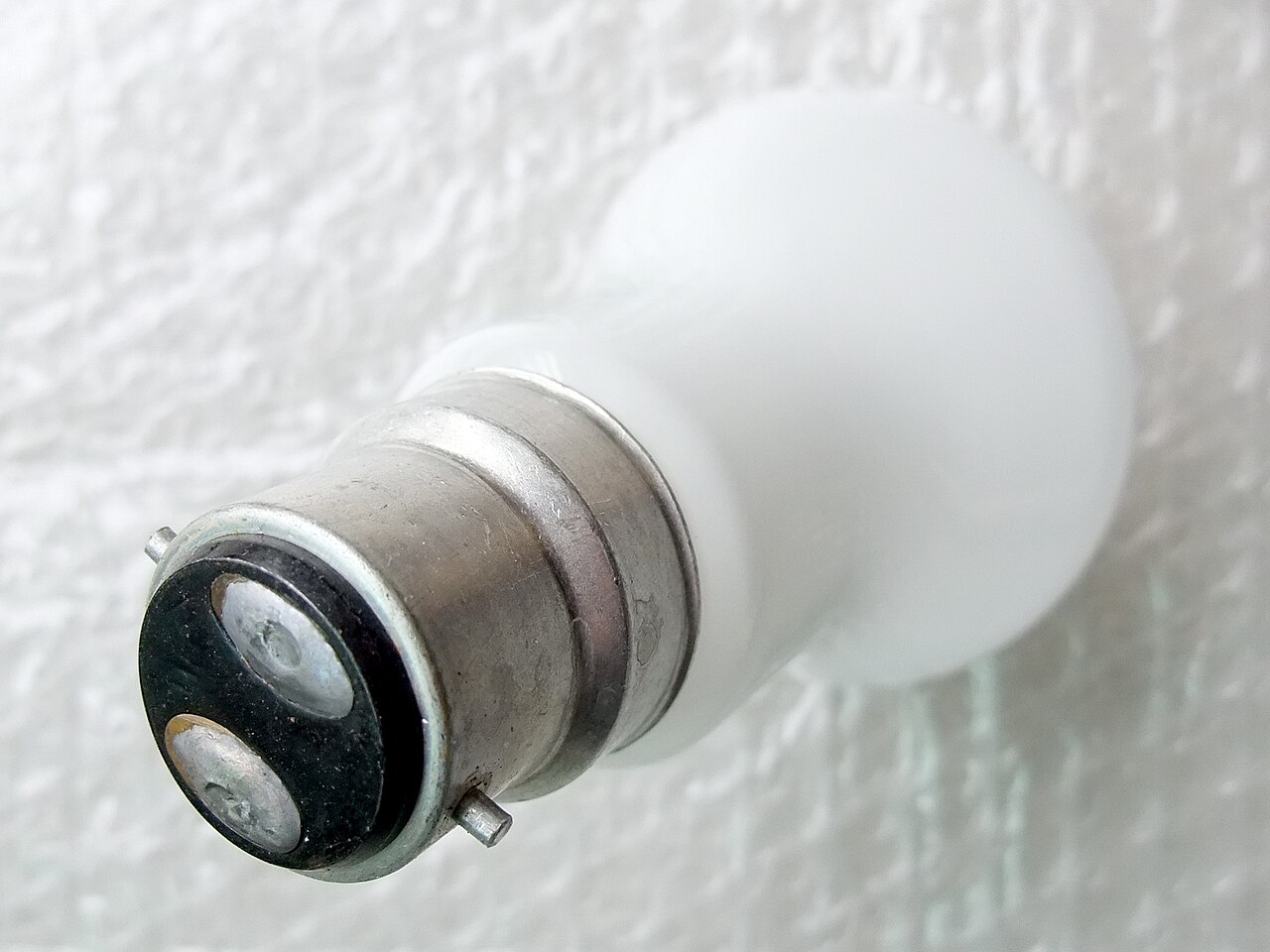
A filament is a slender conductor or element that produces light or emits electrons when it is heated by an electric current. In the most familiar application, the filament is the glowing element inside an incandescent lamp; it converts electrical energy to visible light by becoming very hot. The term also applies to the electron-emitting wire inside certain vacuum devices used in older electronics.
Image gallery
10 Images



Materials and design
Modern lamp filaments are most often made of tungsten because of its exceptionally high melting point and mechanical strength at elevated temperatures. Filaments are usually formed from a fine wire that is sometimes wound into a tighter spiral known as a coiled coil to increase its length in a compact space and to raise operating efficiency. Designs vary by application: some filaments are straight, some are spiral, and some are supported by thicker lead-in wires to keep them positioned within the bulb or envelope.
Characteristics and performance
- Light generation: The filament emits light when resistive heating causes it to glow.
- Heat and efficiency: A large portion of the electrical energy becomes heat rather than visible light, which limits luminous efficiency compared with newer technologies.
- Durability: Filament life depends on material purity, mechanical stresses, and operating conditions; thin sections and temperature cycles contribute to eventual failure.
History and development
Early experiments with incandescent lighting used carbon or metallic threads; development over the 19th and early 20th centuries led to more reliable filaments and evacuated or gas-filled envelopes to reduce oxidation. The adoption of tungsten filaments was a key advance because it allowed higher operating temperatures and brighter light. Filament-like elements were also central to vacuum tubes, where a heated filament or cathode emitted electrons to control current flow in amplifying circuits.
Uses, examples, and importance
Filaments are most often associated with incandescent light bulbs but appear in a range of devices: vacuum tubes (as the electron-emitting element), certain types of heaters, and some scientific instruments. They rely on an applied electric current that passes through the filament material such as tungsten, causing it to glow. Designers balance brightness, lifetime, and energy consumption when choosing filament geometry and operating conditions.
Failure modes and modern alternatives
Filament failure most commonly occurs by thinning and breakage due to prolonged high-temperature operation and cyclical mechanical stress. To extend life, bulbs may be filled with inert gas or the filament coiled more tightly. Over recent decades, more energy-efficient light sources such as compact fluorescents and light-emitting diodes have largely supplanted filament lamps in many applications, while filaments remain important where their particular light quality or simplicity is desirable.
Questions and answers
Q: What is an electrical filament?
A: An electrical filament is a small thin wire in an incandescent light bulb that produces light.
Q: What holds up the electrical filament in an incandescent light bulb?
A: Two bigger wires hold up the electrical filament in an incandescent light bulb.
Q: What is the filament made of in incandescent light bulbs?
A: Filaments in incandescent light bulbs are made of tungsten.
Q: What happens when an electric current goes through the filament?
A: When an electric current goes through the filament, the filament glows and produces light.
Q: What is the filament also known as in a vacuum tube?
A: In a vacuum tube, the filament is also known as the electron emitting element.
Q: How is the filament usually made in order to produce more light in an incandescent light bulb?
A: To produce more light, the filament in an incandescent light bulb is usually made of coils of fine wire, also known as the coiled coil.
Q: What is the main function of the filament in an incandescent light bulb?
A: The main function of the filament in an incandescent light bulb is to produce light when an electric current goes through it.
Related articles
Author
AlegsaOnline.com Electrical filament: function, materials, history, and uses Leandro Alegsa
URL: https://en.alegsaonline.com/art/30697