
Electrical Resistance: Definition, Causes, Laws, and Practical Roles
Electrical resistance quantifies how strongly a material opposes electric current. Overview, Ohm’s law, resistivity, temperature effects, differences from conductance and impedance, and common applications and measurements.
Electrical resistance measures how much a material or device resists the flow of electric charge. In simple terms, it links the electrical pressure called voltage to the resulting flow of charge known as current. A larger resistance means a smaller current for a given applied voltage. Resistance is a fundamental property of everyday components such as wires, resistors and heating elements, and it underlies losses in power transmission as well as the controlled behavior of electronic circuits.
Image gallery
5 Images


Basic law and units
The common relationship used to describe resistance is Ohm’s law, formulated by Georg Simon Ohm in the 1820s. Ohm’s law states that R = V / I, where R is resistance, V is the potential difference (voltage) and I is the current. The SI unit of resistance is the ohm, symbolized by Ω. Conductance is the reciprocal of resistance and is measured in siemens (S).
Material and geometric factors
Resistance depends on both the intrinsic properties of a material and the shape of the object. The key factors include:
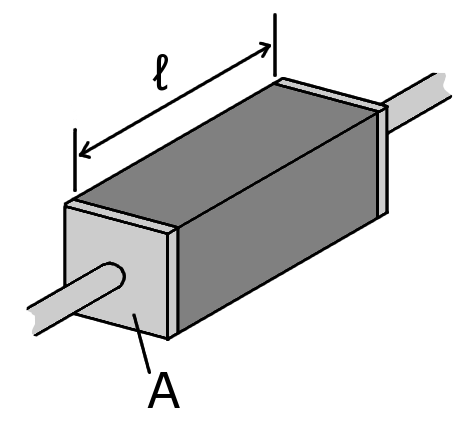
- Resistivity: an intrinsic material property (often denoted by the Greek letter rho) that quantifies how strongly a material opposes current. Its unit is ohm·meter.
- Length: resistance is proportional to the length of a conductor — a longer path gives greater resistance.
- Cross-sectional area: resistance is inversely proportional to the area — a thicker conductor has lower resistance.
Temperature and other dependencies
Resistance typically changes with temperature. For most metals, resistance increases as temperature rises because thermal motion scatters conduction electrons. In many semiconductors and electrolytes the opposite occurs: conductivity improves at higher temperatures. Some materials exhibit very strong dependencies or non-linear behaviors; superconductors are notable exceptions that can exhibit effectively zero resistance below a critical temperature — see superconductors.
AC, impedance and related concepts
In alternating current (AC) circuits, the simple concept of resistance extends to impedance, which also accounts for phase-shifting effects from capacitance and inductance. Unlike pure resistance, impedance is a complex quantity combining magnitude and phase. For steady direct current (DC) conditions, resistance alone suffices. The distinction between resistance and conductance is straightforward: conductance measures how easily current flows, while resistance quantifies opposition.
History, measurement and practical importance
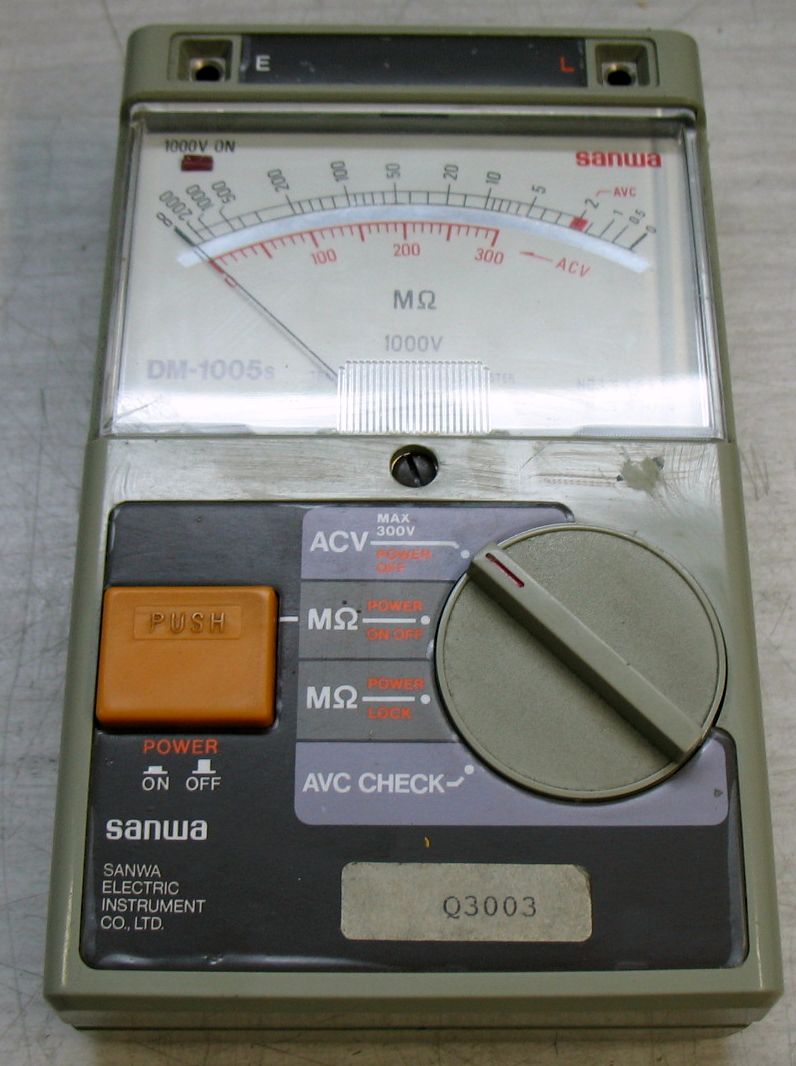
The formal study of resistance and its relationship to voltage and current was codified by Ohm; modern references discuss this as Ohm's law. Resistance is measured with instruments such as ohmmeters and multimeters, and it appears in many applications: current limiting, voltage division, heating (as in electric heaters), sensing (thermistors change resistance with temperature) and signal conditioning. In engineering work, attention to resistance is crucial because it affects power dissipation, heating, efficiency and safety in electrical systems. For components and conductors, datasheets and standards describe resistance behavior and acceptable limits, and designers often consult material tables for resistivity of metals, alloys and semiconductors — for example when choosing a conductor for a particular application.
Related articles
Author
AlegsaOnline.com Electrical Resistance: Definition, Causes, Laws, and Practical Roles Leandro Alegsa
URL: https://en.alegsaonline.com/art/30702