
Deus Ex — 2000 cyberpunk action RPG and immersive-sim video game
Deus Ex (2000) is a critically acclaimed cyberpunk first-person action-RPG that blends shooting, stealth, role-playing and conspiracy-driven storytelling. It emphasizes player choice, augmentation, and multiple solutions.
Deus Ex is a hybrid first-person action role-playing game first released in 2000. Developed by Ion Storm (Austin) and published by Eidos, it combines elements of shooters, stealth sims and classic RPGs to create an open-ended single-player experience. The player assumes the role of J.C. Denton, an agent whose abilities are enhanced by futuristic nanotech augmentations. The title is noted for its branching narrative, emergent problem-solving and a setting that interweaves global conspiracies with questions about technology and human nature. For basic reference, see the game's primary page Deus Ex overview.
Image gallery
5 Images


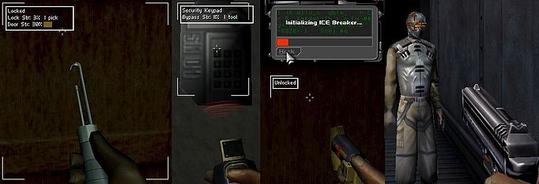

Gameplay and structure
Gameplay mixes combat, stealth, exploration and dialogue. Players can approach objectives with lethal force, non-lethal takedowns, hacking, social manipulation or bypassing obstacles entirely. Character growth is expressed through skill development and upgradeable augmentations rather than fixed classes; players invest earned points in talents such as marksmanship, stealth, hacking or medical abilities. Typical tools and threats include automated systems and robots, human opponents, and environmental hazards—using ventilation ducts or alternate routes is a common stealth tactic. For the PC release specifics, consult PC version notes.
Setting, characters and conspiracies
The game is set in a near-future, cyberpunk-tinged world rife with political instability and shadowy organizations. Central to the plot are secretive power structures and advanced artificial intelligences that manipulate events from behind the scenes. The story explicitly engages with conspiracy motifs, including references to groups like the Illuminati and autonomous AI systems. The protagonist's role as a nanotech-augmented agent places him at the intersection of state power, private interests and transhumanist debate; his family ties and ambiguous employers complicate loyalties and choices. For more about the conspiracy elements, see conspiracy themes and the game's futuristic setting future backdrop. The Illuminati motif is discussed further at mythic conspiracies, and AI themes at artificial intelligence.
Protagonist, tools and progression
J.C. Denton is a cybernetically enhanced agent whose augmentations can be customized to support different playstyles. He confronts robots, human adversaries and explosives during missions; his personal relationships—most notably his brother—figure into the narrative and the choices he faces. Progression is driven by completing objectives and earning experience and upgrade points, which can be spent to improve skills or buy equipment. Common in-game mechanics include stealth routes (such as ventilation shafts), weapon upgrades and non-combat solutions. See entries on the protagonist and cyborg augmentation at cyborg protagonist, robots robotic threats, and explosives/mission hazards explosives. References to supporting characters and employer factions appear at factions and employers.
Core features
- Nonlinear missions with multiple solutions and meaningful consequences.
- Customizable augmentations and skill systems rather than rigid classes.
- Blended gameplay: shooting, stealth, dialogue and hacking.
- Environment-based problem solving (vents, security systems, social routes).
Typical in-mission interactions—such as sneaking through military areas via ventilation shafts or trading earned resources for upgrades—illustrate the game's layered approach to objectives. Players often convert mission rewards into improved combat accuracy or equipment like pistols and tools (in-game economy, weapon upgrades).
Themes, influences and reception
Deus Ex explores themes of surveillance, control, transhumanism and the ethical implications of advanced knowledge. Its narrative and philosophical questions drew contemporary comparisons to films such as The Matrix, which address reality and autonomy, though Deus Ex develops these through interactive choice rather than cinematic spectacle. Upon release in 2000 the game received widespread critical acclaim for its ambition and design; it has since been cited as a landmark title in immersive simulations and narrative-driven games and has won multiple industry awards. For the original release year and contemporary context see 2000 release, with thematic discussions at philosophical themes, knowledge and power, and representations of terrorism. Cultural comparisons to The Matrix are noted at The Matrix parallels.
Legacy and related titles
Deus Ex's open-ended, player-driven structure influenced later games emphasizing choice and systemic gameplay. It spawned sequels and prequels—each exploring different eras of the series' timeline—and remains a frequent reference point in discussions about narrative agency in games. Its combination of genres and willingness to tackle weighty themes helped secure its reputation as one of the most influential PC titles of its generation.
Related articles
Author
AlegsaOnline.com Deus Ex — 2000 cyberpunk action RPG and immersive-sim video game Leandro Alegsa
URL: https://en.alegsaonline.com/art/26935