
Artificial intelligence: overview, history, methods, applications and types
A clear, compact encyclopedia article on artificial intelligence: what it is, how it works, key approaches, historical milestones, common applications, classifications and ethical considerations.
Overview
Artificial intelligence (AI) refers to computer systems and programs designed to perform tasks that, when performed by humans, require intelligence. At its core AI combines methods for acquiring data, creating representations of the world, and selecting actions to achieve goals. A simple way to think about AI is as a computer program or machine that can adapt its behaviour based on experience rather than solely following fixed, hand-coded instructions. The term "artificial intelligence" was introduced by John McCarthy in the 1950s and has since covered a range of techniques, from rule-based systems to modern machine learning.
Image gallery
10 Images


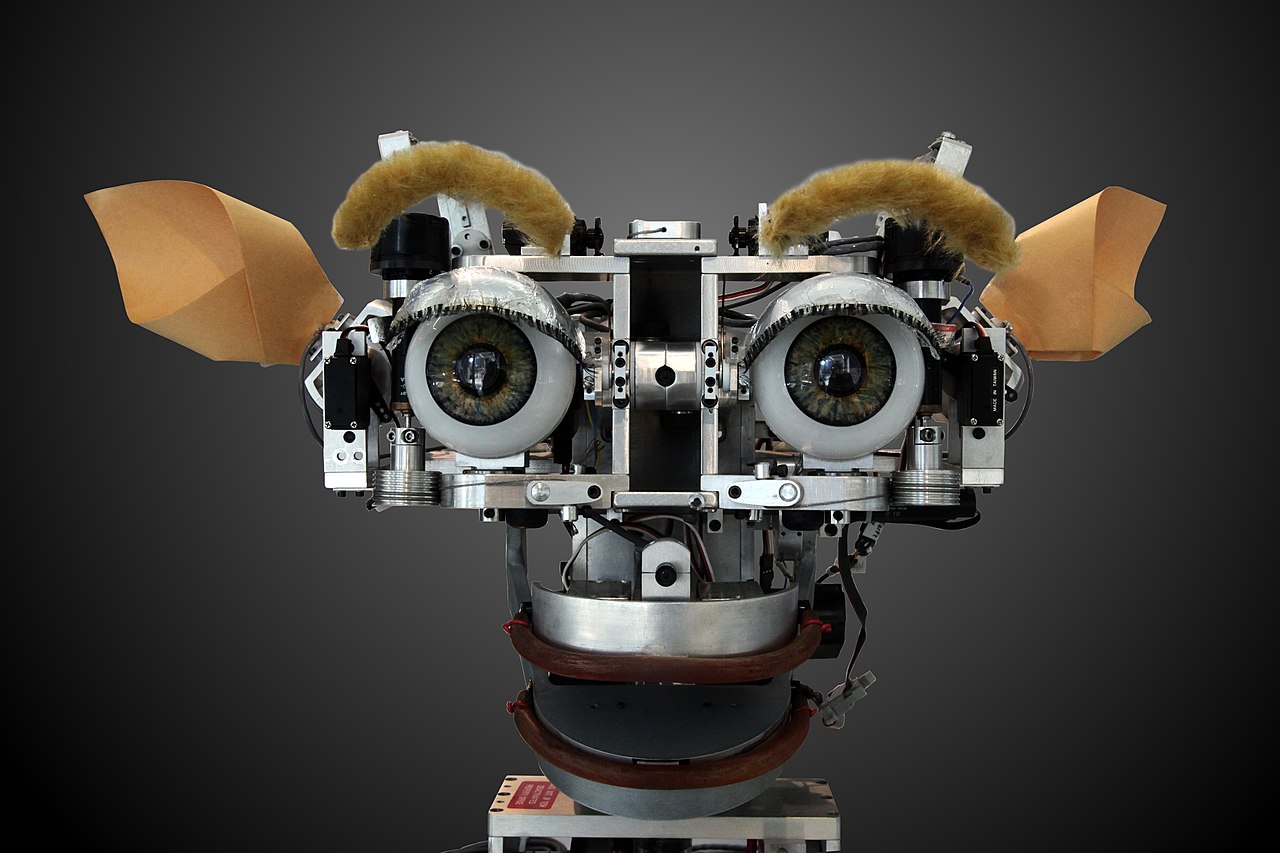


Key characteristics and components
AI systems are commonly described by their ability to interpret input, learn from data, and act to achieve specified goals. The notion of mimicking human mental processes — such as perception, reasoning, learning, and problem solving — links AI to the study of cognition. Typical components include data representation, learning algorithms, decision-making modules and interfaces to sensors or users. Important capabilities often associated with AI are:
- Learning: improving performance from examples or experience (learning).
- Reasoning: drawing conclusions and making plans (problem solving).
- Perception: transforming raw signals into structured information (perceives).
- Communication: understanding and generating language and other signals.
Historical development and approaches
AI research has moved through distinct phases: early optimism with symbolic logic and search algorithms; subsequent periods of limited progress (sometimes called "AI winters"); and renewed advances driven by statistical learning and increased computational resources. Early milestones included formal descriptions of intelligent agents and demonstrations that machines could play games or prove theorems. Over time the field incorporated ideas from many disciplines — for example, computer science, mathematics, linguistics, psychology, neuroscience, and philosophy — to develop varied techniques such as logic-based systems, probabilistic models, neural networks and reinforcement learning. Management and business scholars have also contributed taxonomies and practical frameworks for adoption (management literature), while contemporary authors like Kaplan and Haenlein offer classifications that emphasize differing mixes of cognitive and emotional competencies.
Applications and examples
Modern AI powers a broad set of applications. Speech and language technologies enable virtual assistants and automated transcription (speech recognition); game-playing systems have demonstrated high-level strategic skill in domains such as Chess and Go; recommendation engines sort content and personalise services; and autonomous vehicles use perception and planning to navigate. Data-intensive tasks such as searching databases or performing large-scale numerical computations are natural fits for machines. Some functions once described as AI — for example, optical character recognition — have become standard software components and are no longer viewed as particularly "intelligent" even though they remain practically important.
Types, classifications and capabilities
AI is frequently described by its scope and capabilities. "Narrow" or domain-specific AI systems excel at particular tasks, while the long-sought goal of "general" AI would involve flexible problem solving across many domains. Scholars also distinguish systems by internal properties: analytical AI focuses on cognitive abilities alone; human-inspired AI includes affects such as emotional intelligence alongside cognition; and humanized AI would incorporate social and self-reflective competencies. In practice most deployed systems today are analytical and specialised, designed to augment or automate narrowly defined processes.
Challenges, limitations and societal considerations
Despite rapid progress, AI faces technical and social limits. Technical issues include robustness, interpretability, data quality and transferability of learned behaviour between contexts. Ethical and policy questions concern fairness, privacy, accountability and the economic impact of automation. Some observers warn about long-term risks if powerful autonomous systems appear without adequate governance; others emphasise near-term benefits and the need for responsible design. A balanced approach combines technical safeguards with public discussion and regulation so that AI systems serve broadly beneficial ends.
Why AI matters
AI influences science, industry and everyday life by making it possible to process vast amounts of information, automate routine work, and augment human decision-making. As techniques mature and compute capacity grows, AI will continue to reshape domains from healthcare and transportation to creative industries. Understanding its history, methods and societal implications helps citizens, practitioners and policymakers make informed choices about adoption and oversight.
For further reading on foundational ideas and specific technologies see works cited by researchers such as Kaplan and Haenlein and historical accounts that record contributions by pioneers like John McCarthy. Additional interdisciplinary perspectives are available from fields including computer science, mathematics, linguistics, psychology, neuroscience, and philosophy. Practical guides and case studies appear in engineering and management literature, while technology reports document contemporary uses such as speech recognition, game-playing systems like Chess engines, and enterprise solutions for searching databases.
Questions and answers
Q: What is Artificial Intelligence (AI)?
A: Artificial Intelligence (AI) is the ability of a computer program or a machine to think and learn. It is also a field of study which tries to make computers "smart" by having them work on their own without being encoded with commands.
Q: Who came up with the term “Artificial Intelligence”?
A: John McCarthy came up with the name "Artificial Intelligence" in 1955.
Q: How do Andreas Kaplan and Michael Haenlein define AI?
A: Andreas Kaplan and Michael Haenlein define AI as a system’s ability to correctly interpret external data, to learn from such data, and to use those learnings to achieve specific goals and tasks through flexible adaptation.
Q: What are some applications of AI?
A: Some applications of AI include understanding human speech, competing at a high level in strategic game systems (such as Chess and Go), self-driving cars, and interpreting complex data.
Q: What is an extreme goal of AI research?
A: An extreme goal of AI research is to create computer programs that can learn, solve problems, and think logically.
Q: What fields are involved in AI research?
A: Fields involved in AI research include computer science, mathematics, linguistics, psychology, neuroscience, and philosophy.
Q: What types of artificial intelligence does Kaplan & Haenlein classify into?
A:Kaplan & Haenlein classify artificial intelligence into three different types; analytical , human-inspired ,and humanized artificial intelligence.
Related articles
Author
AlegsaOnline.com Artificial intelligence: overview, history, methods, applications and types Leandro Alegsa
URL: https://en.alegsaonline.com/art/6348
Sources
- sciencedirect.com : "ScienceDirect"
- betanews.com : "Stephen Hawking believes AI could be mankind's last accomplishment"
- sciencedirect.com : "Rulers of the world, unite! The challenges and opportunities of artificial intelligence"