
Robot — programmable machines, types, history and uses
An overview of robots: what they are, main components and types, historical and cultural background, practical applications, and distinctions from other automated systems.
A robot is a programmable machine that performs physical tasks autonomously or under human direction. Modern robots combine mechanical structures, power sources, sensors and software to perceive their environment and act on it. Control can be provided by a computer program, by direct human control, or by a mix of onboard logic and remote instructions; many designs also rely on electronic circuitry to manage motion, sensing and communications. Some robots are shaped to resemble people, and their external behaviour can sometimes suggest intelligence or thought, but appearance and behavior do not imply consciousness or feeling.
Image gallery
10 Images




Characteristics and components
Robots are typically built from a set of common subsystems that determine capability and role:
- Sensors—cameras, proximity sensors, force sensors, microphones—provide information about the surroundings.
- Actuators—motors, pistons, servos—produce motion or force.
- Control unit—hardware and software that interpret sensor data and command actuators, often running algorithms for navigation, manipulation or decision-making.
- Power source—batteries, tethered electricity, or internal combustion in larger systems.
- End effectors—grippers, tools or specialized interfaces that interact with objects or humans.
Types and forms
Robots take many shapes depending on purpose:
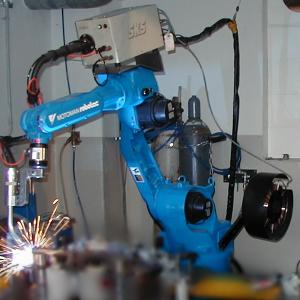
- Industrial robots—stationary arms for welding, painting, assembly and material handling in factories.
- Service robots—machines that assist people, including domestic cleaners and delivery robots.
- Mobile robots—wheeled or legged platforms for indoor or outdoor navigation.
- Unmanned aerial vehicles (drones)—for surveying, photography, agriculture and inspection.
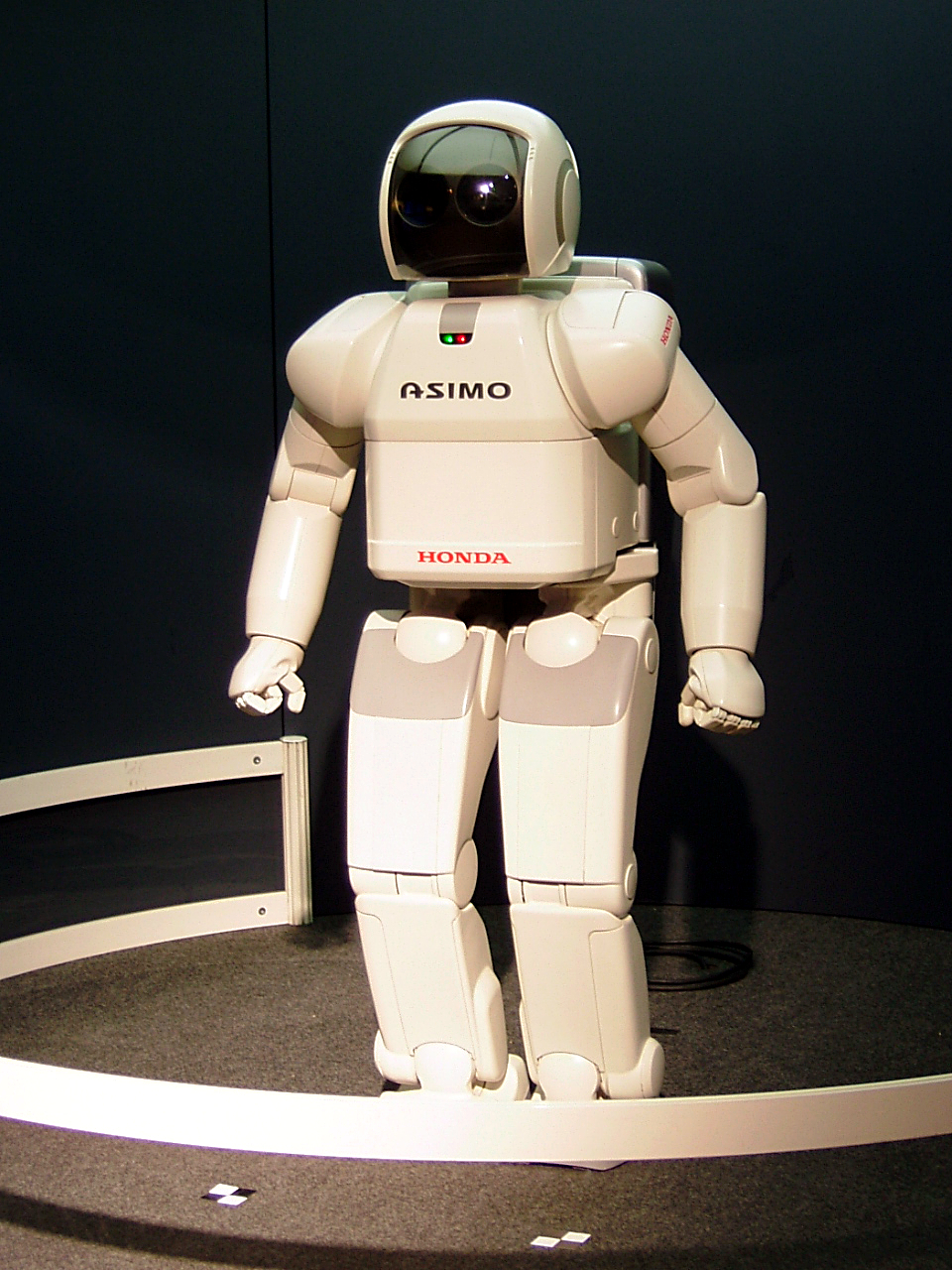
- Humanoid robots—designed with human-like form for interaction and research.
- Collaborative robots (cobots)—built to work alongside humans with enhanced safety systems.
History and cultural background
The idea of automated, human-like devices dates back centuries in the form of mechanical automata. Industrial-scale robotics emerged in the 20th century as manufacturing processes adopted programmable machines for repetitive tasks. Research fields such as artificial intelligence, control theory and materials science have since expanded what robots can do. In popular culture, fiction has explored robots’ roles and ethics across many books, films and games. Writers such as Isaac Asimov helped shape public debates about machines and responsibility; his collection I, Robot popularized discussions about rules, rights and safety for artificial agents.
Applications and examples
Robots are applied wherever automation, precision or endurance offer advantages. Typical domains include:
- Manufacturing—high-speed assembly, quality inspection and packaging.
- Healthcare—surgical assistants, rehabilitation devices and laboratory automation.
- Exploration—planetary rovers, underwater remotely operated vehicles and disaster-response robots.
- Logistics and agriculture—warehouse sorting, crop monitoring and automated harvesting.
- Consumer—vacuuming robots, lawn mowers and educational kits.
Beyond practical tasks, robotics influences research into perception, learning and human–machine interaction. The field balances engineering challenges with ethical and legal questions about safety, job displacement and autonomous decision-making. Distinctions matter: a robot is a specific kind of automated system with physical embodiment and actuators, while terms like "android" (humanlike appearance) or "cyborg" (part organic) describe different concepts.
For readers seeking more, the literature spans technical introductions, historical surveys and speculative works that examine implications of increasingly capable machines. Many resources and organizations track standards, safety rules and ongoing research in robotics and related disciplines.
Questions and answers
Q: What is a robot?
A: A robot is a machine that can move and do certain tasks.
Q: How are robots controlled?
A: Robots are controlled by a computer program or electronic circuitry.
Q: Are robots always directly controlled by humans?
A: No, robots may be directly controlled by humans but they don't have to be.
Q: Can robots have feelings?
A: No, robots do not have feelings even if they are designed to look like humans.
Q: Do robots always look like humans?
A: No, most robots do a specific job and do not always look like humans.
Q: What is the difference between robots in fiction and in reality?
A: In fiction, robots usually look like people and seem to have a life of their own, whereas in reality robots can come in many forms.
Q: What is the most famous book with robots in it?
A: Isaac Asimov's I, Robot is perhaps the most famous book with robots in it.
Related articles
Author
AlegsaOnline.com Robot — programmable machines, types, history and uses Leandro Alegsa
URL: https://en.alegsaonline.com/art/83464