
List of Monarchs of Mercia
Organized overview of Mercian rulers, principal dynasties, notable reigns, and the kingdom’s political, military and cultural role within the Anglo‑Saxon Heptarchy.
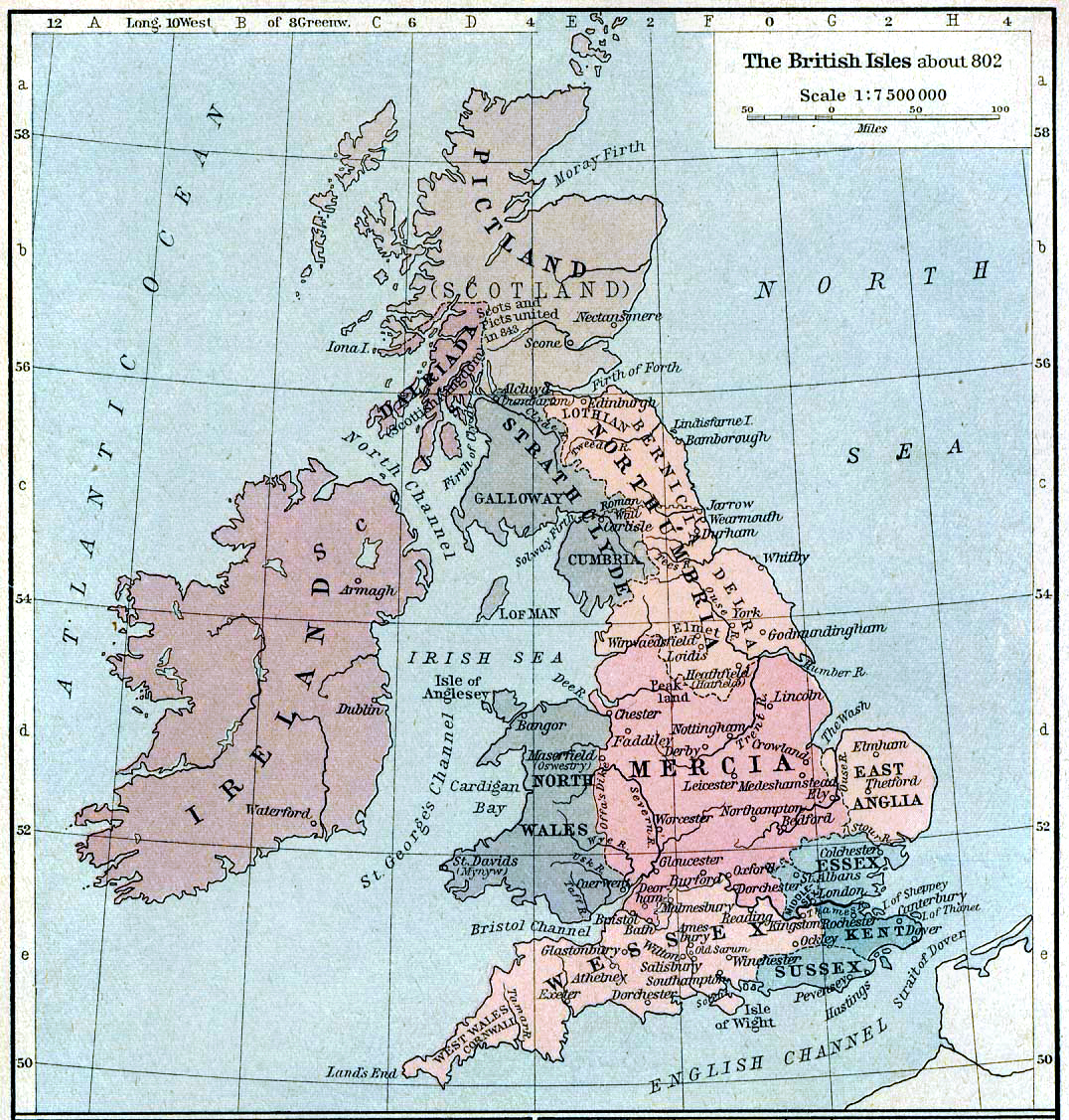
Mercia was a major Anglo‑Saxon kingdom in the English Midlands from the early medieval period into the later 1st millennium. The polity commonly called Mercia is typically dated from the 6th century through to the later 10th century, and its influence peaked from the mid‑7th century into the 8th century. Throughout that period Mercian rulers were among the most powerful of the Anglo‑Saxon kings in what became England, within the broader setting of the early Middle Ages.
Image gallery
9 Images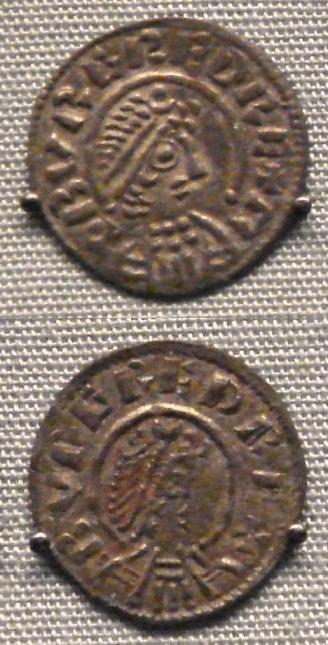



Dynasties and succession
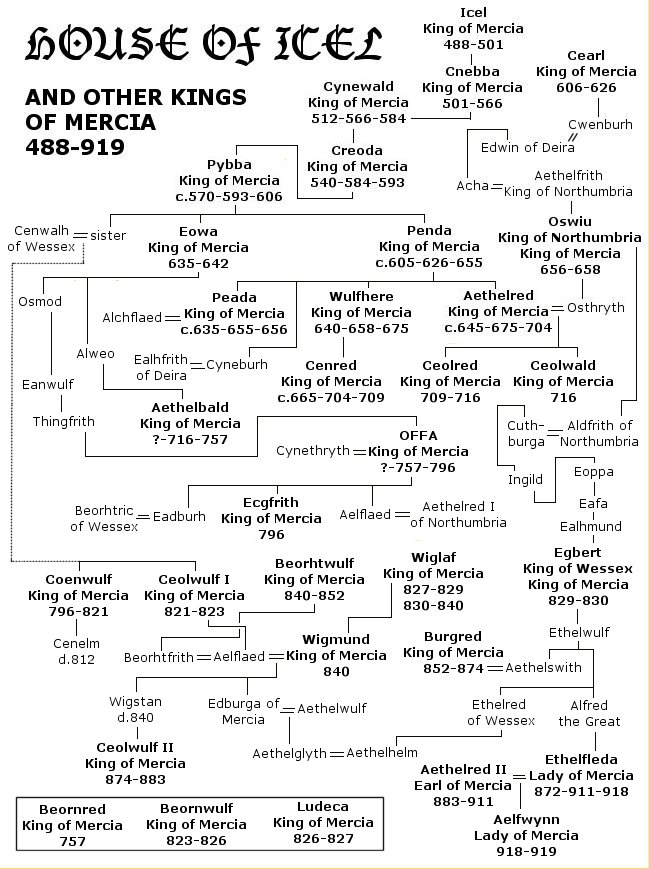
The earliest ruling family associated with Mercia is known to modern historians as the Iclingas, a dynasty said to descend from a founder named Icel and sometimes regarded as semi‑legendary in its earliest generations. Mercian kings in later centuries drew on genealogical claims and marriage ties to consolidate power. During the 7th and 8th centuries Mercia competed and sometimes dominated the other kingdoms of the Heptarchy, including Northumbria, Wessex, East Anglia, Essex, Kent, and Sussex. The Iclingas were supplemented by other families and claimants as the kingdom’s fortunes changed over the centuries; contacts with Western Europe influenced dynastic politics, ecclesiastical appointments, and diplomatic relations.
Principal monarchs (select list)
- Icel — eponymous forebear of the Iclingas and the ancestor claimed in later pedigrees.
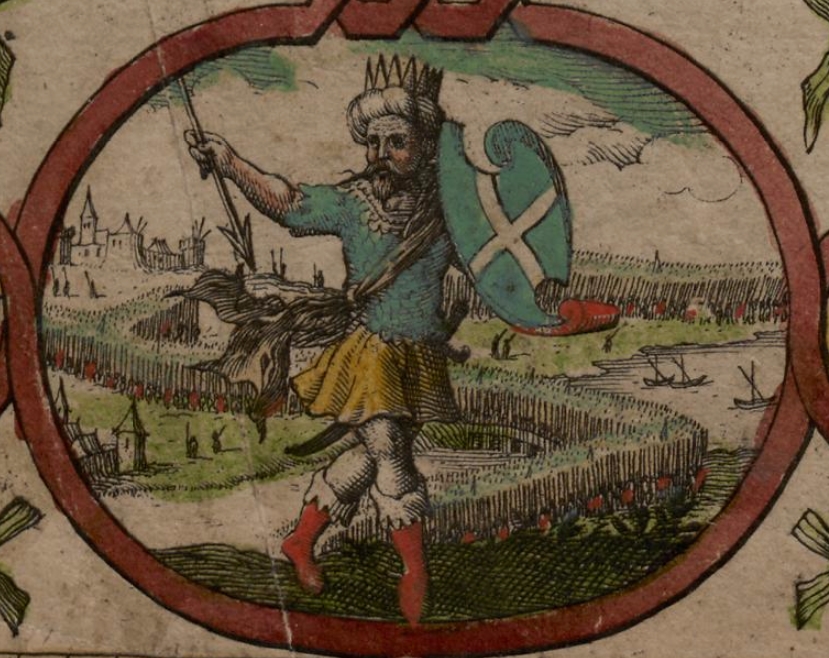
- Penda — a mid‑7th‑century king and military leader whose campaigns established Mercian prominence over neighbouring territories; Penda is one of the best‑known early Mercian rulers. Penda
- Wulfhere — son of Penda; during his reign Mercia continued to exert influence in southern England.
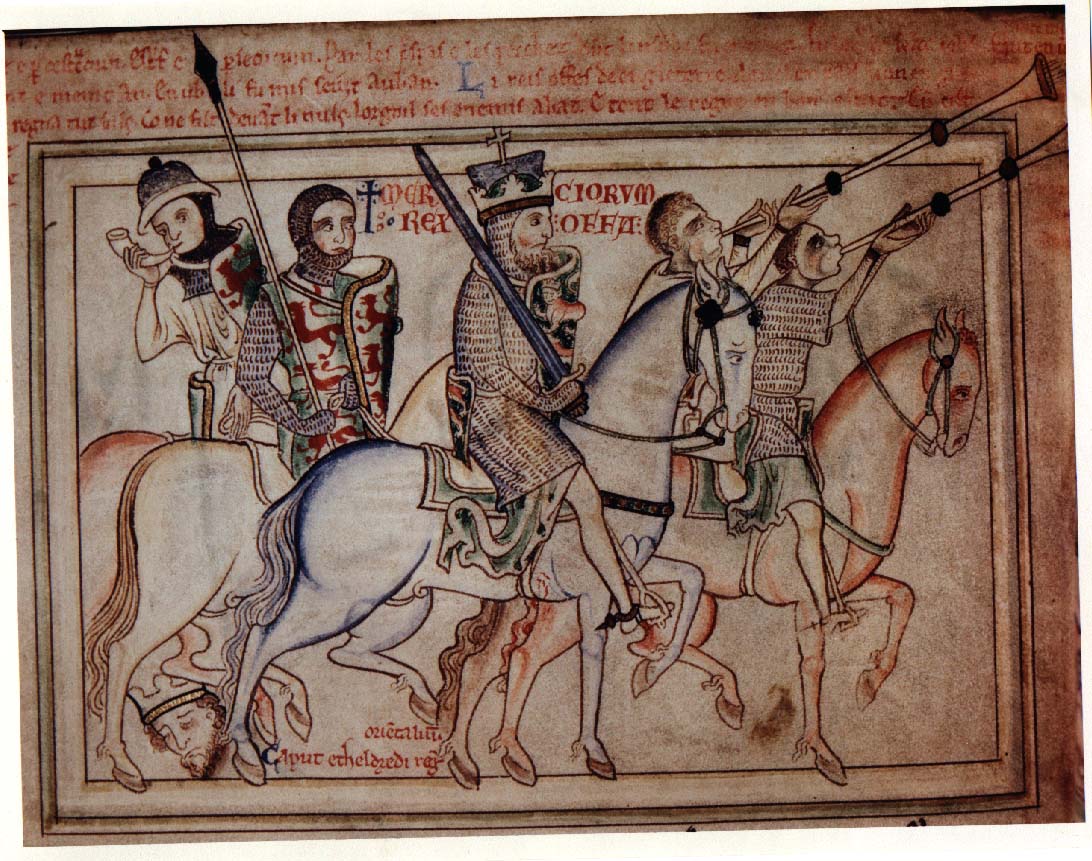
- Offa (reigned 757–796) — the most powerful Mercian ruler of the 8th century; his reign saw administrative reforms, diplomatic contacts abroad and the construction of linear earthworks such as Offa’s Dyke. Offa
- Wolves, Coenwulf and later 9th‑century rulers — monarchs who sought to preserve Mercian autonomy as pressure from Norse raiders and rising West Saxon power increased.
- Æthelred and Æthelflæd — in the late 9th and early 10th centuries Æthelred and his daughter Æthelflæd (the Lady of the Mercians) played decisive roles in regional defence and administration while cooperating with West Saxon kings.
Government, law and economy
Mercian kings exercised authority through a network of noble households, regional thegns and churchmen. They issued charters, convened assemblies, and produced laws that reflected both customary obligations and royal initiatives. Under rulers such as Offa the kingdom developed more systematic coinage and stronger fiscal control, and Mercian charters show links to continental trade. Mercia’s political institutions were continuous with broader Anglo‑Saxon practice but also displayed local adaptations tied to the Midlands landscape and economy.
Military and territorial influence
From the 7th century Mercian rulers projected force across neighbouring regions, winning battles and creating client relationships that extended influence into parts of southern and central Britain. The kingdom’s boundaries were fluid: frontier earthworks, fortified settlements and regional lordships marked zones of control. Mercian diplomacy and warfare connected it to both the other English kingdoms and to continental polities in Western Europe.
Decline and incorporation
The 9th century brought new challenges. Repeated Viking incursions, shifts in trade and the military success of Wessex under West Saxon kings reduced Mercian independence. By the 10th century many Mercian rulers accepted overlordship from stronger English monarchs or held subordinate titles, and Mercia’s institutions were gradually integrated into the emerging kingdom of England. For summaries of the succession after Mercia’s absorption, see discussions of the wider List of English monarchs.
Legacy and sources
Material remains such as coins, charters and earthworks, together with contemporary chronicles and later medieval histories, form the evidence base for Mercian study. Modern scholarship balances these sources by distinguishing well‑attested reigns from later legendary or genealogical additions. For introductory treatments and specialized studies consult general histories of early medieval Britain and works focusing on Mercia, the Heptarchy and neighbouring kingdoms such as Northumbria, East Anglia, Essex, Kent and Sussex.
Because early genealogies and regnal years are sometimes uncertain, modern accounts treat some early names cautiously and distinguish core, documentary evidence from later narrative traditions. For concise introductions, primary source editions and further reading see the linked resources on Mercian history and the broader context of the early Middle Ages in Britain.
Questions and answers
Q: What was the Kingdom of Mercia?
A: The Kingdom of Mercia was an important monarchy in the English Midlands from the 6th century to the 10th. It was one of the seven kingdoms of the Heptarchy, and at its peak it was the most powerful Anglo-Saxon kingdom.
Q: Who were some of its rulers?
A: Some of its rulers were Icel, Penda, Bretwalda, and Offa. Offa is particularly notable as he is considered to be the first Anglo-Saxon king who might rightly be called "king of the English".
Q: Where did they come from?
A: Members of this dynasty claimed to be descendants of a royal family from their homeland in Western Europe.
Q: When did Mercia become a dominant force?
A: Mercia became a dominant force under Penda from about c. 632 until his death in 655.
Q: Who was Bretwalda?
A: Bretwalda was Penda's son and he was the first Mercian overlord of southern England.
Q: When did Offa reign?
A: Offa reigned from 757–796 and during his reign, Mercia reached its peak power level.
Q: What happened after Offa's reign?
A: After Offa's reign, Mercia never regained its former power level and for their successors in England see List of English monarchs.
Related articles
Author
AlegsaOnline.com List of Monarchs of Mercia Leandro Alegsa
URL: https://en.alegsaonline.com/art/124834