
List of Popes (Bishops of Rome)
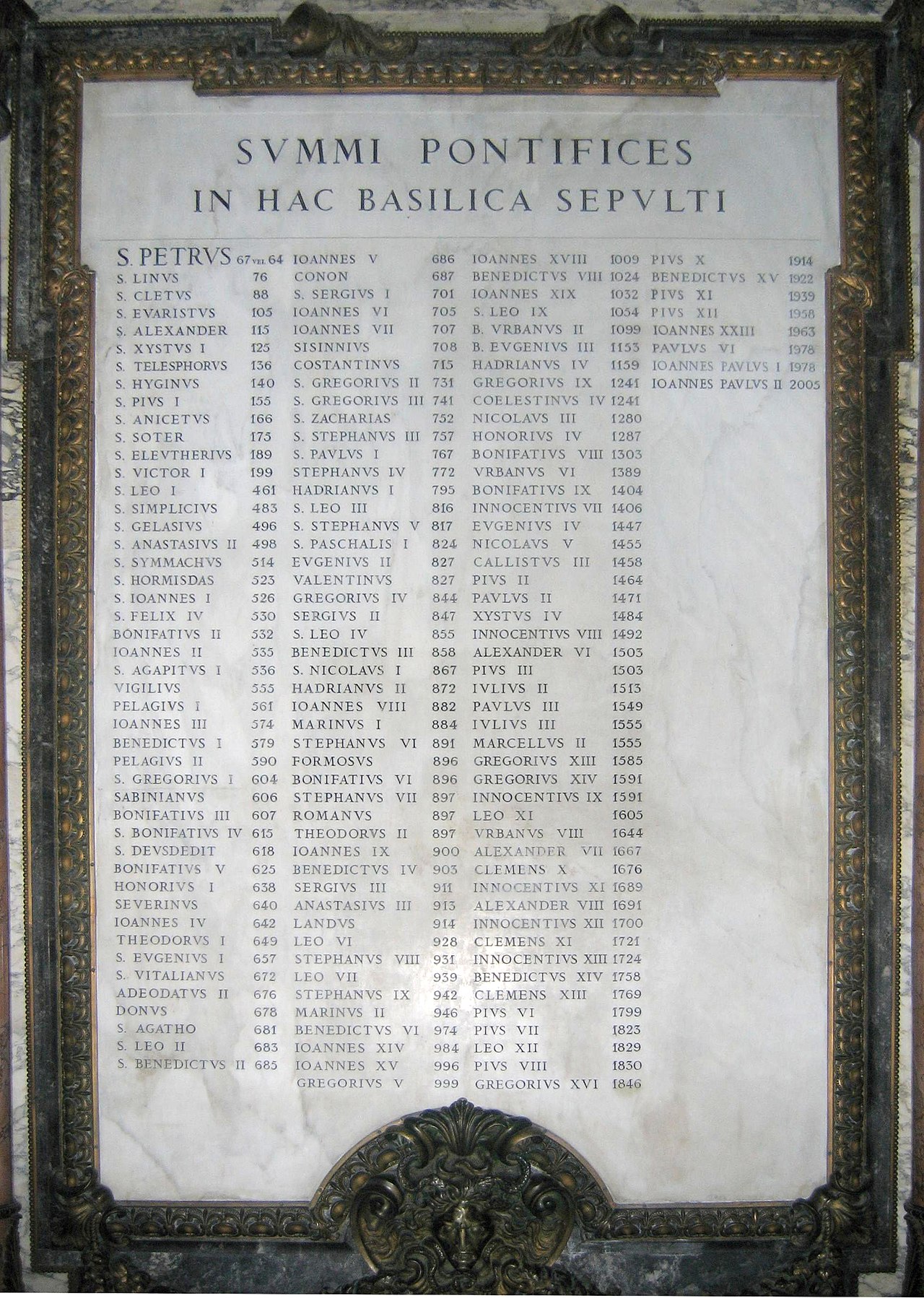
Overview of the chronological list of popes — the Bishops of Rome — including how the list is compiled, common forms of entries, historical disputes and the role of antipopes.
Overview
The list of popes is a chronological register of the Bishops of Rome traditionally beginning with St. Peter, regarded by the Catholic Church as the first pope. It records those bishops who have been recognized as the supreme pontiff and spiritual leader of the Catholic community. Modern editions of the list are compiled for reference by churches, historians and the public and are often available from official and scholarly sources such as the Vatican list.
Image gallery
10 Images



Contents and typical entry format
Entries in a list of popes generally include a regnal name (the name used while in office), an ordinal (for repeated names), a birth name, dates of election and end of pontificate, and brief notes on background or major acts. Lists may be arranged as simple chronological sequences or as annotated catalogues indicating contested cases and source references.
History and development
The roster developed as records, episcopal lists and chronicles accumulated through late antiquity and the medieval period. Early centuries rely on fragmentary sources, later medieval registers became more systematic, and modern historians have revised and corroborated entries using archival material. The list therefore reflects both ecclesiastical tradition and historical scholarship.
Disputes, antipopes and numbering quirks
Throughout history there have been contested elections and rival claimants known as antipopes; these create alternate sequences and require careful annotation. Numbering of popes with the same name has occasionally produced anomalies and gaps due to errors or later adjustments. Scholarly lists usually indicate which claimants are conventionally accepted and which are not.
Uses and importance
Lists of popes serve liturgical, legal, historical and genealogical purposes. They help date documents, trace the development of papal authority and give context to major events in Christian and European history. For general readers, a well-edited list offers a concise guide to the succession of leaders and highlights notable pontificates.
Further notes
- Different editions may vary in presentation and in treatment of disputed popes.
- Scholarly works and official catalogues are useful when precise dating or contested cases are relevant.
- For an official reference, consult sources linked from the Vatican list or recognized academic compilations.
Questions and answers
Q: Who is the first pope in the list of popes?
A: The first pope in the list of popes is St. Peter.
Q: What is the role of the pope?
A: The pope is the head of the Catholic Church.
Q: How is St. Peter related to the Bishop of Rome?
A: St. Peter was called the Bishop of Rome.
Q: Who else besides St. Peter holds the title of pope?
A: All others who became Bishop of Rome were also recognized as popes.
Q: Can women become the pope?
A: No, historically only men have been chosen to be Roman Catholic popes.
Q: Does the Catholic Church trace its roots back to St. Peter?
A: Yes, the Catholic Church traces its roots back to St. Peter who was appointed by Jesus as the first pope.
Q: Is the title of pope limited to one specific country or region?
A: No, the title of pope is not limited to one specific country or region, but is recognized worldwide.
Related articles
Author
AlegsaOnline.com List of Popes (Bishops of Rome) Leandro Alegsa
URL: https://en.alegsaonline.com/art/124926