
10th century (901–1000)
Overview of the 10th century: political fragmentation and state formation, major regional developments across Europe, Asia, Africa, and the Americas, and cultural and technological currents shaping the medieval world.
The 10th century covered the years 901 to 1000. It was an era of regional consolidation and fragmentation rather than a single overarching imperial order. Political authority in many areas was organized around emerging dynasties, competing local rulers, and networks of trade and religion that connected distant regions.
Characteristics of the century include decentralization in Europe after the Carolingian era, the rise and reform of powerful dynasties in Asia, and vigorous cultural exchange across the Islamic Mediterranean and the Silk Road. Long-distance trade — by sea and overland — continued to move goods, ideas and technologies between Africa, Eurasia and parts of the Americas.
Image gallery
5 Images


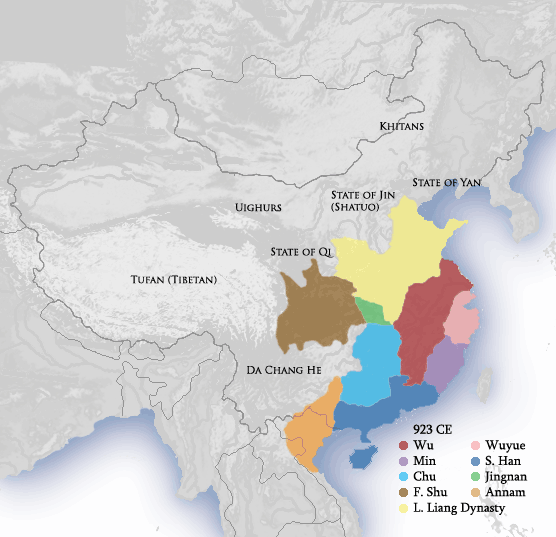
Regional developments
- Europe: Norse activity, the consolidation of principalities, and the emergence of the Ottonian polity in the west transformed political and military structures.
- Middle East & North Africa: Fragmentation of older caliphates gave way to new powers and cultural florescence in cities where scholarship, law and commerce thrived.
- East Asia: China moved from a period of division into reunification under the Song; Japan's Heian court produced distinctive art and literature.
- South Asia: Regional kingdoms expanded trade and local cultures, while maritime links strengthened across the Indian Ocean.
- Sub-Saharan Africa and the Americas: Early states in West Africa grew around trans‑Saharan trade; in the Americas, regional societies continued complex local developments.
Intellectual and technological currents included the wider use of paper and block printing in East Asia, advances in astronomy, medicine and mathematics in Islamic lands, and early mentions of chemical compounds that would lead to later inventions. Artistic production ranged from illuminated manuscripts and liturgical art in Europe to refined metalwork, ceramics and architectural projects across Afro-Eurasia.
Why the century matters: it set many foundations for the high medieval transformations that followed. State-building in several regions, intensified trade routes, and cultural exchanges during this century shaped political borders, religious institutions and artistic canons that endured into later centuries. For a chronological overview and further reading, see related timelines and summaries at century overview and companion resources at chronology guides.
Related articles
Author
AlegsaOnline.com 10th century (901–1000) Leandro Alegsa
URL: https://en.alegsaonline.com/art/111010