
East Anglia: geography, history, and cultural profile
Region of eastern England centred on Norfolk and Suffolk, known for fertile farmland, flat fenlands and Broads, an Anglo-Saxon kingdom origin, distinctive dialects and important archaeological sites.
Overview
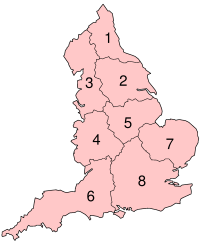
East Anglia is a historic and contemporary region of eastern England most commonly centred on the counties of Norfolk and Suffolk. The name derives from the early Anglo-Saxon kingdom of the East Angles and ultimately from the Angles' original homeland in northern Germany. Boundaries can be defined in different ways and sometimes include neighbouring areas such as Cambridgeshire and parts of Essex or Lincolnshire.
Image gallery
8 Images




Geography and economy
The landscape is dominated by low-lying agricultural plains, coastal marshes, river estuaries and the inland waterway network known as the Broads. Heavy, fertile soils and a relatively temperate climate make the region an important area for arable farming, horticulture and bulb growing. Large tracts of reclaimed fenland have been shaped by drainage schemes and water management methods introduced and refined from continental Europe.
History and archaeology
As the territory of an early medieval Anglo-Saxon kingdom, East Anglia played a distinctive role in England's formation. The region saw early Christian missions, contacts with Viking settlers and later integration into the English state. It has yielded internationally significant archaeological finds, including richly furnished burial sites that illustrate high-status life in the early medieval period.
Culture and environment
East Anglia retains a range of local dialects and cultural traditions. Its coastal areas, wetlands and bird-rich estuaries support important wildlife habitats and draw tourism for boating, birdwatching and seaside visits. Urban centres such as Norwich and Ipswich serve as regional hubs for commerce, education and the arts.
Definitions and notable facts
Different sources use varying definitions of East Anglia for administrative, historical or cultural purposes. The phrase may mean strictly the old kingdom territory (Norfolk and Suffolk) or a wider territory used for modern planning and economic regions. Dutch-engineered drainage projects and centuries of land-management have strongly influenced its present form.
Further information
- Geographical outline and maps
- Administrative history
- Anglo-Saxon origins
- Early kingdoms of England
- Etymology and place names
- Migration and the Angles
- Angeln region
- Northern German connections
- Norfolk county
- Suffolk county
- Boundary debates
- Agriculture and horticulture
- Landscape features
- Dutch influence on drainage
- Engineering and water management
Related articles
Author
AlegsaOnline.com East Anglia: geography, history, and cultural profile Leandro Alegsa
URL: https://en.alegsaonline.com/art/29603