
Offa of Mercia (King of Mercia, 757–796)
Offa was king of Mercia from 757 to 796 and one of the most powerful Anglo-Saxon rulers before Alfred the Great. He is known for territorial expansion, Offa's Dyke, coinage reforms, and church policies.
Overview
Offa ruled Mercia from 757 until his death in July 796 and is widely regarded as one of the most powerful Anglo-Saxon rulers of the period before Alfred the Great. During his nearly forty-year reign he consolidated power in the English midlands and exercised influence over neighbouring kingdoms. On his death in 796 he was succeeded by his son Ecgfrith, whose brief reign was followed by the accession of Coenwulf.
Image gallery
10 Images





Authority and territorial control
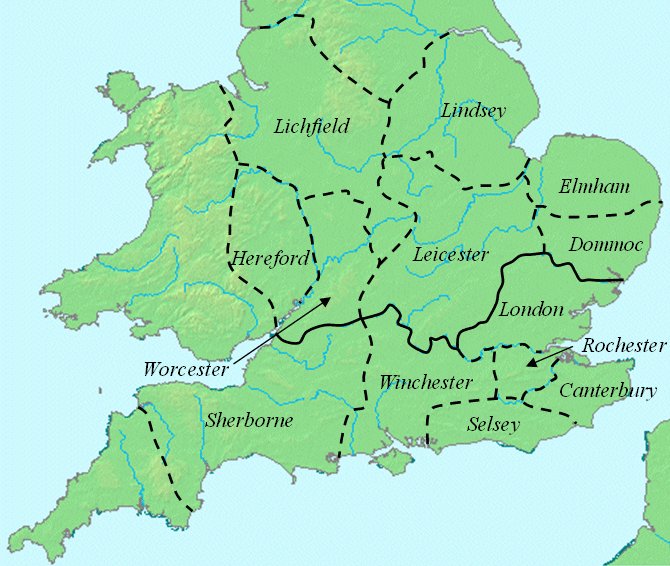
Offa extended Mercian control over much of southern and central England through military action, diplomacy and marriage alliances. His court—often associated with royal centres such as Tamworth—acted as the hub of administration and patronage. While not all details of his conquests are precisely recorded, contemporary sources and later historians agree that his reign marked a high point in Mercian power.
Major projects and achievements
- Offa's Dyke: a large linear earthwork roughly following the Welsh border, attributed to his reign and intended as a frontier and territorial marker between Mercia and Welsh kingdoms.
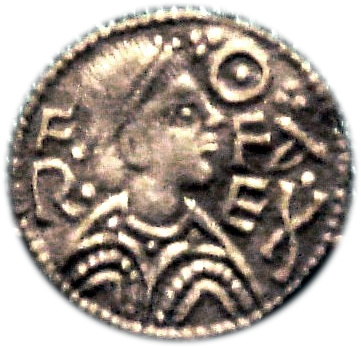
- Monetary reform: he introduced and standardized silver coinage; coins from his reign bear high artistic and technical quality and helped stimulate commerce.
- Church policy: Offa engaged with the papacy and continental rulers and arranged changes in church organisation, including the temporary elevation of an archbishopric at Lichfield to reduce external ecclesiastical influence.
Administration, law and diplomacy
Offa issued legal provisions and supported monastic foundations, promoting literacy and record-keeping in his courts. He corresponded with continental rulers and the Pope, managing trade relations and diplomatic marriages typical of seventh- and eighth-century royal practice. His coinage and laws helped centralise authority and provided a framework for governance that influenced later Anglo-Saxon kings.
Legacy
Offa's long reign left visible and institutional traces: the massive earthwork known as Offa's Dyke, a substantial body of coins, and documentary evidence of energetic diplomacy and church patronage. Although Mercian supremacy proved short-lived after his death, his rule is often seen as a formative moment in the political development of early medieval England.
For further reading on the historical context and material culture of his reign see studies of Mercian polity, coin finds and ecclesiastical correspondence: Mercia, Anglo-Saxon history and relations with continental powers such as those noted in correspondence with figures like Alfred the Great's predecessors and contemporaries.
Questions and answers
Q: Who was Offa of Mercia?
A: Offa was the King of Mercia from 757 until his death in July 796.
Q: How do many historians view Offa?
A: Many historians regard Offa as the most powerful Anglo-Saxon king before Alfred the Great.
Q: When did Offa die?
A: Offa died in 796.
Q: Who succeeded Offa as king?
A: Offa was succeeded by his son, Ecgfrith.
Q: How long did Ecgfrith reign for?
A: Ecgfrith reigned for less than five months.
Q: Who became king after Ecgfrith?
A: Coenwulf of Mercia became king after Ecgfrith.
Q: When did Coenwulf become king?
A: The text does not specify when Coenwulf became king, only that he succeeded Ecgfrith.
Related articles
Author
AlegsaOnline.com Offa of Mercia (King of Mercia, 757–796) Leandro Alegsa
URL: https://en.alegsaonline.com/art/72026