
Weedy sea dragon (Phyllopteryx taeniolatus): appearance, habitat, and conservation
The weedy sea dragon is a marine fish related to seahorses, native to southern Australia. This article covers its appearance, behaviour, habitat, reproduction, conservation and differences from other sea dragons.
The weedy sea dragon (Phyllopteryx taeniolatus) is a distinctive marine fish related to seahorses and pipefish. It is known for leaf‑ and weed‑like appendages that break up its outline and help it blend into kelp and seagrass. The species occurs along the southern coast of Australia, including Tasmania, from shallow reef edges to moderate depths, and is strongly associated with sheltered coastal habitats.
Image gallery
6 Images


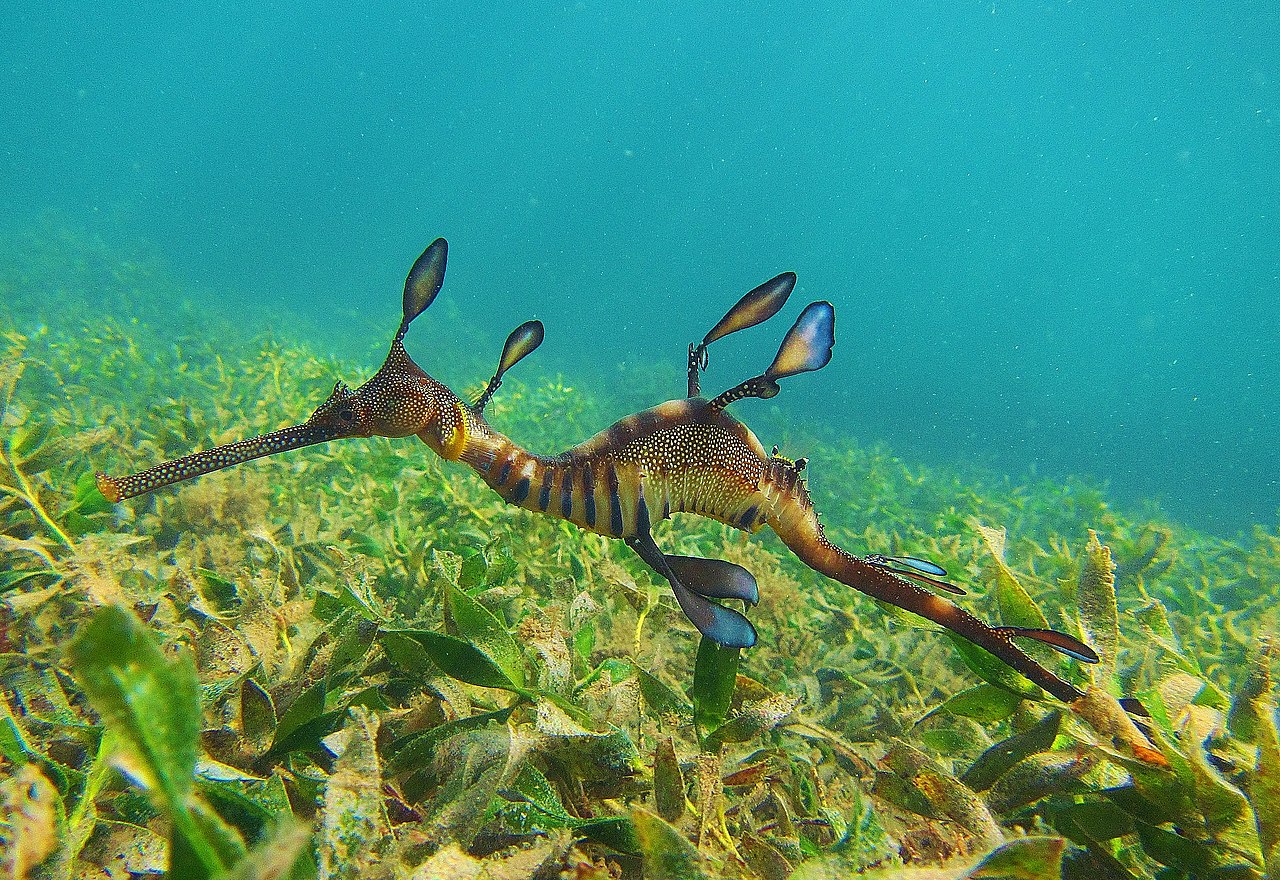
Appearance and anatomy
Weedy sea dragons have elongated bodies covered with skin flaps and tubular snouts used for suction feeding. Their movement is driven by a small dorsal fin and paired pectoral fins, producing a slow, hovering swim. Colouration varies—reds, browns, yellows and purples—often matching surrounding algae. Key characteristics include:
- Leafy and filamentous skin appendages that provide camouflage.
- Long, pipe‑like snout for feeding on tiny crustaceans and mysid shrimps.
- No prehensile tail (unlike many seahorses) and a body plan adapted for open swimming among plants.
Distribution, habitat and behaviour
Weedy sea dragons are chiefly found along the temperate southern Australian coastline in waters ranging from shallow reefs to several dozen metres deep. They favour kelp beds, seagrass meadows and rocky reefs where their camouflage is most effective. Adults feed on small crustaceans and planktonic prey by sucking them into the snout. They are solitary or found in loose aggregations rather than forming shoals.
Reproduction and life cycle
Like other members of the seahorse family, males play the central role in brooding. Females deposit eggs onto a brood patch on the male’s tail; the male carries and protects the eggs until they hatch. Newly hatched juveniles are independent and receive no further parental care. Reproductive timing and success depend on local conditions such as water temperature and food availability.
Conservation, threats and human interest
Weedy sea dragons attract interest from divers, aquaria and conservationists due to their striking appearance and specialised habitats. Threats include habitat degradation (loss of seagrass and kelp), pollution, climate change and disturbance from coastal development. Collection for aquaria is regulated in Australia. Conservation measures focus on habitat protection and monitoring.
- Common pressures: habitat loss, water quality decline and warming seas.
- Protective actions: marine reserves, captive breeding research and public education.
Notable distinctions and facts
Weedy sea dragons are often compared with the leafy sea dragon and other seadragons: leafy sea dragons have more elaborate leaf‑like protrusions, while weedy sea dragons have thicker, weed‑like appendages and a different body shape. The genus Phyllopteryx is closely related to other seadragon genera and was expanded in recent years with the discovery of additional species. The weedy sea dragon is a cultural and natural icon in parts of Australia and features in regional conservation efforts.
For further reading and resources see marine fish overview, fish taxonomy, seahorse relatives, Phyllopteryx genus, depth ranges, south Australian coast, Western Australia records, Tasmania marine life, camouflage in marine species, seagrass habitat, kelp bed ecology, and state emblems and conservation.
Questions and answers
Q: What is the weedy sea dragon?
A: The weedy sea dragon is a marine fish related to the seahorse and the only member of the genus Phyllopteryx.
Q: Where is the weedy sea dragon found?
A: The weedy sea dragon is found in water 3 to 50 m deep around the south coast of Australia, from Port Stephens, New South Wales to Geraldton, Western Australia, and also in the waters around Tasmania.
Q: What makes the weedy sea dragon camouflage?
A: The weed-like growth on their bodies makes the weedy sea dragon camouflage and hides them as they move among the seaweed beds where they live.
Q: Why is the weedy sea dragon called the aquatic emblem for the state of Victoria?
A: The weedy sea dragon is called the aquatic emblem for the state of Victoria because it is found in the waters around the state and is a unique and iconic species.
Q: How deep can the weedy sea dragon be found?
A: The weedy sea dragon can be found in water 3 to 50 m deep.
Q: What is the weedy sea dragon's scientific name?
A: The weedy sea dragon's scientific name is Phyllopteryx taeniolatus.
Q: Is the weedy sea dragon similar to the seahorse?
A: Yes, the weedy sea dragon is related to the seahorse.
Related articles
Author
AlegsaOnline.com Weedy sea dragon (Phyllopteryx taeniolatus): appearance, habitat, and conservation Leandro Alegsa
URL: https://en.alegsaonline.com/art/107113
Sources
- dse.vic.gov.au : DSE Victoria
- news.yahoo.com : news.yahoo.com
- tnaqua.org : tnaqua.org
- aquadaily.com : "Weedy Seadragons spawn for Hong Kong aquarist"
- iucnredlist.org : Phyllopteryx taeniolatus