
Wedge-tailed shearwater (Puffinus pacificus)
A medium-large tropical seabird of the Procellariidae family, noted for its wedge-shaped tail, nocturnal colony habits, burrow nesting, long-distance foraging and broad Indo-Pacific range.
The wedge-tailed shearwater (Puffinus pacificus) is a medium-large pelagic bird in the seabird assemblage and a member of the family Procellariidae. It is commonly encountered across tropical and subtropical waters of the Indian and Pacific Oceans and is recognized for its long, stiff-winged flight and a distinctive wedge-shaped tail that gives the species its common name.
Image gallery
7 Images



Identification and variation
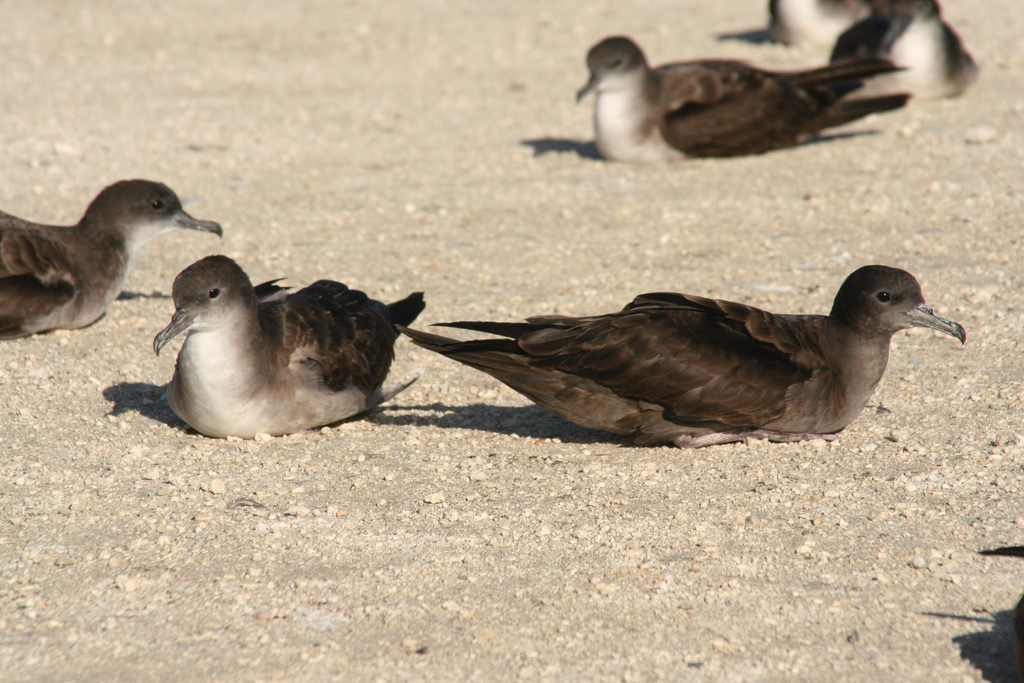
Adult birds show a dark brown to blackish upper surface with paler underparts in many populations; some regions support a darker morph. The head often appears darker than the body, and the species has a robust, tubular nostril typical of shearwaters. Juveniles resemble adults but may have fresher plumage tones. Flight is buoyant, using glides and shallow wingbeats to cover long distances over open water.
Range, habitat and movements
Wedge-tailed shearwaters breed on islands and coastal headlands, typically in vegetated slopes where they excavate burrows or nest under shrubs. Outside the breeding season they disperse widely at sea, foraging along continental shelf edges and in productive oceanic waters. Their distribution spans many islands and archipelagos across the Indo-Pacific, with local timing of breeding adapted to regional conditions.
Breeding, diet and behaviour
Colonies are usually active at night to avoid predators and human disturbance. Pairs lay a single egg and invest parental care in incubation and feeding of the chick until fledging. Diet consists mainly of fish, squid and other small marine animals taken by surface-seizing or shallow diving. The species is vocal at colonies, producing calls used in mate and colony recognition.
Conservation and human interactions
Although widespread, some island populations suffer from introduced predators, habitat loss and light pollution. Conservation efforts focus on predator control, habitat protection and community engagement to reduce disturbance at breeding sites. The species is also an indicator of marine ecosystem health because its foraging success reflects local ocean productivity.
Notable facts include the species' long-distance dispersal capacity, nocturnal colony attendance, and occasional taxonomic reassessments that place it near other shearwater groups. For more information on related groups and identification, see resources on seabirds and the family Procellariidae.
Related articles
Author
AlegsaOnline.com Wedge-tailed shearwater (Puffinus pacificus) Leandro Alegsa
URL: https://en.alegsaonline.com/art/107106