
Fat (macronutrient and lipid compounds)
Fat is a macronutrient composed of lipids and fatty acids. It stores energy, forms cell membranes, aids vitamin absorption, and occurs in varied dietary forms with distinct health effects.
Overview
Fat is one of the three primary macronutrients and refers broadly to a class of biomolecules known as lipids. In nutrition, "fat" usually denotes triglycerides and related compounds found in foods and tissues. Fats are energy-dense (about 9 kcal per gram), serve structural roles in cells, and act as carriers for fat-soluble vitamins.
Image gallery
10 Images


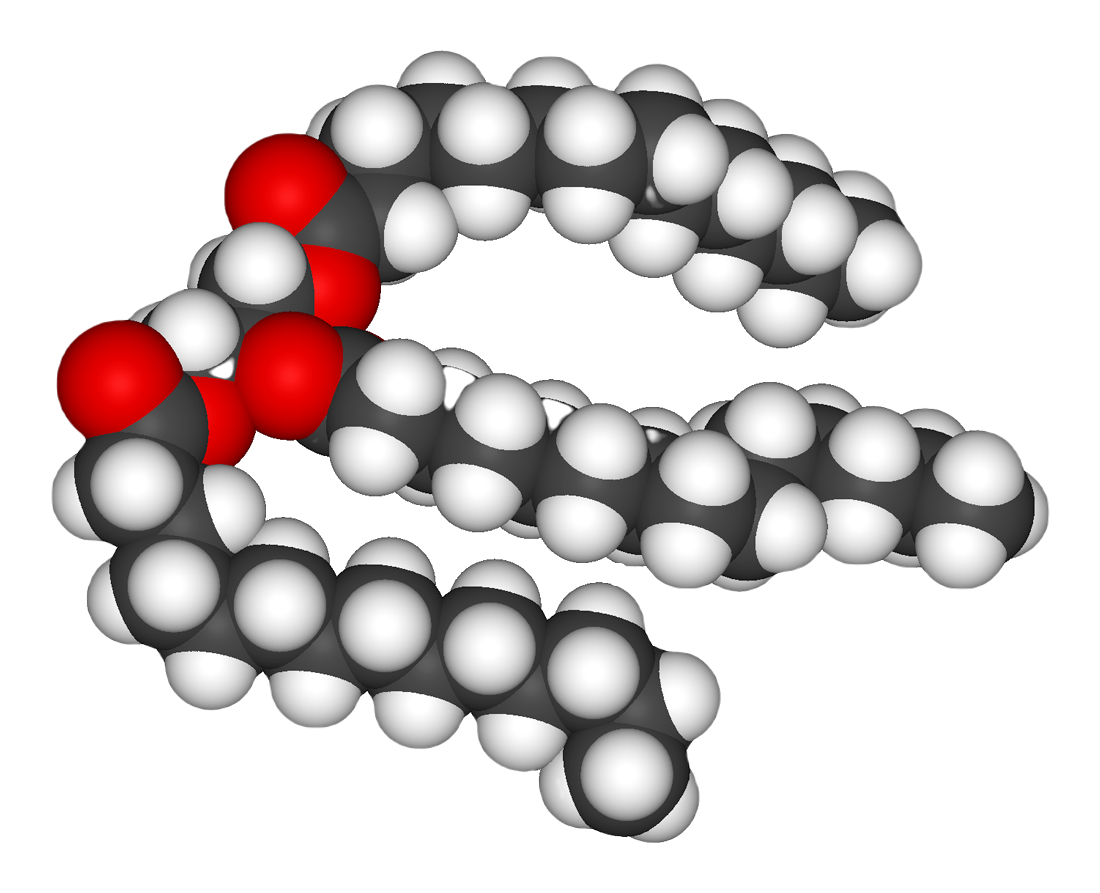


Structure and types
At a molecular level many dietary fats are triglycerides: a glycerol backbone esterified to three fatty acids. Fatty acids differ by chain length and by the presence and position of double bonds. Major categories include saturated fats (no double bonds), monounsaturated fats (one double bond), polyunsaturated fats (multiple double bonds, including omega-3 and omega-6 families) and trans fats (unsaturated fats with a trans configuration). Some lipids are sterols (e.g., cholesterol) or phospholipids that form cell membranes.
Functions in the body
Dietary and stored fats perform several essential roles: they provide concentrated energy reserves, insulate against heat loss, cushion internal organs, form critical components of cell membranes, and serve as precursors to signaling molecules and steroid hormones. Fats are also necessary for absorption and transport of vitamins A, D, E and K. Certain fatty acids, such as linoleic and alpha-linolenic acids, are essential because the human body cannot synthesize them.
Digestion, transport and health
During digestion bile salts emulsify fats and lipases break triglycerides into absorbable units. Intestinal cells reassemble lipids into chylomicrons that enter the lymphatic system and bloodstream. In circulation, fats are carried by various lipoproteins; their balance influences cardiovascular risk. Health effects depend on type and amount: high intakes of industrial trans fats and excessive saturated fat are linked to increased heart disease risk, while monounsaturated and polyunsaturated fats (including marine omega-3s) are associated with cardiovascular benefits when they replace less healthy fats or refined carbohydrates.
Dietary sources and uses
Common sources include animal fats (butter, lard), plant oils (olive, canola, sunflower), nuts, seeds, and oily fish. At room temperature many saturated fats are solid ("fats") while unsaturated fats are liquid ("oils"). Beyond nutrition, fats and oils are used in cooking, food processing, cosmetics, soapmaking (saponification), and industrial applications such as biodiesel.
Notable facts
- Fats supply about 9 kcal per gram — more than carbohydrates or protein.
- Essential fatty acids must be obtained from the diet.
- Food processing (hydrogenation) can create harmful trans fats; many regulations and recommendations now limit their use.
Questions and answers
Q: What are the three main types of macronutrients?
A: The three main types of macronutrients are carbohydrates, proteins, and fats.
Q: What is a lipid?
A: A lipid is a type of macromolecule that is composed of long-chain fatty acids.
Q: Where can fats be found?
A: Fats can be found in many different types of foods.
Q: Are all lipids essential for the body?
A: No, not all lipids are essential for the body. Some lipids cannot be made by the body and must be obtained from food sources. These are known as essential fatty acids.
Q: What does it mean when a fat is "essential"?
A: When a fat is referred to as "essential", it means that it cannot be produced by the body and must instead be obtained through diet or supplementation.
Q: How do lipids differ from other macronutrients?
A: Lipids differ from other macronutrients because they are composed of long-chain fatty acids rather than simple sugars or amino acids like carbohydrates and proteins respectively.
Related articles
Author
AlegsaOnline.com Fat (macronutrient and lipid compounds) Leandro Alegsa
URL: https://en.alegsaonline.com/art/33620
Sources
- hsph.harvard.edu : "Types of Fat"
- nlm.nih.gov : "Types of Fats"
- nlm.nih.gov : "Facts about saturated fats"
- heart.org : "Trans fat"
- healthyeating.sfgate.com : "Three Functions of Fat in the Body"
- go.galegroup.com : "Medium-Chain Triglycerides"
- livestrong.com : "Why You Eat Fat to Burn Fat"