
Waterfowl: ducks, geese and swans — overview, traits, and conservation
Waterfowl are birds adapted to life on or near fresh and salt water, chiefly the Anatidae (ducks, geese, swans). This article covers their features, behavior, importance, and how they differ from other water birds.
Overview
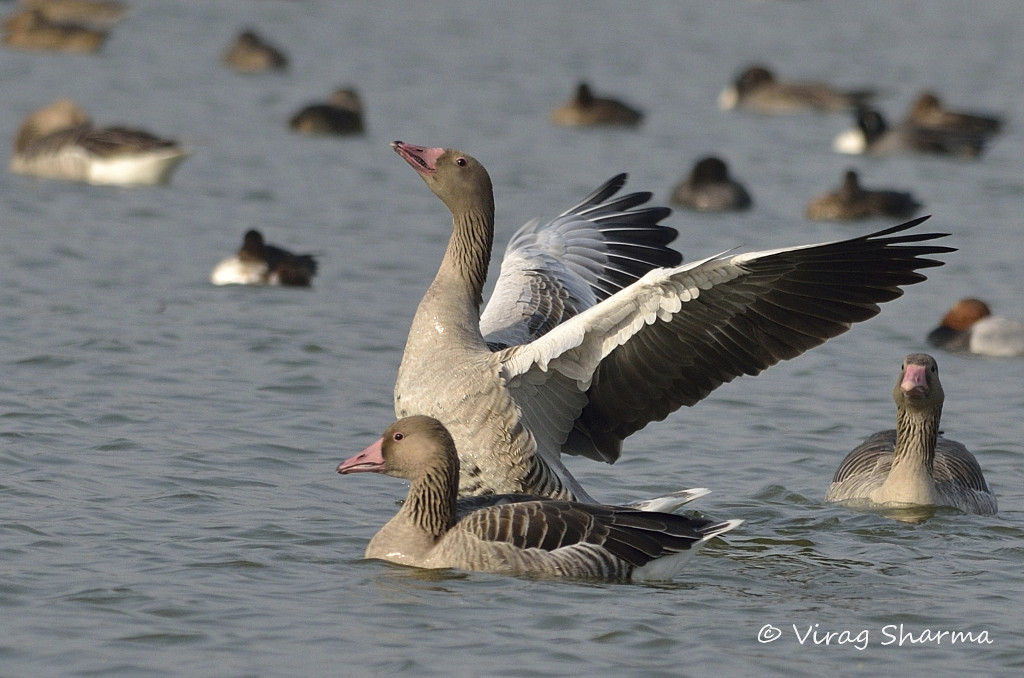
Waterfowl is a common name for birds that spend much of their time in or near aquatic environments. In everyday use it most often denotes members of the family Anatidae, a group that includes ducks, geese and swans. The term relates to the broader notion of a bird associated with water, but some authors apply it more loosely to several other water-associated groups.
Image gallery
10 Images




Key characteristics
Waterfowl share a set of adaptations to an aquatic way of life. Typical features include dense, waterproof plumage, webbed feet for swimming, and bills shaped for feeding in water. Many species have insulating down beneath their outer feathers for buoyancy and cold tolerance.
- Diverse bill shapes: from flat, filtering bills to serrated edges for grasping.
- Locomotion: most swim well and some dive; wing shape varies with migration habit.
- Plumage: seasonal changes and sexual dimorphism are common in ducks.
Behavior, diet and life cycle
Waterfowl diets range from aquatic plants and seeds to invertebrates and small fish, depending on species and season. Breeding strategies vary: many geese and swans form long-term pair bonds, while ducks often show more diverse mating systems. Migration is a well-known trait of many waterfowl, linking breeding and wintering grounds across great distances.
Examples and related groups
Beyond Anatidae, other water-associated birds are often mentioned alongside waterfowl. Coots and moorhens, grebes, various shorebirds and seabirds occupy aquatic niches but differ in anatomy or behavior. For example, grebes have lobed rather than fully webbed feet (grebes), and seabirds have marine-focused life histories (seabirds).
Human uses, importance and conservation
Waterfowl have cultural, ecological and economic significance: they are hunted and farmed in many regions, act as seed dispersers and predators in wetland food webs, and serve as indicators of habitat health. Many species have declined because of wetland loss, pollution, overhunting and introduced predators; conservation efforts focus on habitat protection, sustainable harvest and monitoring.
Distinctions and notable facts
The terms "waterfowl" and "water bird" are sometimes used interchangeably, but some specialists contrast waterfowl with waders—birds that typically walk in shallow water like herons and sandpipers (waders). For reference and further reading consult taxonomic and wildlife management sources such as family accounts of Anatidae and regional guides (bird field manuals and conservation pages at water-focused organizations).
Related articles
Author
AlegsaOnline.com Waterfowl: ducks, geese and swans — overview, traits, and conservation Leandro Alegsa
URL: https://en.alegsaonline.com/art/106837