
Water deer (Hydropotes inermis)
Small, tusked deer native to China and Korea, sole member of Hydropotinae. Lives in wetlands and reedbeds; males have prominent upper canines instead of antlers. Two subspecies: Chinese and Korean.
Overview
The water deer (Hydropotes inermis) is a small hoofed mammal classified as an even-toed ungulate. It belongs to the broader deer family and is the only living representative of the subfamily Hydropotinae. Two recognized subspecies are the Chinese water deer (H. i. inermis) and the Korean water deer (H. i. argyropus). The species is notable for its unusual anatomy and preference for wetland habitats.
Image gallery
8 Images


Description and distinguishing traits
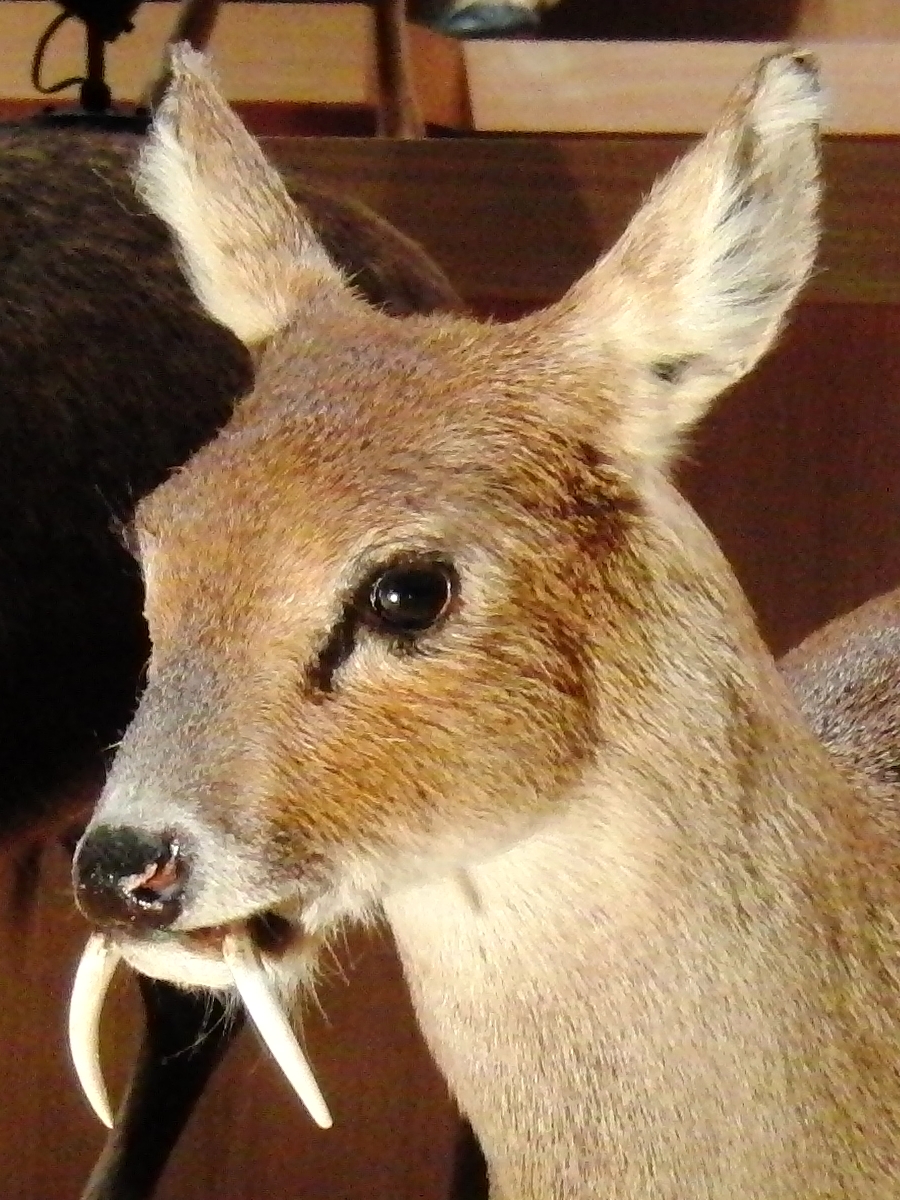
Water deer are relatively small and compact, with a sleek, tawny coat and a short tail. Unlike most male deer, males do not grow antlers; instead they have long, pointed upper canine teeth that protrude like small tusks. Other distinctive features include a rounded head, large eyes, and a propensity to move silently through tall vegetation. These traits make them easy to distinguish from other small deer species.
Distribution and habitat
Native populations occur in eastern China and on the Korean peninsula, where the species favors lowland marshes, reedbeds, river margins and damp fields. Water deer are strong swimmers and are often associated with areas of dense cover near water. Outside their native range, small feral populations have become established in parts of Europe, notably in the United Kingdom and France, where they occupy similar wetland and scrub habitats.
Behavior, diet and reproduction
Water deer are mostly crepuscular and feed on a variety of grasses, aquatic plants, reeds and agricultural crops. They tend to be solitary or found in small family groups rather than large herds. Breeding is seasonal; females typically give birth to a small number of fawns each year that are well hidden in vegetation until they can follow the mother. Males use scent marking and vocalizations during the breeding season and may fight using their canines.
Taxonomy, name and notable facts
The genus name Hydropotes reflects the animal's association with watery habitats; the species name inermis means "unarmed," a reference to the absence of antlers. Because it occupies a distinct evolutionary branch within Cervidae, the water deer is of particular interest to scientists studying deer evolution and diversity. Its combination of deer-like and unique features makes it a frequently cited example in comparative anatomy and ecology.
Human interactions and conservation
In their native range, water deer face pressures from habitat loss, drainage of wetlands and hunting, while introduced populations may be stable or expanding in localized areas. Conservation attention focuses on protecting wetland habitats and monitoring populations to ensure long-term viability. The species is also encountered in captive collections and educational facilities, where it helps illustrate diversity within the deer family.
- Key identifiers: small size, no antlers, long upper canines
- Habitats: marshes, reedbeds, river margins
- Range: eastern China, Korean peninsula; introduced in parts of Europe
Related articles
Author
AlegsaOnline.com Water deer (Hydropotes inermis) Leandro Alegsa
URL: https://en.alegsaonline.com/art/106788