
Warwick Castle
Medieval castle in Warwick, England. Built after the Norman Conquest and long associated with the Earls of Warwick, it combines historic architecture, state rooms, dungeons and live public displays.
Overview
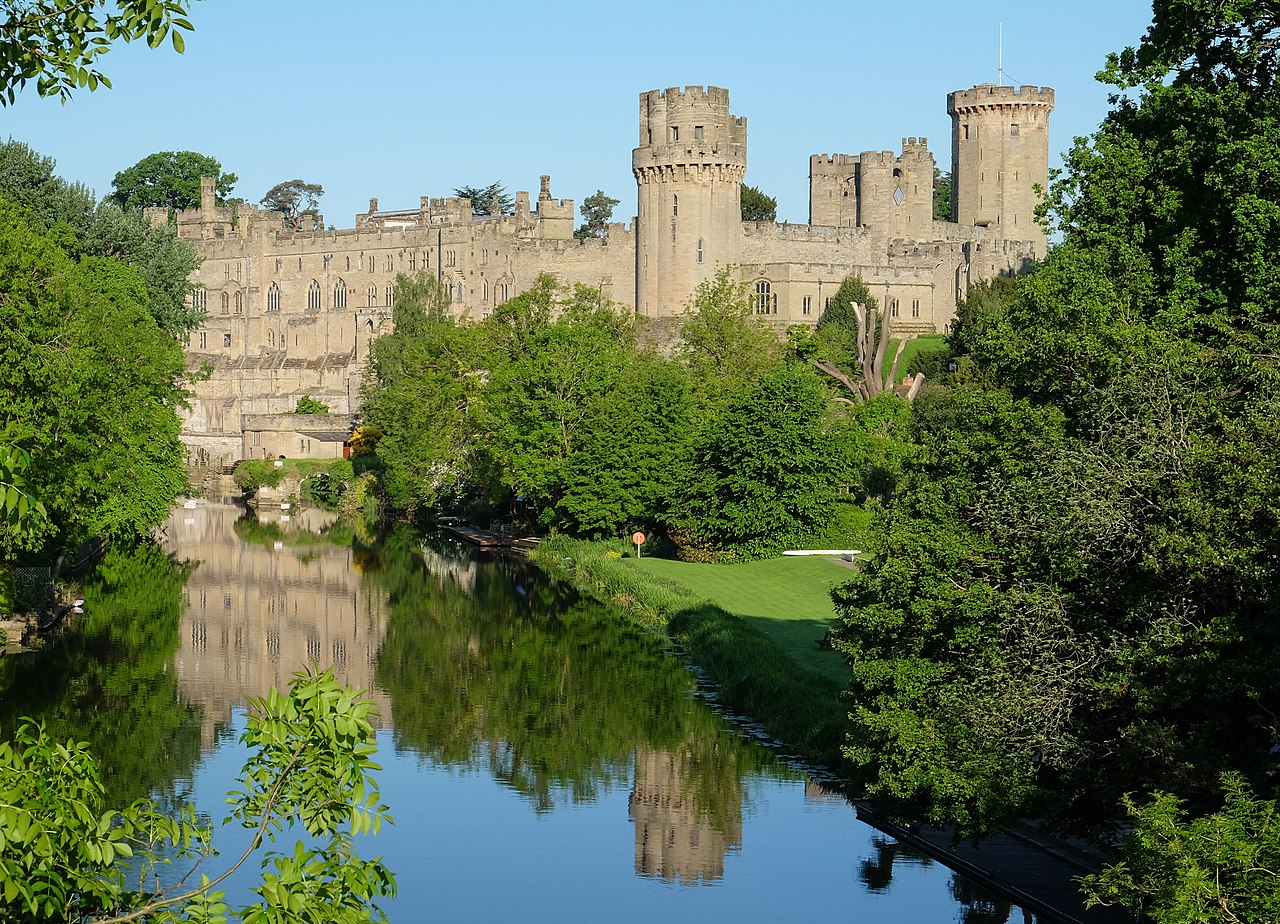
Warwick Castle is a large medieval fortress near the town of Warwick in the county of Warwickshire, England. Its name and pronunciation are part of local identity. Originally raised as a wooden motte-and-bailey fortification shortly after the Norman Conquest, the site was progressively rebuilt in stone and expanded into a complex of walls, towers and domestic buildings. For centuries it served as a stronghold and the principal residence of the Earls of Warwick, a family prominent in medieval and early modern English politics.
Image gallery
10 Images





Layout and principal features
The castle is arranged around a high motte (a raised earthwork) with curtain walls and a range of towers. Visitors today can walk along the ramparts and climb the steps to the highest vantage point where a flag is traditionally flown. Many interior spaces have been preserved or restored to illustrate how a large noble household functioned: the private chambers, the great hall, chapel and formal state rooms containing portraits and decorative furnishings. There is also a recreated dungeon and exhibition areas that use displays and costumed figures to interpret daily life.
- Towers and battlements: vantage points for defence and views.
- State rooms and portraits: galleries of paintings and family portraits.
- Domestic apartments: bedrooms and private suites formerly occupied by the family and guests.
- Interpretation displays: mannequins and period costumes to illustrate interiors.
History and development
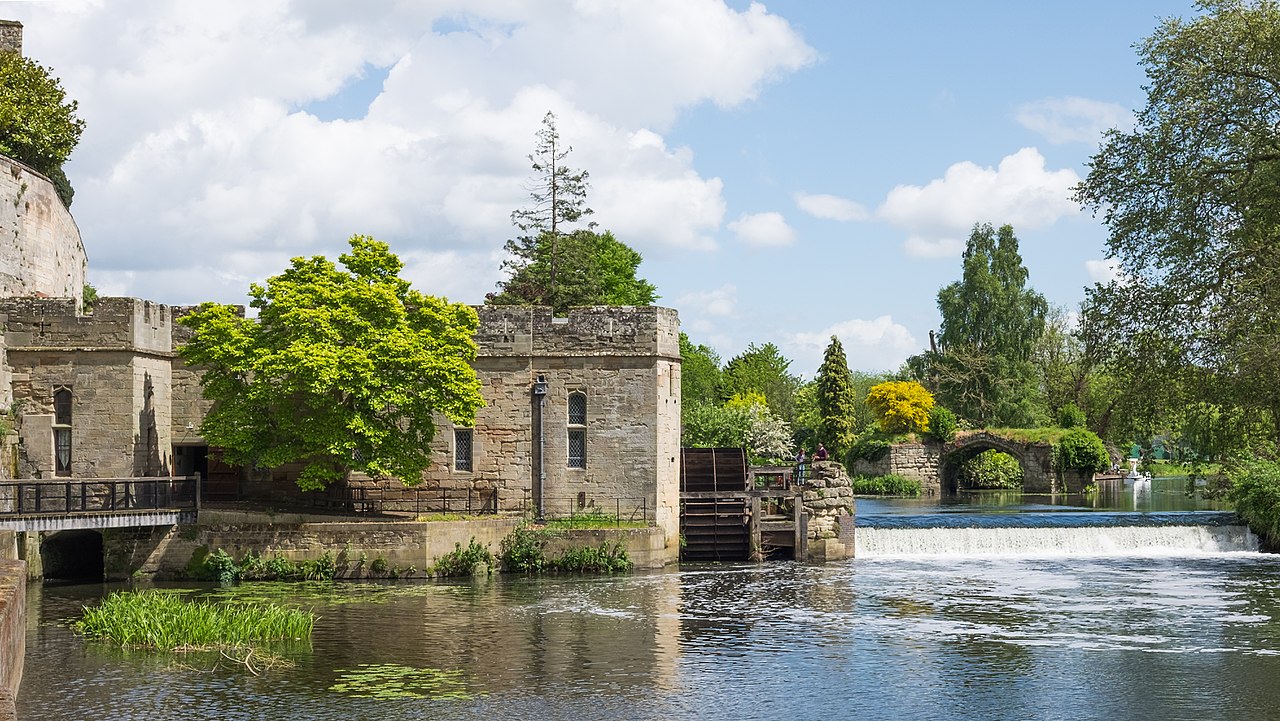
The original fortification was founded by the Normans and over the next several centuries was rebuilt in stone, enlarged and adapted to changing military and residential needs. Its owners included influential noble houses; the castle is associated with Richard Neville, the 16th Earl of Warwick, often called the "Kingmaker" for his role in the Wars of the Roses. Over time the medieval fortress evolved into a country seat, with landscaped grounds along the River Avon and added amenities to reflect shifting tastes and status.
Visitor experience and events
Today Warwick Castle is a major public attraction offering guided tours of the picture collection, views from the steep stair, and access to the wall walk from which guards once watched for threats. Curated displays include dressed figures and mannequins that recreate scenes of household life; actors and staged encounters add dramatic interpretation to special programmes and seasonal experiences. Live demonstrations such as falconry, siege engine exhibitions and historical re-enactments are scheduled for visitors throughout the year.
Notable facts and distinctions
The castle contains a collection of portraits of monarchs and past owners and retains private suites and period bedrooms that show how aristocratic families used the site. Some areas are presented with theatrical lighting and sound for immersive events; a staged supernatural or "spook" experience uses actors to suggest reported hauntings. The site combines military architecture, domestic history and public entertainment, attracting scholars, local visitors and international tourists. For practical information, opening hours, ticketing and upcoming programmes, consult official visitor resources and local tourism guides.
Further reading and resources: county context, national setting, historical timelines at town records and curated archives at museum collections. Research materials and educational visits often reference the castle's role in regional defence, aristocratic life and heritage conservation; see guides at interpretation services, conservation reports at archival centre and event listings at seasonal programme. Visitor reviews and practical tips appear on local forums at visitor boards and travel pages at tourism sites. For access and directions use transport links: nearest roads, rail connections and parking information. Institutional contacts include the estate office (administration) and educational outreach (school programmes).
Related articles
Author
AlegsaOnline.com Warwick Castle Leandro Alegsa
URL: https://en.alegsaonline.com/art/106646